

Among all the chatter about GLP-1s and weight loss, there’s a medication that’s flying somewhat under the radar, even though it’s been helping some women lose weight since the ’90s: metformin. While it may not be as talked-about as GLP-1s, metformin can be a safe, effective way for some women to lose weight and reduce their blood sugar. While it’s not FDA-approved for weight loss, metformin can be prescribed off-label for that purpose, especially for more modest weight loss goals. So if you’re wondering “Does metformin cause weight loss?” and want to know whether it’s an option for you, we’ve got helpful info below. And you’ll also learn how Midi Health clinicians can help you figure out the right treatments for your unique health needs and weight goals.
Does metformin cause weight loss? The answer isn’t as straightforward as you may expect, because for some people it can help them shed pounds, and for others, not as much.
Metformin can help you lose weight by improving insulin resistance as well as reducing appetite. This combo makes it especially intriguing to women in midlife, since perimenopause and menopause can raise your risk for insulin issues and lead to weight gain. So metformin can seem like a win-win for both of those issues.
Below, we’ll dig into metformin for weight loss, what kind of results you may realistically see, and who are the best candidates for the medication. We’ll also give you info on possible side effects, and look at how it compares to other options like GLP-1s. All of this will help give you some clarity about metformin, and provide background so that you can discuss the option with a healthcare professional, such as a Midi clinician, during your next visit.
Does Metformin Cause Weight Loss?
Metformin is FDA-approved to manage blood sugar in people with type 2 diabetes, but beyond that, research shows that it can, in fact, lead to some weight loss. This is especially true for people with obesity (regardless of whether or not they have diabetes). While it’s not FDA approved for weight loss, it can be prescribed off-label for that purpose.
Study results on metformin weight loss vary, but they indicate you could lose 5% or more of your body weight. This doesn’t mean you will lose that much, though—some people lose only a few pounds—and it can take years to reach maximum weight loss.
That’s because losing weight is a side effect of metformin, not its intended purpose. You can’t tell in advance how your body will react to metformin, and results can depend on things like dose, starting weight, and how reliably you take the medication as prescribed.
How Does Metformin Affect Weight?
It isn’t fully understood yet why a medication that’s designed to improve blood sugar levels can lead to weight loss. But it’s likely due to one of these actions:
- It makes you less hungry. Metformin can suppress your appetite by affecting the levels of hormones like GLP-1 and peptide YY. It also raises levels of a molecule called lac-phe, which is produced when you exercise vigorously and suppresses appetite as well. It may also make users more sensitive to leptin, the satiety hormone.
- It improves how your body uses insulin. Metformin helps with something known as insulin sensitivity, which is how well your body moves glucose out of your blood and into cells. It also reduces how much glucose is produced by your liver in the first place. By helping your body regulate blood sugar, it can help you lose weight.
- It may also impact your gut microbiome. Research shows that people taking metformin experience a change to the bacteria that live in their gut, which could also impact metabolism and weight loss.
This is still an area of active research, but one thing is clear: Metformin works best for weight loss alongside lifestyle changes like a more nutritious diet and physical activity, rather than as a replacement to healthy habits. However, the medication remains attractive due to its generally low cost, wide availability, and favorable long-term safety profile.
True Stories Of Transformation
How Much Weight Can You Realistically Lose on Metformin?
Metformin isn’t some wonder drug that’s going to help you lose a boatload of weight overnight. But it can help you gradually lose weight over the course of a year or two. People who take the medication as prescribed can lose an average of 3.5% of their body weight. Some may lose more–studies show that 28.5% of people who take metformin for a year will drop 5% or more of their weight–and some may lose less (another study showed that the average weight loss was around 5.5 pounds).
But one interesting thing: As long as people kept taking the medication and prioritizing healthy habits, they maintained the weight loss. The studies showed that this wasn’t true for people who lost weight via lifestyle changes alone.
This amount of weight loss can be significant, but it’s less than the amount people tend to lose on GLP-1s. Depending on the specific medication, those losses are more in the ballpark of 15% of your weight or more.

Who Is Most Likely to Lose Weight on Metformin?
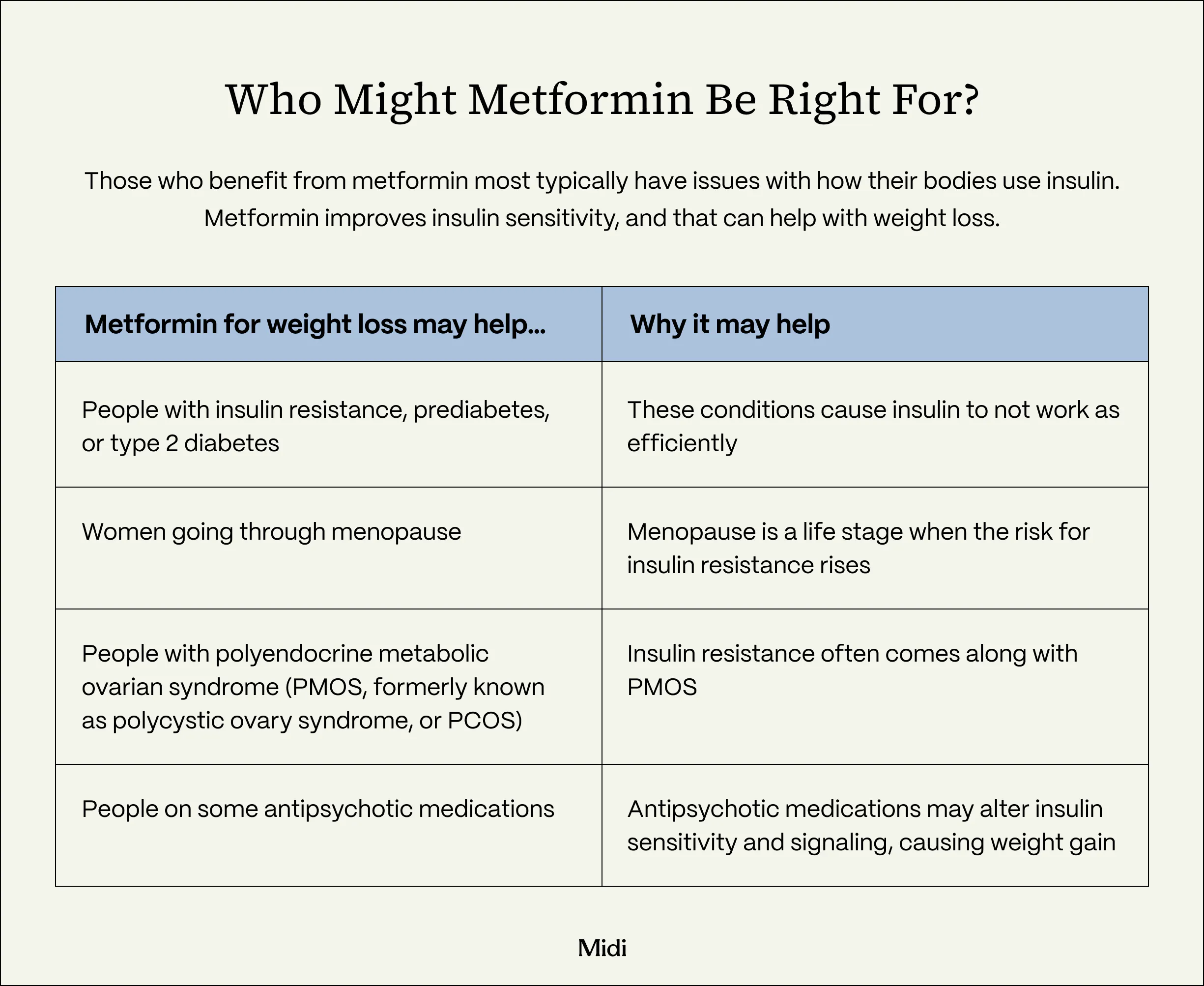
It’s impossible to look into a crystal ball and figure out who will lose the most weight on metformin, but there are certain groups who might benefit the most. This includes:
- People with insulin resistance, prediabetes, or type 2 diabetes: One of the ways metformin leads to weight loss is by improving insulin sensitivity, so those whose insulin isn’t working efficiently may get a bigger boost. And metformin will help lower their glucose levels.
- Those with polyendocrine metabolic ovarian syndrome (PMOS, formerly known as polycystic ovary syndrome, or PCOS): Metformin can help those with PMOS lose weight, as well as improve fertility and regulate ovulation and their periods. One reason why: Those with PMOS typically also have insulin resistance.
- People taking antipsychotic medications: Many drugs for schizophrenia, bipolar disorder, and treatment-resistant depression can result in weight gain, because they can alter insulin sensitivity and signaling. Metformin has been shown to help prevent this weight gain (or reverse it if it’s already happened).
- Those going through menopause: During menopause, the risk for insulin resistance goes up, which makes metformin especially helpful. It can improve insulin sensitivity and help with weight gain (another common result of the menopause transition).
One thing these groups have in common is an issue with how their body uses insulin. Those who don’t have insulin resistance may not notice as much weight loss with metformin. And of course, everyone is unique, so consider your own health history and personal needs, rather than lumping yourself in with a large group of people.
Metformin and Weight in Midlife Women
Right around the time you notice all sorts of changes in your body related to menopause—hot flashes, mood swings, vaginal dryness, you name it—you may also notice a change in your weight and how your body looks. Estrogen levels fluctuate in the years prior to menopause, and intermittent low esrogen levels can lead to weight changes and different fat stores on your body. Menopause also comes with an increased risk for insulin resistance, which can put you on a path towards type 2 diabetes.
And this is where metformin may come in. It can help with insulin resistance and reduce some of the weight gain. Metformin can also help decrease amounts of visceral fat, the kind associated with belly fat that raises the risk of cardiovascular disease.
If your goal is to improve metabolic health and lose weight, metformin is an off-label option to discuss with your clinician. A menopause-informed clinician, like one at Midi, can guide you in considering whether metformin is the best choice, or if a different treatment may be a better way to go.

Side Effects and Safety Considerations
Metformin has been prescribed in the U.S. since 1994 and it is considered a generally safe medication, with serious side effects happening only rarely.
That said, there are some more mild side effects you may notice. These include:
- Diarrhea
- Nausea
- Gas
- Vomiting
- Stomach pain or discomfort
There are a few more serious metformin side effects in women to be aware of. While they are rare, they require immediate health care. These are:
- Vitamin B12 deficiency: This may develop if you take metformin for a prolonged period of time. That’s why those taking metformin should have their B12 checked regularly to make sure they don’t need a supplement.
- Lactic acidosis: This is when lactate builds up in the body, leading to a dangerous situation called metabolic acidosis. Your risk goes up if you have impaired renal functioning (people with that issue aren’t good candidates for metformin). Drinking excessive amounts of alcohol can also raise your risk, so that’s not advised if you’re taking metformin.
As a reminder, metformin—and all prescription medications—should only be taken with a clinician’s supervision, with appropriate monitoring. That way you can stay on top of side effects and make sure anything serious is caught early.
Metformin vs. GLP-1 Medications for Weight Loss
Metformin is not specifically approved for weight loss; some GLP-1s are. This class of medications include Wegovy (a brand name for semaglutide), Zepbound (a brand name for tirzepatide), and more. Similar to metformin, GLP-1s can also help lower blood sugar levels— that’s why some are also approved for type 2 diabetes.
GLP-1 medications, unlike metformin, can lead to pretty significant amounts of weight loss. Studies have shown that:
- Injectable semaglutide can lead to an average of 14.9% weight loss in 68 weeks
- Injectable tirzepatide can result in an average of 20.9% weight loss in 72 weeks
They also work in a different way: by mimicking the hormone GLP-1 (along with other hormones depending on the medication), which acts on the gut and brain to help reduce hunger and slow digestion. As a result, you eat less and lose weight.
Whether or not you should use metformin or a GLP-1 to lose weight—or another medication, or a different approach altogether—is something to discuss with a healthcare professional, like a Midi clinician, with your individual health in mind. There is no single best medication for everyone.
How to Talk to Your Clinician About Metformin
If you do think metformin may be a good fit for you—or you’re just curious and want to learn more—your clinician is the best place to start. You’ll be able to go over your full health history, including what other meds you’re taking and the menopausal symptoms you’re experiencing. You’ll also be able to ask any questions you have, like:
- Is it safe for me to take metformin?
- Will metformin help me with my health goals?
- What kind of results can I expect?
- What dose would you start me with?
- How would we make sure metformin is working?
- What other lifestyle habits will I need to follow while taking metformin?
Think of this as an open conversation, where you can talk about your goals and your clinician can explain your options, clear up confusion, and give recommendations for the best weight loss route for you.
Key Takeaways
- Metformin is FDA-approved to help manage type 2 diabetes. It can improve insulin sensitivity and lower blood sugar. Metformin isn't FDA-approved for weight loss, but it can be prescribed off-label to help provide modest weight loss.
- Some may only lose a few pounds when taking metformin, while others can lose 5% or more of their body weight.
- Metformin is generally considered safe, but you may notice some gastrointestinal side effects like diarrhea and nausea.
- Metformin isn’t right for everyone—your Midi clinician can help you figure out if it can help you reach your health goals.
Frequently Asked Questions (FAQs)
How much weight can you lose in a month with metformin?
Metformin is not a fast-acting weight-loss medication. It leads to a slower, more gradual weight loss compared to other drugs like GLP-1s. It’s likely you’d lose a pound or two, at most, in the first month of taking metformin. Most weight loss will be achieved by 8 to 12 weeks. If there is little to no weight loss by 3 to 6 months, at the maximal dose greater than or equal to 1500 milligrams), you might have to ask your clinician about an alternative treatment. Weight loss tends to plateau at 6 to 12 months.
Can a non-diabetic person lose weight on metformin?
Yes, studies show that people without diabetes can lose weight on metformin. Those with insulin resistance may notice more weight loss, but people without it could still shed some pounds.
Can you lose belly fat with metformin?
Yes, metformin has been shown to reduce visceral fat, which is the kind that surrounds organs in your midsection. It may not have a huge impact, but it can help some.
Will I lose weight when I start taking metformin?
Metformin is not an approved weight loss drug—it’s more that the weight loss happens as a side effect when taking the medication. The weight loss will likely happen slowly, over a period of time, as opposed to right away when you first start taking it.
Does metformin work differently for women in perimenopause or menopause?
Women in perimenopause and menopause are at a higher risk for insulin resistance, so metformin can be especially helpful to them. It can improve how the body uses insulin and bring down blood sugar, as well as result in some modest weight loss.
If you’re in perimenopause or menopause and want guidance from clinicians who specialize in women’s midlife health, book a virtual visit with Midi today.
Hormonal change is at the root of dozens of symptoms women experience in the years before and after their period stops.
Our trained menopause specialists can help you connect the dots to guide you towards safe, effective solutions.
Whether you need personalized guidance or a prescription routine to tackle symptoms—including brain fog, hot flashes, sleep trouble, mood swings, and weight gain—we’ve got you covered. Learn more here.
Midi’s mission is to revolutionize healthcare for women at midlife, wherever they live and whatever their health story. We believe that starts with education, to help all of us understand our always-changing bodies and health needs. Our core values guide everything we do, including standards that ensure the quality and trustworthiness of our content and editorial processes. We’re committed to providing information that is up-to-date, accurate, and relies on evidence-based research and peer-reviewed journals. For more details on our editorial process, see here.