
 Rebecca Yee, MD
Progesterone is a crucial part of hormone therapy for many women. As a bonus, it may bring welcome relief from menopausal sleep issues. But other people notice new daytime drowsiness that they can’t shake and wonder: “Does progesterone make you tired?” The short answer is yes, it can—but it shouldn’t make you so tired that it’s hard to get through your day. A clinician who specializes in midlife women’s health, like the ones at Midi Health, can adjust your progesterone dose or timing to help you sleep without leaving you groggy the next day.
After what might feel like an endless string of sleepless, sweaty nights, you’ve finally started hormone therapy for perimenopause symptoms. Now, you’re fighting off sleep the next morning, even after your usual two cups of coffee. What gives? Does progesterone make you tired?
You’re onto something there: Drowsiness is a common and expected effect of oral micronized progesterone. In fact, that’s why it’s typically taken at bedtime.
Lots of women like that their hormone replacement therapy (HRT, now commonly referred to as menopause hormone therapy, or MHT) helps them get better rest. But if you’re constantly tired during the day, it’s time to talk with a clinician about whether your treatment plan needs to be adjusted.
Below, we’ll explain why progesterone can make you sleepy, how long the drowsiness may last, and when it can become a problem. We’ll also review other causes of menopause fatigue to watch out for and what may help.
And remember: Progesterone is a prescription medication, so don’t stop taking it or change your dose without talking with a healthcare professional, such as a Midi clinician, first.
Does Progesterone Make You Tired? The Short Answer
Yes, progesterone can make you tired. In fact, drowsiness is a common side effect of oral micronized progesterone, a form that’s chemically identical to the progesterone your body naturally makes. If that’s the type of medication you take, you might feel sleepy within a few hours of taking it.
That’s not a sign that something is wrong. This sedating effect is actually one reason micronized progesterone may help improve sleep, a welcome bonus for many women dealing with sleep problems. A similar effect can even happen naturally: Menstruating women may feel more fatigued when progesterone levels peak during the luteal phase, the time between ovulation and your next period.
“At Midi, we typically prescribe micronized progesterone at bedtime because it can make you drowsy,” Midi clinical leader Amanda Rosales, DNP, previously told us.
Of course, everyone is different. You might feel very sleepy after your evening progesterone dose, while your bestie is just a little drowsy. That kind of variation is common. The bigger concern is fatigue or grogginess that sticks around well into the next day.
Why Does Progesterone Make You Sleepy?
So, why does progesterone make you tired? When you take oral micronized progesterone, your body converts most of it into allopregnanolone, a neurosteroid with calming effects on the brain. Allopregnanolone then works on GABA receptors, boosting the calming effects of GABA, a brain chemical that promotes relaxation and sleep.
This calming effect helps explain why progesterone has been shown to help people fall asleep faster and sleep better overall. In one trial, perimenopausal women who took oral micronized progesterone reported better sleep quality than those who took a placebo. And because sleep problems are so common for women in midlife, that sleepiness may feel more like an extra benefit than a side effect.
Micronized progesterone works differently from synthetic (lab-made) progestins, which typically don’t have the same effect on sleep.
How you take progesterone matters, too. When you take micronized progesterone by mouth, your liver converts some of it into allopregnanolone, the same calming compound responsible for making you sleepy. But your body processes vaginal micronized progesterone differently, so it may be less likely to cause drowsiness. (Just note: Using vaginal micronized progesterone is considered off-label use, so it’s important to talk with your clinician if you’re interested in this method of delivery.)
How Long Does Progesterone Fatigue Last?
It’s normal for progesterone to make you feel drowsy within the first few hours after taking it. That’s one reason why people often take progesterone at night: The drowsiness can help you fall asleep while minimizing its effects during the day. But sometimes, that sleepiness can linger into the next morning.
“Some patients report a hangover-like feeling in the morning because it really helped them with sleep and they feel like they slept too much,” Midi clinician Sonya Carothers, PhD, APRN, FNP-C, previously told us.
It’s unclear exactly how long this fatigue might stick around. It may ease over the first few weeks as your body gets used to your medication. If it doesn’t improve after a few weeks, or you’re feeling worse rather than better, talk with your clinician.
There’s no need to push through daytime drowsiness that disrupts your routine. Your clinician can make several adjustments to your HRT treatment that may help (more on those below).

When Is Tiredness a Normal Side Effect, and When Is It a Problem?
A little nighttime sleepiness is expected after an evening dose of micronized progesterone. Feeling wiped out the next day isn’t.
What might be a welcome sleep benefit at night can become a problem if you’re still groggy or tired during the day and it interferes with your daily routine.
It’s also a problem if drowsiness comes with major mood changes. Some people are sensitive to progesterone and may experience sadness, anxiety, or other mental health changes. If you notice disruptive fatigue or new or worsening mood symptoms after starting progesterone, talk with your clinician as soon as you can.
You might wonder whether fatigue or other changes mean your progesterone is too high. But high progesterone symptoms aren’t always that straightforward. Headaches, breast tenderness, stomach pain, and changes in vaginal discharge can all happen while taking progesterone. But they don’t automatically mean your level or dose is too high.
That’s why it’s so important to check in with your clinician when you need to. They can look at what you’re experiencing, when it started, and your dose to figure out whether an adjustment might help.
While rare, some progesterone side effects can be serious. Seek medical care right away if you notice any of the following:
- sudden arm or leg pain or swelling
- chest pain or shortness of breath
- severe headaches or migraine
- vision changes
- unexpected vaginal bleeding
- sudden or severe numbness, dizziness, or difficulty speaking
What Can a Clinician Adjust to Reduce Progesterone Tiredness?
If progesterone leaves you groggy during the day, a clinician––like one of the menopause-trained specialists at Midi––can help you figure out how to reduce the side effects. They may adjust your dose, timing, or form of progesterone, based on your symptoms and treatment needs.
Adjustments may include:
- Changing the timing: Instead of taking progesterone just before you go to sleep, you may be able to take it 2 to 3 hours before bedtime to help the sedating effect wear off sooner.
- Adjusting your dose: Your clinician may consider lower-dose progesterone, depending on factors like whether you need progesterone alongside estrogen to protect your uterine lining during hormone therapy, your estrogen dose if you take it, and your overall response to treatment. Midi clinicians, for example, can prescribe individualized lower doses when appropriate.
- Changing how you take it: Vaginal micronized progesterone may cause less drowsiness than oral progesterone because your body processes it differently. Your clinician can help determine whether this route is appropriate for you (but again, this is off-label use).
- Switching to a synthetic progestin: Synthetic progestins, such as norethindrone or the levonorgestrel found in some IUDs, don’t have the same sedating effect as oral micronized progesterone and may cause less drowsiness.
- Changing your dosing schedule: You can take progesterone continuously (every day) or cyclically for part of each month. For example, some perimenopausal women take progesterone only during the last 14 days of their menstrual cycle to mimic the body’s natural rise in progesterone. With cyclic dosing, drowsiness may be limited to the days you take it.
Remember, these changes should be made only with your clinician. Don’t skip doses or adjust progesterone on your own.
What Success Looks and Feels Like
Is It the Progesterone, or Is It Midlife Fatigue?
It’s easy—and understandable—to blame fatigue on progesterone, especially if it’s the most recent addition to your routine. But menopause fatigue is super common, thanks to fluctuating hormones and other changes in midlife.
Mood changes can make it harder to relax and drift off to sleep. Hot flashes and night sweats can leave you tossing and turning in bed. And other health concerns––such as iron deficiency, low vitamin D, thyroid issues, or sleep apnea––can leave you fatigued during the day.
In other words, there are many reasons you might feel tired during this chapter of life. In fact, fatigue may be part of what led you to start HRT in the first place.
If you were already feeling tired before you started oral micronized progesterone, it’s unlikely that the prescription alone is causing your fatigue. But if the drowsiness started after you began taking it or changed your dosage, the medication could be a factor.
A healthcare professional, like a Midi clinician, can look at when your symptoms started to figure out whether your fatigue is progesterone-related. If it seems to be the culprit, they may have you take a short break from your prescription to see whether your symptoms improve.

Practical Ways to Manage the Drowsiness at Home
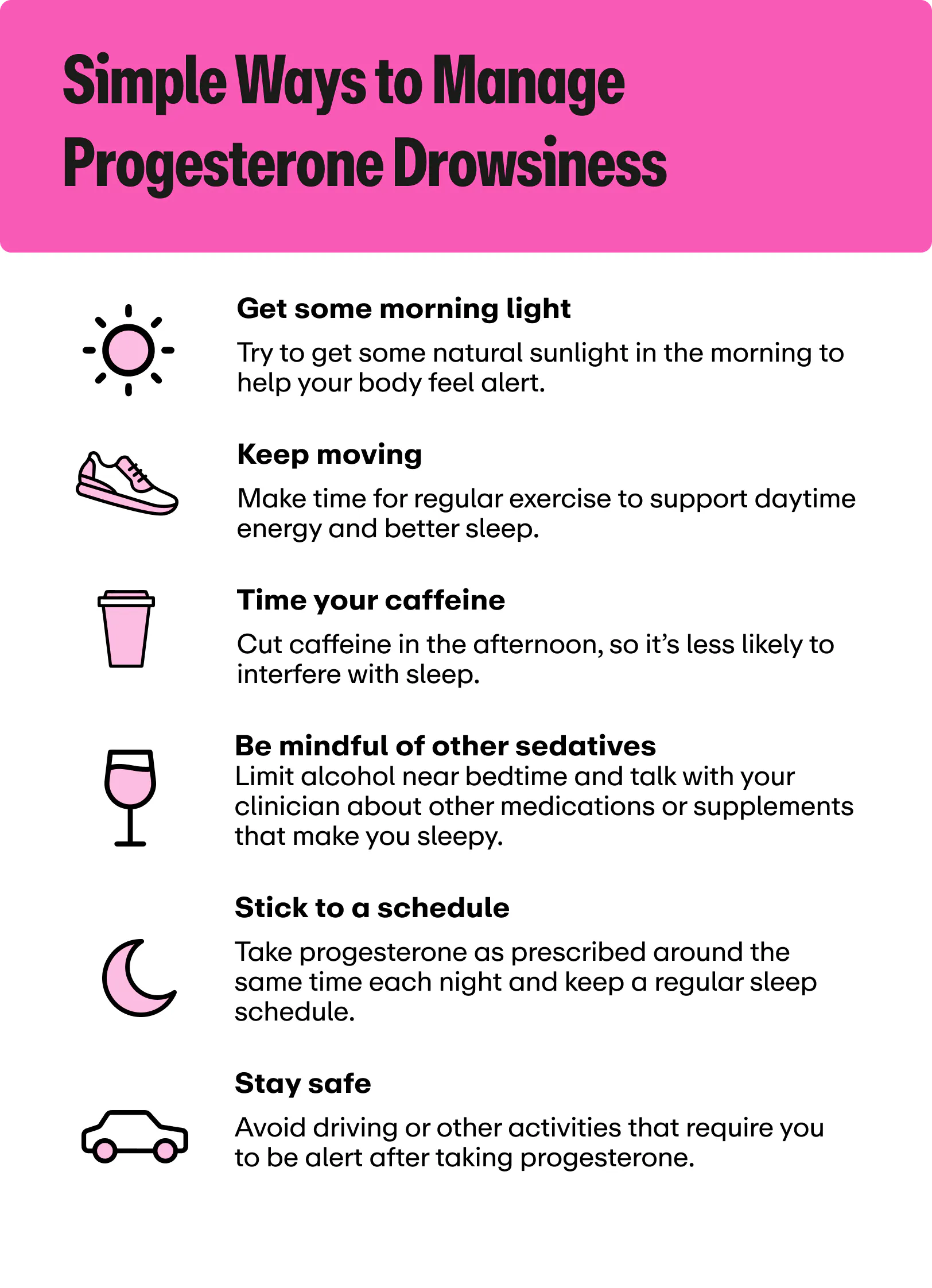
A few simple sleep hygiene habits may help you manage mild drowsiness and get the best possible rest while you work with your clinician to fine-tune your progesterone treatment:
- Stick to a schedule: Take your prescribed progesterone dose around the same time each night, so it becomes part of your bedtime routine. Try to go to bed and wake up around the same time each day, too.
- Play it safe: Avoid driving or other activities that require you to be alert after taking your dose.
- Get some morning light: Try to get some natural sunlight every morning to help your body feel alert.
- Keep moving: Make time for regular exercise to keep your energy up during the day and help you sleep better at night.
- Time your caffeine: Cut caffeine in the afternoon so it’s less likely to interfere with sleep at night.
- Be mindful of other sedatives: Limit alcohol within a few hours of bedtime, and check with your clinician about any medications or supplements you take that make you sleepy. They may add to progesterone’s sedating effects.
These habits can help, but they’re not a substitute for working with your clinician to adjust your prescription if daytime fatigue disrupts your routine.
Why Progesterone Is Worth Sticking With
Persistent fatigue can be pretty frustrating. But it’s important to keep taking progesterone unless a clinician tells you otherwise.
If you still have your uterus, you typically need progesterone or a progestin alongside systemic estrogen therapy. Estrogen can make the uterine lining too thick over time. Progesterone helps prevent that buildup, reducing the risk of endometrial cancer.
Plus, there’s an upside to finding the right fit. Oral micronized progesterone may help you fall asleep faster and improve overall sleep quality.
If the grogginess bothers you, talk with a clinician about adjusting your dose or finding another form that works better for you. Fortunately, you have options.
Midi clinicians can help you weigh those options. You can book a virtual visit with one of our menopause-trained experts, who can fine-tune your progesterone treatment to find an approach that works for you.
Key Takeaways
- Oral micronized progesterone can make you tired. But that sedating effect may also help menopausal women fall asleep faster and get better rest, which is one reason it’s typically taken at bedtime.
- The sedative effects of progesterone shouldn’t last well into the next day. If you have persistent drowsiness, talk with your clinician.
- A clinician, like the ones at Midi, can adjust your progesterone timing, dose, or form to help reduce drowsiness or other progesterone side effects.
- Menopause fatigue may have many other causes, like hot flashes and night sweats that disrupt your sleep. Your clinician can help you figure out what’s behind your fatigue.
- Don’t stop taking progesterone or adjust your dose on your own. If you have a uterus and take estrogen, progesterone or a progestin helps protect your uterine lining and reduce the risk of endometrial cancer.
Frequently Asked Questions (FAQs)
How long does progesterone drowsiness last?
Drowsiness is usually strongest in the hours after you take oral micronized progesterone, but sometimes it can linger into the next day. Daytime drowsiness may improve within a few weeks as your body adjusts. If it doesn’t, talk with your clinician.
What is the most common side effect of progesterone?
The most common side effects of progesterone include drowsiness, dizziness, breast tenderness or pain, and bloating or swelling.
What are the symptoms of too much progesterone?
If your progesterone dose is higher than you need, you may notice side effects like daytime sleepiness, headaches, breast tenderness, bloating, or changes in vaginal discharge.
How long does it take to adjust to taking progesterone?
It can take a few weeks, but everyone responds differently to hormone therapy. Talk with your clinician about what to expect as you adjust to progesterone.
What should you avoid while taking progesterone?
You should avoid driving and any other tasks that require you to be alert until you know how progesterone affects you. Limit alcohol, and check with your clinician about medications or supplements that can also make you drowsy.
Why take progesterone at night?
Oral micronized progesterone can make you drowsy, so taking it at bedtime lets that sedating effect happen while you’re winding down for sleep.
If you’re in perimenopause or menopause and want guidance from clinicians who specialize in women’s midlife health, book a virtual visit with Midi today.
Hormonal change is at the root of dozens of symptoms women experience in the years before and after their period stops.
Our trained menopause specialists can help you connect the dots to guide you towards safe, effective solutions.
Whether you need personalized guidance or a prescription routine to tackle symptoms—including vaginal dryness and irritation, brain fog, hot flashes, sleep trouble, mood swings, and weight gain—we’ve got you covered.
Midi’s mission is to revolutionize healthcare for women at midlife, wherever they live and whatever their health story. We believe that starts with education, to help all of us understand our always-changing bodies and health needs. Our core values guide everything we do, including standards that ensure the quality and trustworthiness of our content and editorial processes. We’re committed to providing information that is up-to-date, accurate, and relies on evidence-based research and peer-reviewed journals. For more details on our editorial process, see here.