 Rebecca Yee, MD

Hormone replacement therapy (HRT, now commonly referred to as menopause hormone therapy, or MHT) can be a game changer for relieving disrupting symptoms during menopause, but it can come with side effects. A common one is sore breasts, which can range from mild soreness to a dull ache to pain.
And while you may worry that it’s a sign of something more serious, sore breasts are normal and usually temporary—and there are ways to ease the ache while you wait for it to pass. Here’s what you need to know about sore breasts on HRT, the signs that your pain may be something other than HRT breast tenderness, and how a healthcare professional—like a Midi Health clinician—can help you weigh HRT benefits and risks.
You’ve taken the leap and begun hormone therapy to manage menopause symptoms. You’re ready for relief from those life-disrupting hot flashes and night sweats. But wait—after a few weeks, you start experiencing something you weren’t expecting: uncomfortably sore breasts on HRT.
HRT breast tenderness is a common early side effect of the treatment. Your breasts may feel painful or sensitive, or they may have a dull ache that feels similar to premenstrual breast tenderness and swelling. The discomfort may start soon after you begin hormone therapy, or it can happen with a change in dosage. You might feel it in one breast or both. HRT breast tenderness is not only physically uncomfortable, though—it can start the worry machine in your brain as well.
How severe the breast soreness is and how long it may last depend on several factors: HRT timing and duration, dosage, and therapy type. These are all factors you can discuss with an experienced clinician (like one at Midi) if the symptom pops up for you. To prepare you for that conversation, keep reading for the info you need about sore breasts on HRT.
Sore Breasts on HRT: What’s Normal and What’s Not
Some research has shown that HRT breast tenderness is more common in people who take combined HRT—which is estrogen plus progesterone—than in people who take estrogen alone. (Combined HRT is usually prescribed to people who have a uterus in order to prevent an overgrowth of the uterine lining, a condition that raises the risk of endometrial cancer.) More recent research, though, didn’t find an increase in breast pain among women receiving combined HRT, which underlines the fact that responses are very individual.
Breast tenderness from HRT is usually mild and temporary, though occasionally it may be more severe or persistent. For many, the pain subsides within 2 to 4 months; for others, it may last longer. But in any case, it’s not considered a reason to stop HRT (which you should do with clinician guidance only).
If the pain seems to get more intense, is localized to one breast, or is paired with physical breast changes like lumps or thickened skin, bring those symptoms to your clinician’s attention.

Why HRT Can Cause Breast Tenderness
Here’s a quick biology lesson about why HRT could contribute to tender or painful breasts:
- Breast tissue has loads of estrogen receptors. Receptors are like tiny locks on cells; for estrogen receptors, estrogen is the “key” that triggers the cells into specific actions.
- The estrogen in HRT can affect breast tissue by increasing density and promoting fluid retention.
- Both of those changes tend to irritate nerve endings in the area, producing sensations of soreness, fullness, and heaviness.
You might also be wondering, “Does progesterone cause breast tenderness?” It’s true that progesterone can contribute to fluid retention in the breast tissue, adding to the discomfort.
If your clinician recently changed your HRT dose or made adjustments to your general menopause treatment, you may temporarily experience HRT breast tenderness.
It’s important to note that not everyone has the same response, because breast tissue isn’t exactly the same from person to person. And we all respond to and interpret pain differently—some people have a higher tolerance for pain, so a sensation that feels intense to one person may be only slightly annoying to another.
What HRT Breast Pain Can Feel Like
Besides the fullness and soreness mentioned above, menopause-related breast pain (which studies don’t always link directly to HRT) may include:
- tender nipples or breast sensitivity
- burning, throbbing, sharp, or stabbing sensations
- cyclical patterns if periods are still happening
- non-cyclical patterns after menopause
Anecdotally, HRT breast pain is also sometimes associated with physical contact, such as being hugged, friction or movement from exercising, sleeping in certain positions, or wearing a particular bra.
Again, research attributes most of these symptoms to breast pain during the menopause transition in general, though HRT may trigger breast pain as well.
What Success Looks and Feels Like
Other Causes That Can Overlap With HRT and Breast Pain
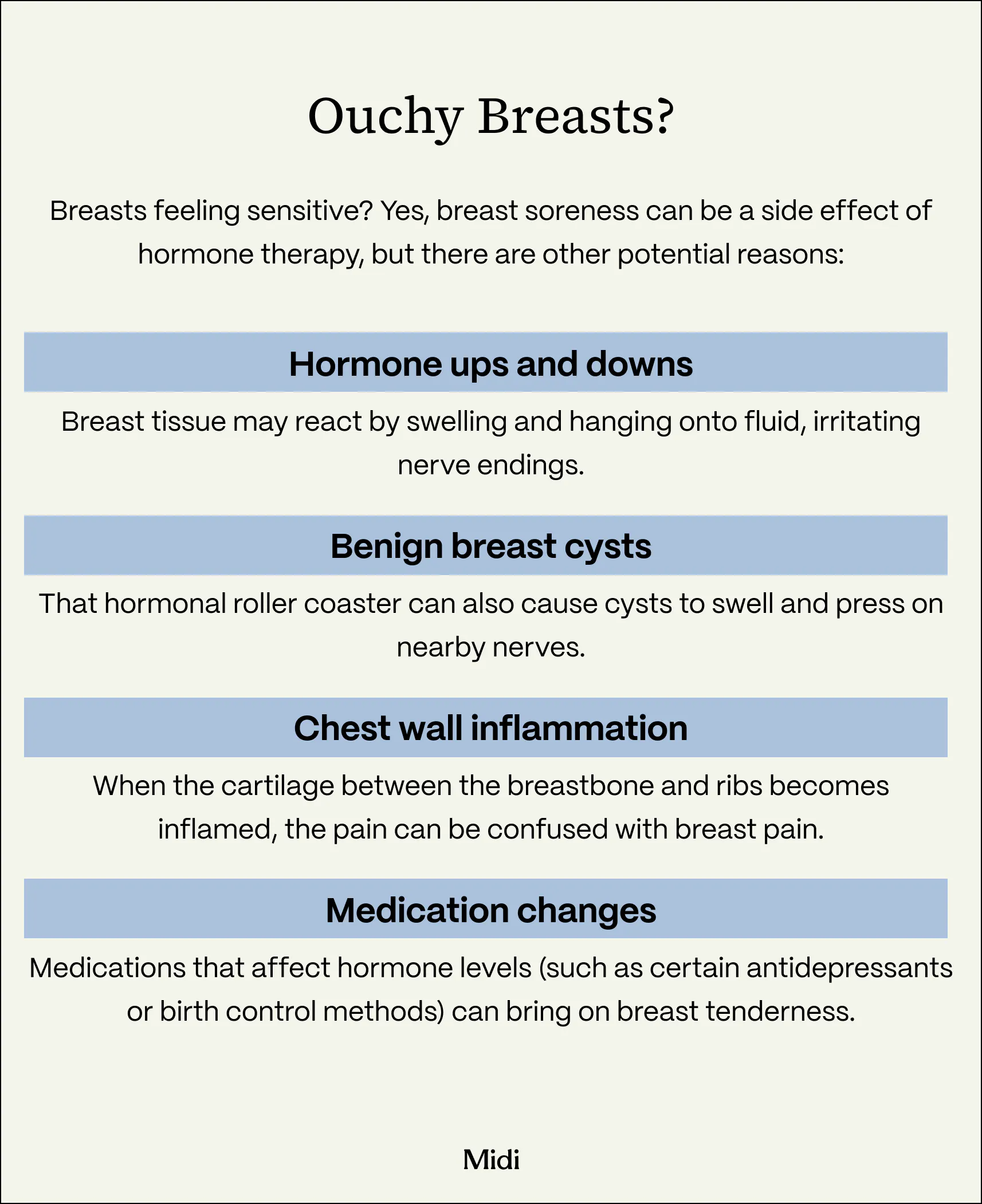
Breast discomfort and pain during perimenopause and menopause can spring from issues other than HRT. These can include:
- the hormone fluctuations that come with midlife
- benign breast cysts or other breast changes
- chest wall inflammation and soreness
- changes in medication or supplements
Should I Stop HRT if My Breasts Hurt?
It’s not recommended to stop or change your HRT dosage without clinician guidance in any case. Plus, mild breast soreness may improve as your body adjusts to the treatment.
So if you’re asking yourself, “Should I stop HRT if my breasts hurt?” here’s a better strategy: Before making any decisions, consider tracking your symptoms and pain levels for a few months. Then you can share that information with your clinician, who can advise you on next steps, depending on how your symptoms change over time. They can adjust your dose or treatment plan if needed.
However, if your breast pain becomes severe, specific to one area, isolated to one breast, or disruptive to your daily life, reach out to your a healthcare professional (like a Midi clinician) sooner to discuss next steps.
Ways to Ease Sore Breasts on HRT
While your body adjusts to HRT, you can minimize breast tenderness with these strategies:
- Wear a supportive, well-fitting bra (especially during exercise).
- Try a soft sleep bra if nighttime pain is an issue.
- Use warm or cold compresses.
- If needed and safe for you, try an over-the-counter (OTC) anti-inflammatory medication (like ibuprofen).
How Clinicians May Evaluate HRT and Breast Pain
A clinician will evaluate HRT-induced breast pain by reviewing the type of hormones you’re taking, the dosage, how they’re administered, and any other recent changes to your menopause treatment plan. Your clinician will ask about where exactly the pain is located, how long you’ve been experiencing it, its severity, and any patterns you’ve observed.
They’ll also review your personal and family history of breast cancer, and they’ll check to see that you’re up-to-date on mammogram screening. If needed, your clinician may recommend further diagnostic screening.

When HRT May Need Fine-Tuning
Your HRT treatment may need tweaking if your breast tenderness continues beyond the expected adjustment period of a few months.
Other reasons that your clinician might want to consider changing it include:
- if pain starts after a dose increase
- if your pain interferes with sleep, sex, exercise, or daily life
- if you also experience unexpected vaginal bleeding
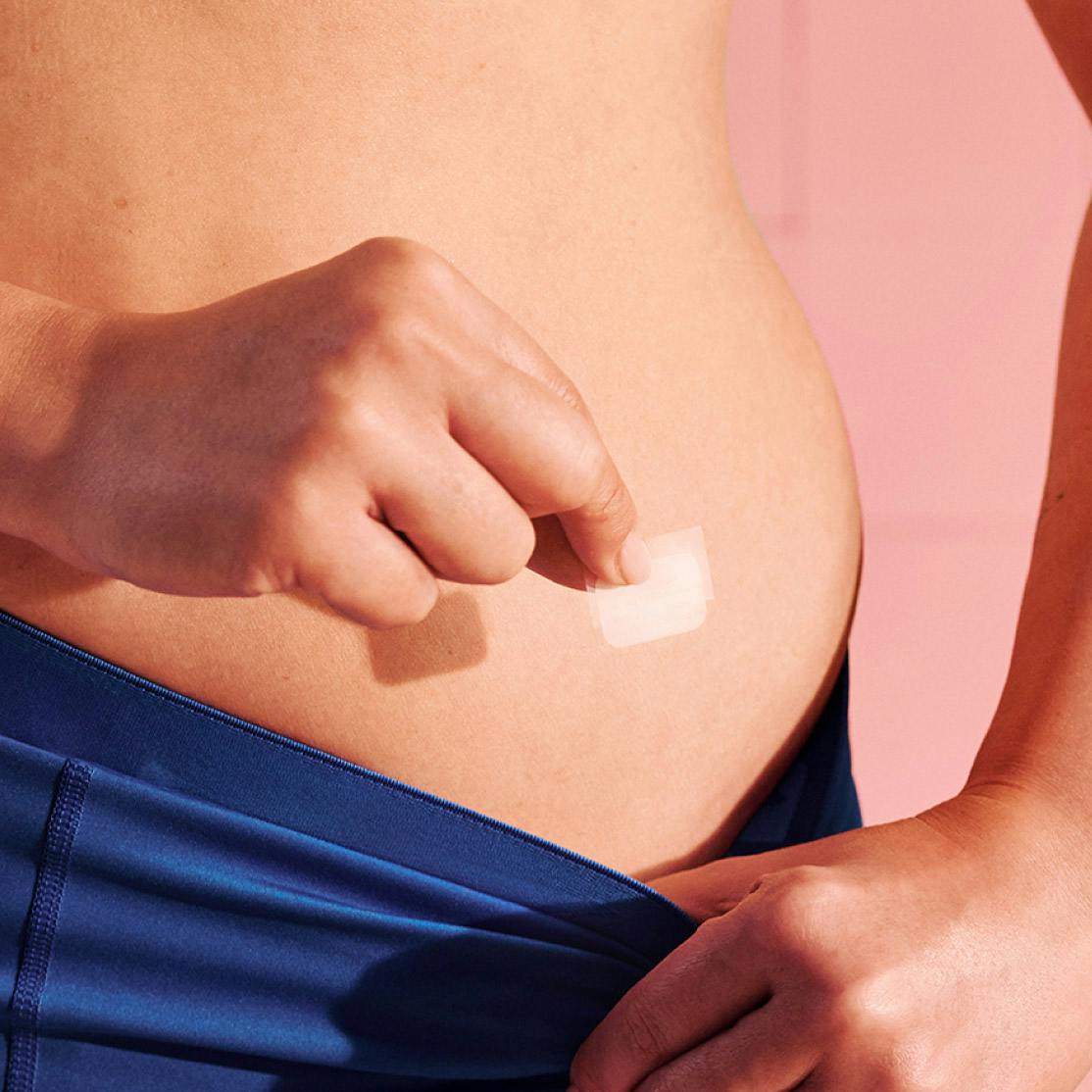
Your clinician may want to lower your estrogen dose or have you try a different form (say, gel or a patch, rather than a pill). They may also want to prescribe a different progesterone. Measures that may help include:
- a lower estrogen dose
- a different estrogen administration route (i.e., gel versus patch versus oral tablet)
- a different type or prescription of progesterone
- a slower pace of dosage increase over time
Breast Changes That Need Prompt Evaluation
You should always bring certain breast changes to your clinician’s attention for immediate evaluation:
- a new lump or thickened area of breast tissue
- one-sided pain that’s getting worse
- nipple discharge (whether clear or bloody)
- nipple inversion or direction change
- skin dimpling
- redness, scaling, or rash
- swelling in the breast or armpit
HRT, Breast Tenderness, and Breast Cancer Risk
A woman who’s experiencing breast tenderness or pain from HRT may worry it’s a sign of breast cancer. But on its own, breast pain isn’t a sign of cancer.
Breast cancer risk is very individualized, and before beginning HRT, you and your clinician should discuss your personal health profile, including breast density, family history of breast cancer, and any other potential risk factors. All of this will inform your clinician’s advice and your potential treatment plan.
New or unusual breast changes should always be checked by your healthcare professional. Regardless of the type of HRT you’re receiving, routine mammograms should remain a staple of your care regimen. If you’re unsure about your personalized risks and how they balance out with the benefits of HRT, your clinician can help you understand them.
Key Takeaways
- Breast soreness during HRT is a normal side effect of starting the therapy. You may experience it as tenderness, a dull ache, or pain of different levels.
- The soreness or pain often subsides after an adjustment period of a few months.
- You can take steps to ease the sensations in the meantime, including wearing a supportive bra, applying warm or cold compresses, or taking OTC anti-inflammatory medications like ibuprofen.
- Always bring concerning breast symptoms, such as a lump, rash, or localized worsening pain, to the attention of your clinician.
- Before starting HRT, you and your clinician should discuss your personal and family health history and balance the risks and benefits of the treatment.
Frequently Asked Questions (FAQs)
Can HRT cause nipple tenderness?
Breast and nipple tenderness are normal symptoms that can occur at the beginning of HRT. The discomfort usually subsides after an adjustment period. Track your symptoms and discuss them with your clinician if pain persists.
Is breast tenderness different with estrogen patches vs. pills?
This hasn’t been rigorously studied, so there’s no definitive research showing that one form is more or less likely to cause breast tenderness. However, your clinician may suggest changing to a different form to see whether that makes a difference in your individual situation.
Can breast tenderness come back after being stable on HRT?
Yes, breast tenderness can reappear later in treatment. If so, the same advice applies: Track your symptoms and give your clinician all the important information.
Can breast pain mean progesterone is not the right fit?
Your HRT treatment plan should be individualized for your particular situation. Since breast pain can be linked to different changes in the body during midlife, it's best to take your concerns to your clinician, who can help you decide whether to make any personal changes to your HRT treatment.
Can caffeine make HRT breast tenderness worse?
Caffeine is often cited as a trigger for breast pain in general, but that hasn’t been rigorously confirmed. And it hasn’t been studied in relation to HRT breast pain. Track your own symptoms and cut back on caffeine if it seems to affect you.
If you’re in perimenopause or menopause and want guidance from clinicians who specialize in women’s midlife health, book a virtual visit with Midi today.
Hormonal change is at the root of dozens of symptoms women experience in the years before and after their period stops.
Our trained menopause specialists can help you connect the dots to guide you towards safe, effective solutions.
Whether you need personalized guidance or a prescription routine to tackle symptoms—including vaginal dryness and irritation, brain fog, hot flashes, sleep trouble, mood swings, and weight gain—we’ve got you covered.
Midi’s mission is to revolutionize healthcare for women at midlife, wherever they live and whatever their health story. We believe that starts with education, to help all of us understand our always-changing bodies and health needs. Our core values guide everything we do, including standards that ensure the quality and trustworthiness of our content and editorial processes. We’re committed to providing information that is up-to-date, accurate, and relies on evidence-based research and peer-reviewed journals. For more details on our editorial process, see here.