Liz Krieger
 Rebecca Yee, MD
Hormone replacement therapy (HRT, now commonly referred to as menopausal hormone therapy or MHT) is a prescription treatment that replaces some of the estrogen—and for many women, progesterone—that your body makes less of during perimenopause and menopause. It's the most effective treatment for hot flashes and night sweats, and it helps protect your bones. There are different types and forms, so we'll walk through the info you need to know about HRT, its real benefits and risks, HRT side effects, and how a menopause-trained clinician at Midi Health can help you decide whether it's a good fit.
If you've typed "what is HRT" into a search bar at 2 a.m. after kicking off the sweaty covers for the third time that night, you're in very good company. Maybe you've also been walking into rooms with no idea why you're there or snapping at your partner for chewing too loudly.
Whatever your symptoms of this, um, challenging midlife phase, you want to understand why these changes are happening and whether hormone therapy can help.
Consider this your guide to how HRT works; the benefits, risks, and side effects; and how a menopause-trained clinician, like one at Midi, can help you ease through the changes.
What Is HRT? Hormone Replacement Therapy, Explained
HRT is prescription estrogen that eases symptoms caused by fluctuating and declining hormone levels in perimenopause and menopause. If you still have a uterus, estrogen is paired with a progestogen (either progesterone or a synthetic version called progestin).
Your body has estrogen receptors all over, including in your brain, bones, blood vessels, skin, and vaginal tissue—which means that fluctuating and declining estrogen can cause symptoms almost anywhere.
Two types of HRT can help address those symptoms are:
- Systemic HRT sends hormones through your bloodstream to treat whole-body symptoms like hot flashes.
- Local HRT (low-dose vaginal creams, tablets, and rings) treats vaginal and urinary symptoms; it acts mainly on nearby tissue, and far less of the hormone enters the bloodstream.
HRT is typically prescribed to women in perimenopause with bothersome symptoms, as well as women who are in postmenopause. It’s also prescribed to women who reach menopause early due to ovary-removing surgery and those who have a condition called primary ovarian insufficiency (POI).
What HRT is not:
- Birth control: The hormone doses in HRT are far less than those in birth control pills—not enough to stop ovulation. So you'll need contraception if that's a concern. (One option does double duty; more on hormonal IUDs below.)
- Gender-affirming hormone therapy: This uses hormones at different doses for different goals.
- Hormone therapy for cancer: This often works by blocking hormones.
What Symptoms Can HRT Help With?
HRT can address a wide range of symptoms—that’s part of the beauty of the treatment. Symptoms that HRT can help address include:
- Hot flashes and night sweats: These are the most common and best-studied reasons that women go on HRT. As estrogen drops, the brain's temperature-control center narrows its comfort zone, so even a tiny temperature change can trigger flushing, sweating, and a racing heart. The Menopause Society confirms that hormone therapy is the most effective treatment.
- Sleep problems: Fewer night sweats can mean fewer 3 a.m. wake-ups. Plus, oral micronized progesterone, taken at bedtime, has a calming effect for many women.
- Mood changes: Estrogen isn't approved to treat depression, but research suggests it can have antidepressant effects in perimenopausal women, particularly those with hot flashes. (For clinical depression, antidepressants and therapy remain front-line treatments.)
- Vaginal dryness, painful sex, and urinary symptoms: Systemic HRT helps some women with this common cluster of symptoms, called genitourinary syndrome of menopause (GSM). But when GSM is the main issue, low-dose vaginal estrogen is usually the go-to.
How about other common perimenopause symptoms? When it comes to fuzzy thinking, many women say HRT helps—often because they're finally sleeping—though it isn't approved to treat brain fog. Some women also report relief from joint aches, and estrogen can make sex more comfortable (though testosterone has better evidence for low desire itself).

Types of HRT: Estrogen, Progesterone, and Combination Therapy
There are different types of HRT. Here’s an overview:
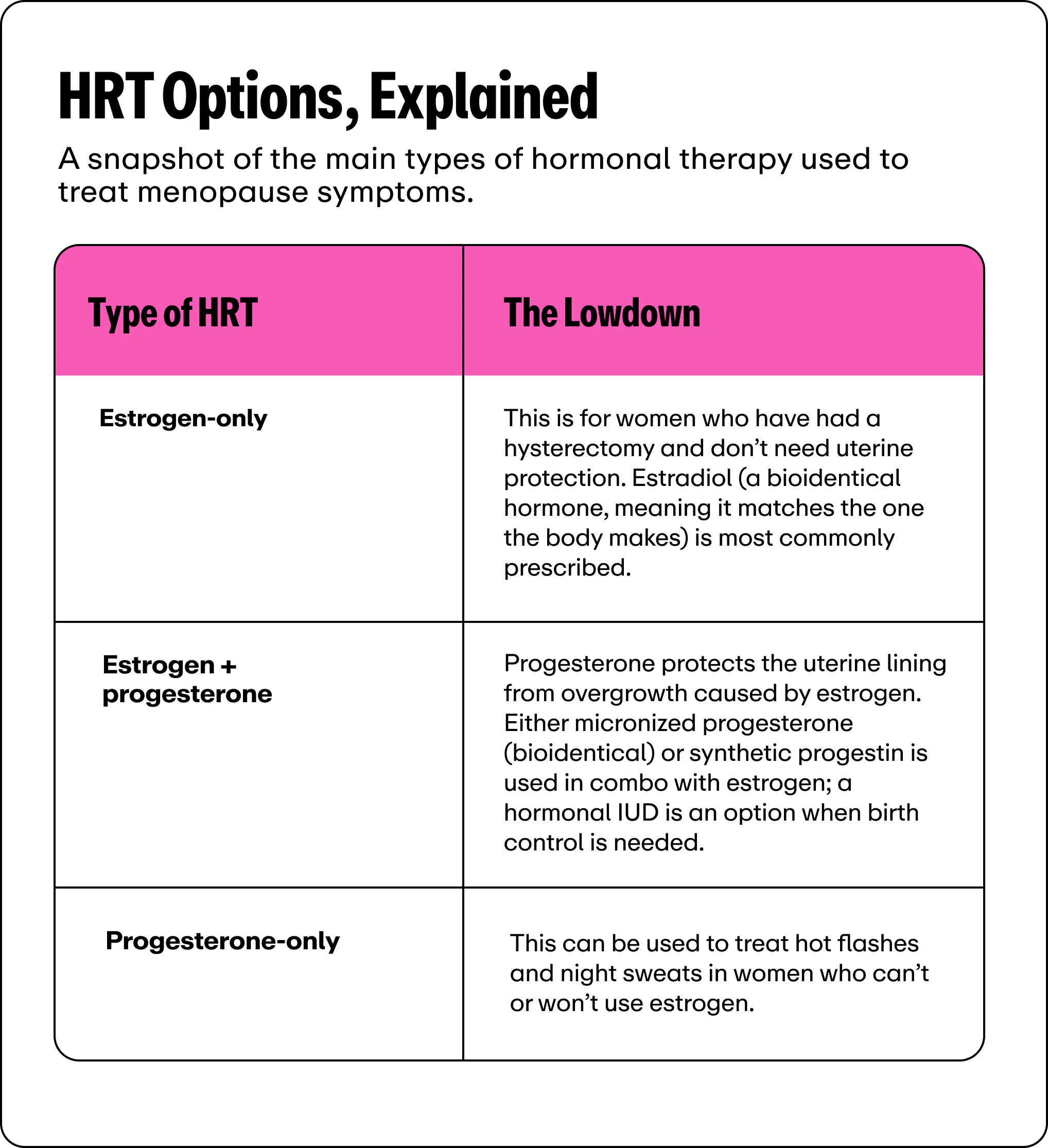
Estrogen-only HRT
If you've had a hysterectomy, you can typically take estrogen on its own. Estradiol, the same estrogen your ovaries make, is the most commonly prescribed form. (Estradiol is a bioidentical hormone, which means it matches the molecular structure of the hormones your body makes.)
Combined HRT (estrogen + progestogen)
If you have a uterus, estrogen alone can thicken the uterine lining and increase the risk of precancerous changes or endometrial cancer, so a progestogen is generally added to protect it. Options include:
- Oral micronized progesterone: This is a bioidentical hormone, and it’s often the preferred first choice. Bonus: Taking it at bedtime can support sleep.
- Synthetic progestins: These are chemically different from the progesterone your body makes. They can better control heavy or irregular bleeding in many women.
- A 52-milligram (mg) levonorgestrel IUD: This protects the lining for up to 5 years and doubles as birth control. Brands include Mirena or Liletta.
- Combination products: These pack both hormones into one capsule or patch.
There are two ways to take HRT that includes a progestogen.:
- Cyclical HRT: A progestogen is taken for part of each month, usually producing a predictable monthly bleed. It can sometimes be better for women who are still having periods and have experienced spotting when on continuous HRT.
- Continuous HRT: Both hormones are taken daily; after some early spotting, most women stop bleeding altogether. This is commonly used for women whose periods have already stopped. A side benefit: If progesterone helps you sleep better, this mode gives you a daily dose.
Progesterone-only therapy
When a woman can’t or won’t use estrogen therapy, progesterone can be prescribed on its own to treat hot flashes and night sweats (off-label). It’s also sometimes prescribed for certain cases of irregular bleeding.
What about testosterone?
An international expert consensus found testosterone effective for women with distressing low sexual desire, as long as blood levels stay within the normal premenopausal range. No FDA-approved testosterone product is indicated for women in the United States, so it's prescribed off-label or compounded, under the close supervision of a healthcare professional.
How Do You Take HRT? Pills, Patches, Gels, and Vaginal Options
A healthcare professional will suggest a type and formulation of HRT that best matches your main symptoms, health history (clot risk, blood pressure, migraine episodes, and more), whether you have a uterus, and other factors.
Here are the various systemic options that a clinician may walk you through:
- Patches: placed on the lower belly or buttocks, and changed once or twice per week
- Gels and sprays: applied daily to the arm or thigh
- Pills: taken once per day
- Vaginal ring: stays in place for 3 months; treats hot flashes and vaginal symptoms
Vaginal (local) estrogen can be used to treat the many symptoms of GSM, including vaginal dryness, painful sex, and urinary tract infections (UTIs). Because these are mainly absorbed locally into vaginal and surrounding tissue, a progestogen isn’t needed (but these can also be used alongside HRT):
- Low-dose vaginal estrogen: available in creams, tablet inserts, and soft rings (in a lower dose than the systemic vaginal ring)
- Vaginal and vulvar DHEA: inserts and cream options; DHEA converts locally in vaginal cells into estrogen and androgen
What Success Looks and Feels Like
Benefits of HRT for Midlife Women
Besides the symptom relief mentioned above (easing of hot flashes and night sweats, better sleep, less vaginal dryness/discomfort, boosted mood), the other benefits of HRT include:
- Stronger bones: Bone loss speeds up in the years around menopause. Hormone therapy has been shown to prevent bone loss and fracture, and estrogen is FDA approved to help prevent osteoporosis.
- Reduced risk of colorectal cancer: The Women’s Health Initiative (WHI) trials found that women on combined estrogen plus progestin had a lower rate of colorectal cancer (though women on HRT should still be screened for this cancer in the usual way).
- Less achy joints: Women in the WHI studies also reported less achiness and stiffness in their joints while on HRT.
What Are the Risks and Side Effects of HRT?
As with any medication, there are potential side effects of HRT, and your clinician will talk you through them. Here are the most common:
- Breast tenderness, bloating, headaches, nausea, or mood changes: These usually settle within 2 to 4 weeks.
- Spotting: This is very common in the first 3 to 6 months of combined HRT. Heavy bleeding or bleeding beyond about 6 months needs a clinical check, though.
- Skin irritation from patches: Some people experience itching or a rash; rotating sites or switching to a gel or spray usually solves it.
Less common but serious risks include:
- Blood clots and stroke: The risk is linked mainly to oral estrogen and rises with age, which is one reason transdermal estrogen is preferred for women with clotting or cardiovascular risk factors.
- Breast cancer: A systematic review found that estrogen with micronized progesterone didn't increase breast cancer risk for up to 5 years of use. Using estrogen alone (for women who’d had a hysterectomy) was linked to fewer breast cancer diagnoses and deaths In the WHI long-term follow-up, while estrogen plus a synthetic progestin was linked to more diagnoses.
- Endometrial cancer: Estrogen without a progestogen raises this risk in women with a uterus; taking a progestogen substantially reduces the risk.
- Gallbladder disease: This is more common with oral estrogen.
Talk with your clinician before starting systemic HRT if you have a history of:
- breast cancer or another hormone-sensitive cancer
- blood clots, stroke, or a known clotting disorder
- heart attack or coronary heart disease
- active liver disease
- unexplained vaginal bleeding
Having one of these doesn't always rule out local vaginal estrogen or non-hormonal options. Migraine, high blood pressure, or a strong family history of breast cancer don't automatically disqualify you, either, but they may change which type or route makes sense.
When and How Do You Start HRT?
Many women start HRT during perimenopause or within about 10 years of their final period. It’s ideal to start before age 60, when the benefit-risk balance is most favorable, but older women can discuss with a clinician whether it’s still an option.
When you talk about HRT with a clinician (like one at Midi), you’ll typically discuss:
- your symptoms, including hot flashes, sleep, mood, brain fog, vaginal and urinary symptoms, and cycle changes
- personal and family health history, including gynecologic surgeries, clotting or heart issues, cancer, migraine, liver conditions, smoking, and alcohol use
- blood pressure, height, and weight
- labs, if needed—blood tests aren't required to start HRT, but your clinician may order thyroid, iron, or metabolic labs to rule out conditions with symptoms that echo perimenopause or a hormone panel if you're under age 40 with perimenopause symptoms or other unusual symptoms
While the right care solutions vary from woman to woman, a common starting plan is a twice-weekly estradiol patch plus nightly micronized progesterone (if you have a uterus). For women who tend to be sensitive to medications, clinicians can prescribe estrogen first and add progestogen about 4 weeks later, which makes it easier to tell how you're tolerating each one. A check-in at around 4 weeks lets your clinician adjust the dose up or down.
Many women notice hot flashes easing within a few weeks, with fuller benefits building over the first couple of months. There's no fixed date that you need to stop taking HRT: Guidelines call for periodic reevaluation of the benefits and risks of continuing, with shared decision-making about longer use.
HRT requires a prescription, and many products are covered by insurance, though coverage varies by plan and formulation. Midi is available in all 50 states, with coverage by many insurance plans for virtual visits and prescriptions.

Alternatives if HRT Isn’t Right for You
Maybe you have a health reason to avoid hormones, or you'd simply rather not take them. Either way, you still have effective options.
FDA-approved non-hormonal prescriptions include:
- Fezolinetant (Veozah) blocks a brain signal that triggers hot flashes. Because of a risk of rare but serious liver injury, periodic blood tests are required.
- Elinzanetant (Lynkuet) reduced hot flash frequency and severity in two phase 3 trials and may ease sleep disturbances.
- Low-dose paroxetine (7.5 mg) is the only SSRI approved for hot flashes. (It isn't appropriate for women taking tamoxifen, a medication used to treat breast cancer.)
In terms of other options, The Menopause Society recommends SSRIs, SNRIs, gabapentin (for nighttime hot flashes), and oxybutynin (for bladder urgency), to treat symptoms of menopause.
Non-prescription options for hot flashes include cognitive behavioral therapy (which may reduce women’s distress over them) and clinical hypnosis. Lifestyle shifts—getting more exercise and prioritizing sleep and healthy eating—can do a lot to protect your bones and heart, as well as improve your metabolism and mood.
How Midi Health Can Help
Midi's clinicians specialize in perimenopause and menopause and offer virtual care that’s in network with most major insurance providers nationwide. If HRT is a good fit, you'll get a personalized plan, with follow-ups to fine-tune it. And if it’s not the right fit, your clinician will walk you through other options like non-hormonal prescriptions, mind-body tools, and lifestyle strategies.
Book a visit today to speak with a trained clinician about the right Care Plan for you, your symptoms, and your goals.
Key Takeaways
- HRT replenishes some of the estrogen—and, if you have a uterus, progesterone—that declines in midlife. It's considered the most effective treatment for hot flashes and night sweats, and it helps protect bone.
- HRT is available in different forms, including pills, patches, gels, and sprays. A clinician can set up a personalized plan for you.
- Timing matters: Benefits generally outweigh risks for healthy women who start before age 60 or within 10 years of menopause.
- There are good alternatives if HRT isn’t right for you or if you prefer a non-hormonal treatment. A menopause-trained clinician can help you sort through your best options.
Frequently Asked Questions (FAQs)
What does HRT do to a person?
It replaces some of the estrogen—and often progesterone—that your body naturally makes less of in midlife. For most women, that means fewer hot flashes and night sweats, better sleep, steadier mood, and protection against the faster bone loss that follows menopause. Vaginal estrogen can treat painful sex and other symptoms of GSM.
What qualifies a woman for HRT?
There's no single test or age cutoff. Good candidates for HRT generally have bothersome menopause symptoms or early menopause, as well as a health history that doesn’t rule out hormonal treatment. A clinician will weigh your symptoms, history, and risk factors, then discuss your options with you.
Does HRT make you gain weight?
Research doesn't show that HRT causes weight gain. One study of more than 1,000 postmenopausal women found that current HRT users had less visceral (belly) fat than women who had never used it, though the effect disappeared after stopping HRT. Some women do notice mild bloating early on.
Is HRT the same as estrogen?
Not quite. Estrogen is the main ingredient, but women with a uterus also typically need a progestogen.
What drugs are used for HRT?
Options include estradiol (patches, gels, sprays, pills, and vaginal rings), conjugated estrogens (used less often these days), oral micronized progesterone, synthetic progestins, the levonorgestrel IUD, and combination products.
If you’re in perimenopause or menopause and want guidance from clinicians who specialize in women’s midlife health, book a virtual visit with Midi today.
Hormonal change is at the root of dozens of symptoms women experience in the years before and after their period stops.
Our trained menopause specialists can help you connect the dots to guide you towards safe, effective solutions.
Whether you need personalized guidance or a prescription routine to tackle symptoms—including vaginal dryness and irritation, brain fog, hot flashes, sleep trouble, mood swings, and weight gain—we’ve got you covered.
Midi’s mission is to revolutionize healthcare for women at midlife, wherever they live and whatever their health story. We believe that starts with education, to help all of us understand our always-changing bodies and health needs. Our core values guide everything we do, including standards that ensure the quality and trustworthiness of our content and editorial processes. We’re committed to providing information that is up-to-date, accurate, and relies on evidence-based research and peer-reviewed journals. For more details on our editorial process, see here.