 Rebecca Yee, MD
What is menopause, exactly? Menopause is technically just a single day: the point in time when you haven’t had a period for 12 consecutive months. But the term is colloquially used to describe so much more, including the years before and after that final menstrual period. Read on for your guide to menopause, including when it typically happens, symptoms to look out for, and treatments that a clinician (such as one at Midi Health) can recommend to help you feel more like yourself.
Hot flashes, night sweats, irregular periods, vaginal dryness—maybe you’re already dealing with these not-so-fun menopause symptoms. Or perhaps you’ve heard about this stage of life and aren’t sure what to expect once it hits. Either way, you’re probably wondering: “What is menopause? And how do I know when I’m in it—and when it’s over?”
Menopause is actually just 1 day on the calendar—the moment in time when you’ve gone 12 months in a row without a menstrual period. But people often use the term more broadly to describe the entire menopausal transition, from perimenopause (when reproductive hormones fluctuate in the years before your last period) to postmenopause (the years that follow).
Read on for your guide to the stages of menopause, including how your hormones change during the transition, when it typically happens, the symptoms you might notice, and how a healthcare professional (like a Midi clinician) can help you navigate these changes.
What Is Menopause, Exactly?
Menopause is a natural milestone that marks the end of your reproductive years, when you’ve gone 12 consecutive months without a period and there’s no other cause for it. It’s a normal part of life, not a disease or a problem that needs to be fixed. In fact, more than 1 million women in the United States reach menopause every year.
Menopause happens as ovarian function declines, leading to lower estrogen levels. This process occurs gradually, often over the course of years, and those classic signs of menopause—think hot flashes and night sweats—are triggered by changing hormone levels.
As significant as this moment is, you probably won’t wake up one day and realize, “I’m in menopause.” Instead, menopause is confirmed after the fact, once you’ve reached that 12-month mark with no periods.
Most women go through menopause naturally, but sometimes surgery or medical treatments can make it happen earlier or more abruptly. This is known as induced menopause.
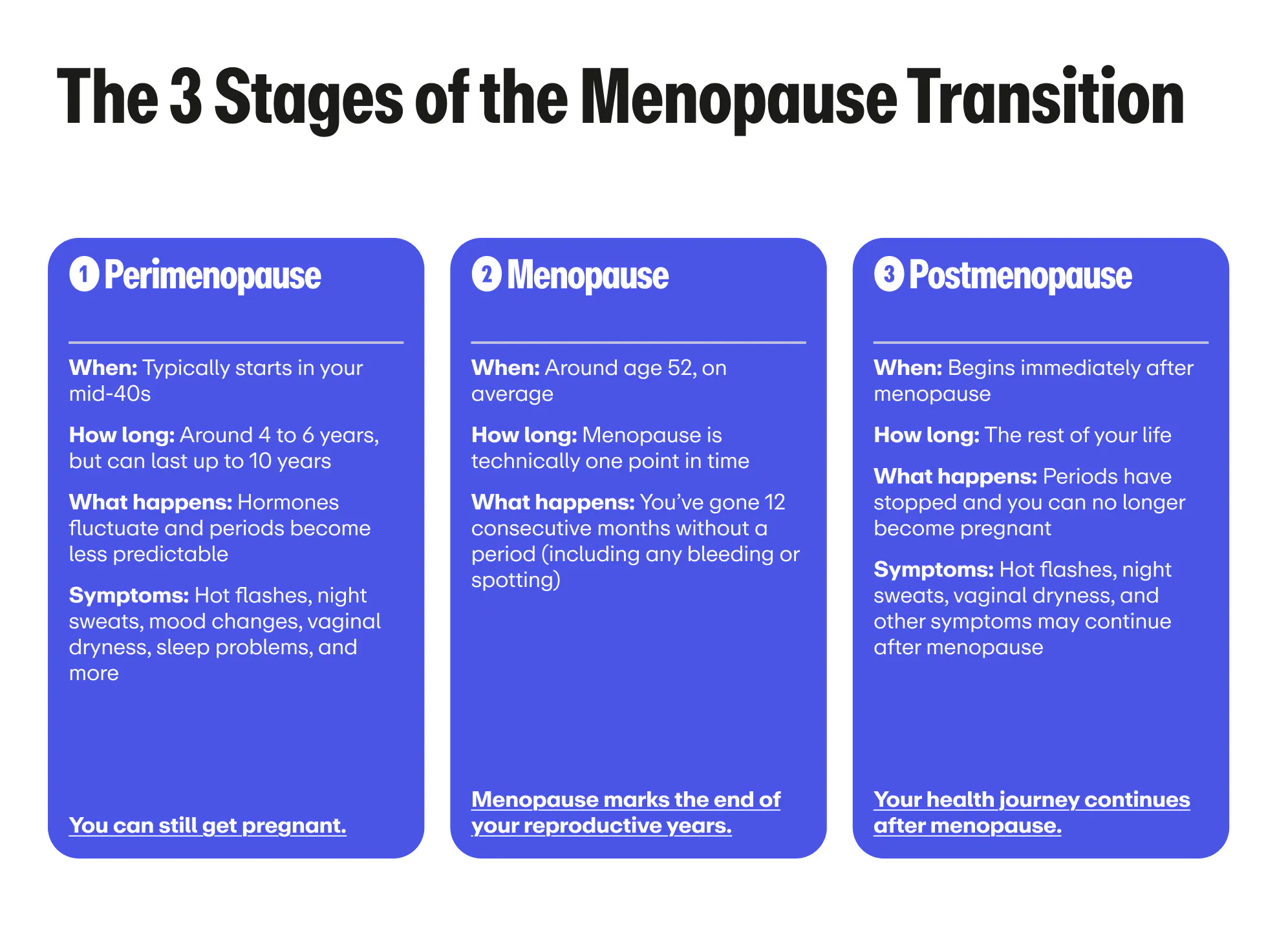
The 3 Stages: Perimenopause, Menopause, and Postmenopause
“Menopause” is the word often used to describe a woman’s entire menopausal transition, including the years leading up to and following menopause itself. But the transition actually has three distinct stages, and the symptoms you experience can vary depending on which stage you're in.
Perimenopause
On average: starts in your mid-40s
When people talk about menopause symptoms, they’re most likely referring to the symptoms that develop during perimenopause. So, what is perimenopause? It’s the years leading up to menopause, when reproductive hormone levels fluctuate and your periods start to change. Perimenopause typically begins in your 40s and can last around 4 to 6 years, though it can be much shorter than that or stretch up to 10 years.
The hormonal fluctuations that start during this time can cause bothersome symptoms, like hot flashes, vaginal dryness, mood shifts, and many others. Changes to your menstrual cycle are often one of the first signs of perimenopause. But even though periods might be irregular and you might skip some altogether, you can still get pregnant during this time.
Perimenopause is sometimes broken down into two stages:
- Early perimenopause: Your menstrual cycles typically start to change and may become shorter.
- Late perimenopause: Your periods become more irregular, with longer gaps between them.
Menopause
On average: occurs around age 52
Again, once you haven’t had a period for 12 consecutive months—including any bleeding or spotting—you’ve reached menopause. The transition from the start of perimenopause to menopause typically takes several years, although the timing varies from person to person.
Postmenopause
Postmenopause begins right after you reach menopause, and you remain in this stage for the rest of your life. You no longer have menstrual periods and can no longer become pregnant naturally. But always talk with your clinician if you notice any vaginal bleeding after menopause, since it can be a sign of a more serious health condition.
Many frustrating menopause symptoms gradually improve during postmenopause, but others, such as hot flashes and vaginal dryness, can continue for years. A menopause-trained clinician, like a Midi clinician, can help you navigate this stage and recommend treatments that offer relief, while also helping you manage health risks that can increase after menopause, including osteoporosis.

What Happens to Your Hormones
You may have heard that shifting estrogen and progesterone levels are to blame for menopause symptoms, and it’s true—but the real picture is a little more complicated. As ovarian function begins to decline during perimenopause, several reproductive hormones go a bit haywire.
As you get closer to menopause, your ovaries have fewer egg-containing follicles and become less responsive to the hormones that control your menstrual cycle. Estrogen levels can swing up and down unpredictably during perimenopause before eventually settling at much lower levels after menopause. And progesterone levels also decline as ovulation becomes less frequent.
Meanwhile, your brain tries to keep your ovaries working by making more follicle-stimulating hormone (FSH). FSH helps control your menstrual cycle and encourages follicles in your ovaries to develop. That’s why FSH levels generally rise as you get closer to menopause, although they can still fluctuate quite a bit during perimenopause.
And these hormone highs and lows don’t affect just your periods or reproductive system. Estrogen receptors are located throughout your body, which is why lower levels of the hormone can cause such a wide variety of menopause symptoms, affecting everything from your mood and sleep to your skin and joints.
Menopause Symptoms: Far More Than Hot Flashes
The menopause transition can vary enormously, and the symptoms that bother one woman may not affect another at all. Symptoms can also change as you move through different stages of the transition. In general, though, these are some of the most common signs of menopause to look out for.
- Vasomotor symptoms: Hot flashes and night sweats are among the most recognizable menopause symptoms, and for good reason. As many as 85% of menopausal women report experiencing these vasomotor symptoms, according to some estimates. Hot flashes can feel like a sudden, intense burst of heat, and triggers like alcohol and spicy foods may make them worse.
- Genitourinary syndrome of menopause (GSM): GSM is a group of symptoms––such as vaginal dryness, painful sex, and recurrent urinary tract infections (UTIs)––that can affect the vagina, vulva, and urinary tract during perimenopause and beyond. Unlike many other menopause symptoms, GSM often persists or worsens after menopause (fortunately, there are care solutions that can help you manage—more on those later).
- Mood and cognitive changes: Remember those estrogen receptors we mentioned? They’re in your brain, too. Hormonal ups and downs can affect mood and cognition, contributing to irritability, low mood, and anxiety. You might also have brain fog, which can make it harder to concentrate or find the right words.
- Trouble sleeping: You may experience sleep problems like trouble falling or staying asleep. Plus, night sweats can disrupt sleep, making it hard to get enough quality rest.
- Skin and hair changes: As estrogen declines, so does collagen production, which can leave your skin drier, thinner, and less firm. You might also notice drier or more brittle hair, along with hair thinning or loss.
- Muscle and joint changes: Muscle aches and joint pain are also common during the menopause transition, and hormonal changes may be at least partly to blame.
And those are just some of the better-known symptoms. There are dozens more that are easy to miss or may not seem connected to menopause at all. Think heart palpitations, tinnitus, dry mouth, itchy skin, frozen shoulder, and even changes in body odor.
True Stories Of Transformation
When Does Menopause Happen?
Just as every woman’s symptom experience is different during the menopause transition, the timing can vary, too. Perimenopause typically begins in your mid-40s, but it’s also normal to enter this stage as early as your late 30s. It lasts around 4 to 6 years, though it can be much shorter or last up to 10 years. The average menopause age in the United States is around 52.
But these are just averages, and it’s very typical to reach menopause anytime between ages 45 and 58. Genetics, smoking, and certain medical treatments can all affect when you reach menopause. Women who smoke, for example, tend to reach menopause 1 to 2 years earlier than women who don’t smoke. And pinpointing the exact timing isn’t always easy, since the age that women reach menopause is often self-reported, a 2026 study found.
Sometimes menopause happens much earlier than the typical range. Early menopause is when menopause occurs between ages 40 and 45. Primary ovarian insufficiency (POI), on the other hand, happens when the ovaries stop functioning normally before age 40. Menopause can also happen suddenly, such as if you have surgery to remove both ovaries.
How Is Menopause Diagnosed?
Most of the time, your clinician can diagnose menopause based on your age and menstrual cycles. Remember: After you’ve gone 12 months without a period—including any bleeding or spotting—and there’s no other cause, you’ve reached menopause.
Sometimes, your clinician might recommend a blood test to check your FSH levels, for example. Blood tests can be tricky, though, because hormone levels can fluctuate widely during perimenopause, so the results might be misleading.
Lab work may be useful if your clinician wants to rule out POI or another condition, like thyroid disease, that might be affecting your periods.
Hormonal birth control can also make it harder to diagnose menopause because it can change or stop your periods and affect hormone test results. If you use hormonal contraception, your clinician can help determine whether testing is useful and how to prepare for it if so.
Why Is Menopause So Often Missed or Dismissed?
Menopause is a natural transition, but far too often, women don’t get the support and treatment options they need to feel better during this stage of life. Symptoms like fatigue, mood changes, trouble sleeping, and brain fog can overlap with other health conditions or simply be chalked up to stress or aging.
Another challenge is that many clinicians don’t get enough training in menopause care. In a 2023 survey of obstetrics and gynecology residency program directors, only 31% of respondents reported having a menopause curriculum in their program.
Unfortunately, it’s not always easy for women to bring up menopause symptoms with their clinicians. Symptoms like vaginal dryness and painful sex can be especially uncomfortable to talk about, and roughly 70% of women with GSM symptoms don’t mention them to a clinician.
Other times, women do bring up their symptoms but still don’t receive the support or treatment they need. A 2024 study published by The Menopause Society found that even though 60% of women had documented vasomotor symptoms in primary care clinic notes, only 23% had them listed in their electronic health records. Treatment was also uncommon: About 15% had been prescribed non-hormonal treatments, and only 6% had been prescribed systemic hormone therapy for hot flashes.
Working with a menopause-trained clinician can make all the difference during these transitional years. Midi clinicians are trained in women’s health and understand the many ways menopause can show up, so they can help you make sense of your symptoms, rule out other possible causes, and find treatment options that help you feel like yourself again.

Treatment Options: What Actually Helps
Not every menopause symptom needs treatment, but if yours are bothering you or taking a toll on your well-being, you have options. Treatment can help with everything from hot flashes and night sweats to vaginal dryness and pain during sex, and the right approach depends on your symptoms, overall health, and preferences. Here are a few care solutions to know.
Hormone therapy
Hormone replacement therapy (HRT, now commonly referred to as menopause hormone therapy, or MHT) is the most effective treatment for hot flashes, night sweats, and vaginal and urinary menopause symptoms. It works by supplementing hormones, primarily estrogen, that decline during the menopause transition.
There are two types of HRT:
- Systemic HRT: This type circulates throughout your bloodstream to treat body-wide symptoms like hot flashes and night sweats. Estrogen comes in forms such as pills, patches, gels, and sprays. If you have a uterus, you’ll generally also need progesterone or a progestin to protect the uterine lining.
- Local HRT: Low-dose vaginal estrogen works in and around the vagina to ease GSM symptoms like vaginal dryness, irritation, and painful sex. It's available as a cream, tablet, or ring, with minimal absorption into the bloodstream.
The conversation around hormone therapy has shifted in recent years. In February 2026, the FDA approved major labeling changes for six hormone therapy products, including systemic and local vaginal treatments. The changes removed boxed warnings about cardiovascular disease, breast cancer, and probable dementia. Leading organizations, including the American College of Obstetricians and Gynecologists, The Menopause Society, and the American Urological Association, supported the move.
That said, no medical treatment is without risks, and HRT isn’t right for everyone. So talk with your clinician about the potential benefits and risks for you. If hormone therapy isn’t a good fit—or you simply prefer not to use it—there are other effective options.
Non-hormonal medications
Several non-hormonal prescriptions can help manage hot flashes and night sweats. Depending on your symptoms and health history, your clinician might recommend:
- non-hormonal medications specifically approved to treat moderate to severe hot flashes and night sweats, including fezolinetant (Veozah) and elinzanetant (Lynkuet)
- certain antidepressants, including some SSRIs and SNRIs, which can help reduce hot flashes even when the medications are not being used to treat depression
- gabapentin, a medication that can cause mild sedation and might be helpful if vasomotor symptoms disrupt your sleep
- oxybutynin, an overactive bladder medication that can also help reduce hot flashes and may be a good option if you’re also dealing with urinary urgency
Lifestyle changes, supplements, and over-the-counter options
Lifestyle strategies and other over-the-counter products won’t replace prescription treatment when you need it, but they can help manage some symptoms and support your overall health during and after the menopause transition.
Options include:
- Exercise: Aim to get regular exercise, including weekly cardio and strength training to keep your bones, muscles, and heart in good shape.
- Diet: Try to stick to a balanced diet, with enough protein to help maintain muscle mass and support your overall health.
- Sleep: Prioritize healthy sleep habits, like getting 7 to 9 hours of sleep every night and limiting alcohol, especially if it triggers hot flashes or disrupts your sleep.
- Stress management: Find healthy ways to de-stress, like yoga, deep-breathing exercises, or meditation.
- Vaginal care: Use vaginal moisturizers regularly for dryness and lubricants as needed to ease friction and discomfort during sex.
- Supplements: You could try a targeted supplement to ease your symptoms, but make sure to get your clinician’s OK first, since evidence varies widely and some supplements can interact with medications.
You might also consider cognitive behavioral therapy or clinical hypnosis, which are research-backed options that can help make hot flashes less bothersome.
Health After Menopause: What to Pay Attention To
Once you’ve reached menopause, you enter postmenopause, the stage that lasts for the rest of your life. At this time, you can no longer become pregnant naturally.
Some important areas of your health to keep an eye on during postmenopause include:
- Your bones: Bone loss speeds up during the menopause transition and the years just after menopause as estrogen levels decline, increasing your risk of osteoporosis over time. In fact, women can lose up to 20% of their bone density during the transition. Getting enough calcium and vitamin D, along with regular weight-bearing and strength exercise, can help protect your bones. Hormone therapy can also help prevent bone loss in some women.
- Your heart: The risk of cardiovascular disease increases with age, and shifts that happen around menopause can contribute. As estrogen declines, LDL (“bad”) cholesterol may rise, and other changes, like increases in blood pressure, can affect your heart health. Regular cholesterol and blood pressure checks can help your clinician keep an eye on your cardiovascular health and address any risk factors early.
- Your metabolism and body composition: Aging is a major driver of changes in metabolism and body composition, but menopause can play a role, too. You might notice more weight around your midsection, weight that’s harder to lose, or less muscle mass over time. That’s why healthy eating and regular physical activity are especially important.
- Your brain: Getting enough quality sleep can support your cognitive function as you age. A 2021 study found that people who regularly slept 6 hours or less in their 50s and 60s had a higher risk of dementia later in life, although this doesn’t prove that short sleep causes dementia.
- Ongoing menopause symptoms: Your periods stop after menopause, but hot flashes can continue into postmenopause, lasting up to 14 years for some women. GSM symptoms, such as vaginal dryness, pain during sex, and frequent UTIs, can also persist or worsen without treatment.
Preventive care matters, too. Keep up with routine health screenings, such as mammograms, blood pressure and cholesterol checks, and bone-density screening when recommended based on your age or risk factors.
The bottom line: You don’t have to simply “ride out” ongoing menopause symptoms, and getting older doesn’t mean you’re powerless over your health. Treatments can help you feel better, while regular preventive care and healthy habits can protect your long-term health. A menopause specialist, like one of the clinicians at Midi, can help you navigate both.
Key Takeaways
- What is menopause, exactly? Menopause is the moment in time when you haven’t had a period at all in the previous 12 months. Once you’re in menopause, you can no longer become pregnant, so your reproductive years are behind you.
- People often use the word “menopause” to talk about the larger menopause transition, which includes perimenopause—the years leading up to menopause, when hormone levels start to fluctuate—as well as postmenopause, the years after menopause.
- You can experience a wide range of symptoms during the menopause transition, including hot flashes and night sweats, vaginal dryness, urinary urgency, pain during sex, fatigue, insomnia, mood changes, and much more. One of the most common signs of menopause is irregular periods, which can start to become less predictable early on in perimenopause.
- Menopause is too often dismissed by clinicians, who may not have up-to-date information on how to address the symptoms. Other times, women may not feel comfortable speaking to their healthcare professional about what they’re going through. But help for menopause symptoms is available.
- There are plenty of ways to manage menopause symptoms. Hormone therapy is the most effective treatment for hot flashes and night sweats, while non-hormonal medications, lifestyle changes, and over-the-counter options can help, too.
- Your health still deserves attention after menopause. Healthy habits and routine preventive care can help protect your bone, heart, brain, and metabolic health for the years ahead.
Frequently Asked Questions (FAQs)
What does menopause do to a woman?
Menopause marks the end of your menstrual periods and reproductive years, so you can no longer become pregnant. Estrogen levels are also much lower after menopause, which can contribute to ongoing symptoms and health concerns, like hot flashes, vaginal dryness, and osteoporosis.
What is menopause in a short answer?
Menopause is the moment in time when you haven’t had a menstrual period at all during the past 12 months and can no longer become pregnant. On average, this happens around age 52.
Can a woman with menopause get pregnant?
Once you reach menopause—meaning you haven’t had a menstrual period for 12 consecutive months, including any bleeding or spotting—you typically can no longer become pregnant naturally. But you can still conceive during perimenopause, the years before menopause officially happens.
What are the 7 signs of menopause?
There isn’t one official list of seven signs of menopause, and symptoms can vary widely. Common signs include irregular periods, hot flashes, night sweats, sleep problems, mood changes, vaginal dryness, and brain fog.
How do I know if I’m in menopause?
You’ll know you’re in menopause once you haven’t had a period at all in the past 12 months, including any bleeding or spotting. Your clinician may also recommend blood tests in some cases, though they aren’t usually necessary to diagnose menopause.
If you’re in perimenopause or menopause and want guidance from clinicians who specialize in women’s midlife health, book a virtual visit with Midi today.
Hormonal change is at the root of dozens of symptoms women experience in the years before and after their period stops.
Our trained menopause specialists can help you connect the dots to guide you towards safe, effective solutions.
Whether you need personalized guidance or a prescription routine to tackle symptoms—including brain fog, hot flashes, sleep trouble, mood swings, and weight gain—we’ve got you covered. Learn more here.
Midi’s mission is to revolutionize healthcare for women at midlife, wherever they live and whatever their health story. We believe that starts with education, to help all of us understand our always-changing bodies and health needs. Our core values guide everything we do, including standards that ensure the quality and trustworthiness of our content and editorial processes. We’re committed to providing information that is up-to-date, accurate, and relies on evidence-based research and peer-reviewed journals. For more details on our editorial process, see here.