


When you have achy knees or painful joints, you want to find the best joint supplement—like, yesterday. But there's a lot of information to contend with online, some of which may steer you in the wrong direction. Learning which ingredients have research behind them and how supplements might fit into your routine can help you figure out what might actually ease your joint pain and stiffness. At Midi Health, clinicians who specialize in midlife women's health can help you understand what's behind your joint pain and find the right treatment approach for you.
One of my favorite things about aging as a woman in perimenopause (hint: sarcasm ahead) is how my knees pop and crunch as I walk up the stairs. Those sounds sometimes come with aches and stiffness, too.
It’s easy to understand why countless women are on the hunt for the best joint supplement. While there is no single best joint supplement for women, some ingredients have more research behind them than others. Knowing which ones may actually help can make it easier to sort through the endless options on store shelves and online.
But choosing a joint health supplement isn't just about finding the right ingredients. It's also about knowing what to expect, how long results might take, and whether a supplement is safe for you.
Supplements are no substitute for diagnosis or treatment, but they may offer some relief as part of a care plan guided by a menopause-informed clinician like one at Midi.
What Is the Best Joint Supplement? The Short Answer
The best supplement for joint pain isn't necessarily a specific brand. It's one with research showing that it may help ease pain, reduce inflammation, or improve joint mobility.
A healthcare professional may recommend these joint supplements, depending on your symptoms and health history. Not all of these are right for you—and there’s little reason to take them all. But this list offers a good starting point for understanding your options:
- Hydrolyzed collagen peptides: Collagen helps provide structure and support to your joints. Hydrolyzed collagen supplements contain collagen that's been broken down into smaller peptides, making it easier for your body to absorb.
- Curcumin (turmeric extract): Curcumin is the bright yellow, anti-inflammatory compound found in turmeric, a root and spice.
- Boswellia serrata: Also known as Indian frankincense, boswellia is an herbal extract with anti-inflammatory properties.
- Vitamin D3: Vitamin D3 is one form of vitamin D that helps your body absorb calcium and maintain healthy bones and muscles. Research hasn't consistently shown that it eases joint pain, so it matters most if you're low in vitamin D.
In certain scenarios, your healthcare professional may also recommend topical capsaicin. Capsaicin is the compound that makes chili peppers hot. Unlike the other options on this list, it's a cream or gel you apply to the skin, not a supplement.
How Joint Supplements Are Ranked
Here are four main factors to consider when evaluating joint health supplements:
- Level of evidence: Look for supplements backed by human research, especially randomized controlled trials (which compare randomly assigned groups) and meta-analyses (which combine findings from multiple studies). Consistent results across several studies are more convincing than findings from a single small study.
- Measurable impact: Ideally, trials should show that a supplement reduces inflammation or improves other markers related to joint health.
- Real-life benefits: It’s one thing to see a reduction in markers in blood testing, but it’s another for the supplement to actually improve how you move and feel day to day. Look for evidence of improvements in joint pain, stiffness, or function.
- Manufacturing quality and purity: This is brand- and product-specific, but it's a good idea to choose supplements that have undergone independent third-party testing. This helps confirm that the supplement contains what the label says and has been checked for harmful contaminants.
Professional guidelines, including those from the American College of Rheumatology, are still cautious about several joint supplements marketed for osteoarthritis (OA) because the research is often limited or mixed. That's why it's important to focus on the evidence behind each ingredient, rather than brand names, marketing claims, or paid rankings.
Which Joint Supplements Have the Strongest Evidence?
Not all supplements and herbs for joint health are backed by the same level of research. These options show promise for easing pain and stiffness or improving mobility, though the evidence is stronger for some than others.
Curcumin (turmeric extract)
Curcumin supplementation has been shown to help relieve muscle soreness after exercise and reduce signs of muscle damage. It may also help with OA pain, stiffness, and joint function. Some curcumin supplements contain additional ingredients, like black pepper extract, to help boost absorption.
Doses studied: 500 to 2,000 milligrams (mg) per day, with 500 mg twice a day being a commonly studied amount—though dosage varies widely by type
May be a fit if: You want extra relief from OA pain and stiffness or post-workout muscle aches.
Talk with a clinician first if: You take blood thinners or have liver or gallbladder problems.
Boswellia serrata
Also known as Indian frankincense, Boswellia is an herbal extract with anti-inflammatory properties. Research suggests that it may help take the edge off OA pain and stiffness and improve joint function. But results may vary depending on the type and strength of the extract, so look for standardized extracts that clearly identify the active compounds.
Doses studied: At least 100 to 250 mg per day for 4 weeks for certain standardized extracts
May be a fit if: You're exploring herbal options for OA symptom relief.
Talk with a clinician first if: You're pregnant, breastfeeding, or taking medications regularly.
Hydrolyzed collagen
Collagen supplements may help with joint pain and inflammation. A review of 11 trials found that collagen peptides may ease pain from knee OA, a condition involving the gradual breakdown of joint cartilage, and improve joint function. One clinical trial also found that collagen supplementation reduced C-reactive protein, a marker of inflammation, but more research is needed to know whether this benefit holds up.
Doses studied: 5 to 15 grams (g) per day
May be a fit if: You're looking for extra support for knee OA symptoms.
Talk with a clinician first if: You have allergies to collagen sources, such as fish or shellfish.
Do Glucosamine and Chondroitin Really Work?
Glucosamine and chondroitin are commonly found together in joint supplements. Both occur naturally in cartilage, which cushions your joints. That led to hopes that taking them could protect cartilage and ease joint pain and stiffness. But does the research back that up?
Some people might find these supplements helpful. In a meta-analysis involving about 3,800 people with knee OA, the combination supplement was linked to self-reported improvements in pain, stiffness, and physical function, compared with a placebo. That said, the researchers noted that more high-quality trials are needed to draw firm conclusions.
Results may also depend on the form of glucosamine used, since glucosamine sulfate and glucosamine hydrochloride aren't interchangeable. Overall, research on glucosamine and chondroitin has been too inconsistent to say for sure whether these supplements help, according to the National Center for Complementary and Integrative Health.
The American College of Rheumatology's 2026 guidelines also recommend against using glucosamine and chondroitin for OA.
If you're considering these supplements, check with your clinician first. Glucosamine and chondroitin can interact with warfarin, glucosamine may affect blood sugar, and some products contain ingredients derived from shellfish.

Collagen, MSM, and Vitamin D: What the Research Shows
As mentioned earlier, collagen helps keep cartilage and other joint tissues strong and flexible, but changes in collagen over time may contribute to joint problems. While hydrolyzed collagen peptides might improve joint comfort, it’s best to think of them as one part of your joint care routine, not a replacement for other treatments. Hydrolyzed collagen is broken down into smaller peptides, while undenatured type II collagen keeps its original structure. Both have been studied for joint symptoms, but they're not interchangeable.
MSM (methylsulfonylmethane) is available by itself or in joint supplement blends. It's thought to reduce inflammation and oxidative stress, and some studies suggest that it may ease joint pain and improve mobility. But human research is limited, and most trials have been small and short term. Because MSM is often combined with other ingredients, it's also hard to know how much benefit comes from MSM alone.
Vitamin D is essential for healthy bones and muscles, and vitamin D3 is a common supplement form. But research hasn't consistently shown that supplements relieve OA pain or prevent cartilage loss. Correcting a deficiency is important, but taking more vitamin D than you need isn't necessarily better.
You might also see ingredients like S-Adenosyl-L-Methionine (SAMe), hyaluronic acid, and avocado-soybean unsaponifiables (ASU) in joint supplements. Some may help with OA symptoms, but the evidence is mixed, and none has been proven to rebuild damaged cartilage.
What Is the Best Joint Supplement for Knees?
If you're looking for the best joint supplement for knees, there's no single winner. But some ingredients have shown promise for knee OA pain and stiffness. Depending on your symptoms and health history, healthcare professionals may suggest considering options such as:
- Topical capsaicin: a cream or gel (not a supplement) that the American College of Rheumatology conditionally recommends for knee OA
- Curcumin extract: has anti-inflammatory properties and may help relieve knee OA symptoms
- Boswellia serrata: standardized extracts may help ease pain and stiffness
- Hydrolyzed collagen: may help reduce knee pain and improve joint function
These options aren't a substitute for treatments with stronger evidence, like strengthening exercises, physical therapy, and weight management when appropriate. And if your knee pain comes with significant swelling, locking, or instability or if it starts after an injury, check in with a clinician to find out what's going on.
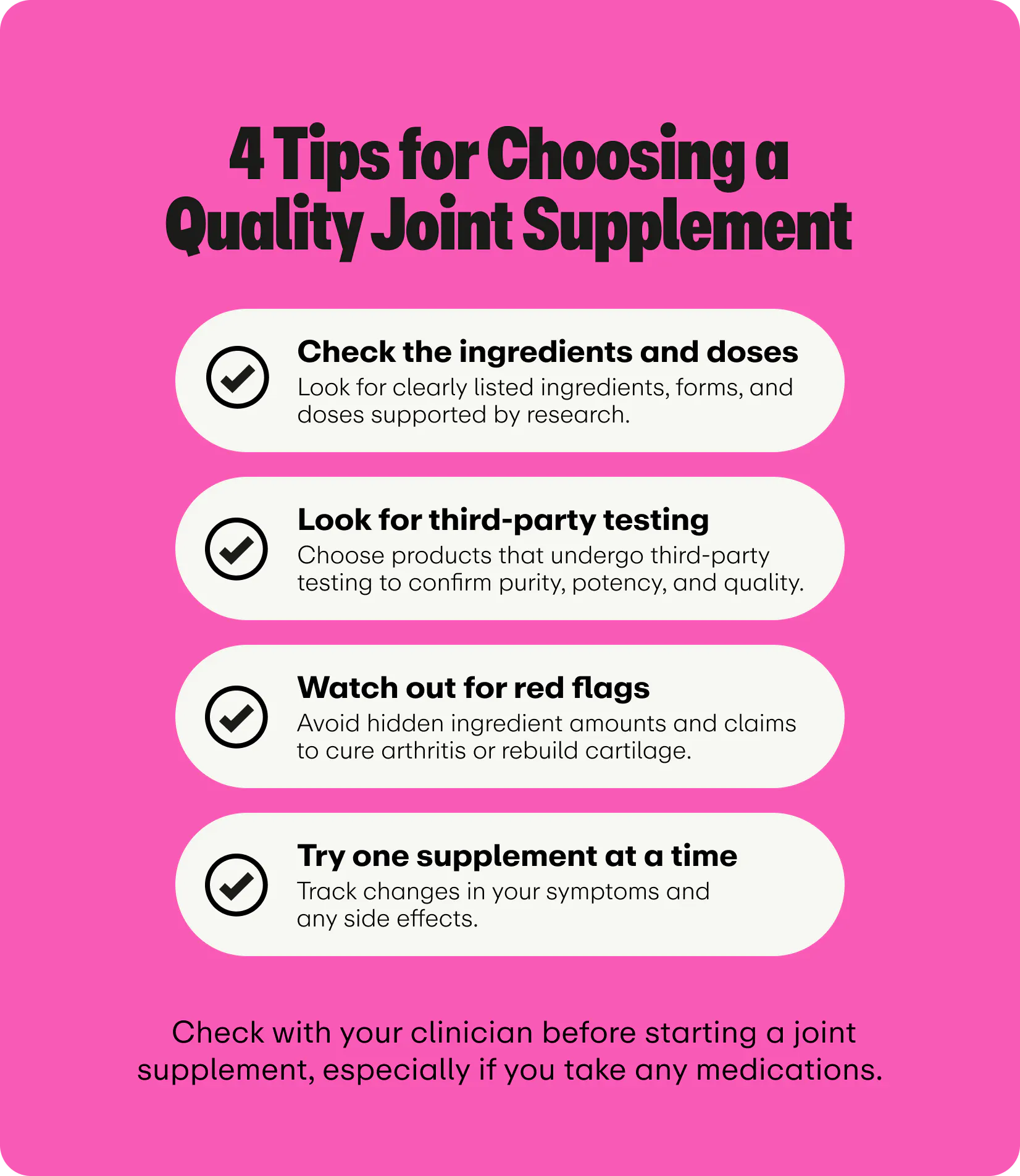
How to Choose a Quality Joint Supplement
Choosing the best joint supplement can feel like a minefield. And few of us have the time or patience—especially during this stage of life—to compare every product on the shelf. But doing your research can help you make a safer choice. Here's what to look for:
- Check the ingredients and doses: The label should tell you what's in the supplement, including the form and amount of each ingredient. Look for clearly identified forms, such as curcumin phytosome or hydrolyzed collagen peptides, and compare the ingredients and doses with those studied in research.
- Look for third-party testing: The FDA regulates supplements but doesn't approve them for safety or effectiveness before they're sold. Look for third-party seals to help confirm product quality and label accuracy.
- Watch out for red flags: Be cautious of proprietary blends that hide ingredient amounts, products with tiny doses of multiple ingredients, and claims to cure arthritis or rebuild cartilage.
- Try one supplement at a time: Starting one supplement at a time makes it easier to track your response, tolerance, and potential side effects, so you and your clinician can adjust your routine if needed.
Are Joint Supplements Safe? Side Effects and Interactions
As a whole category, it’s tough to call all joint supplements safe. “Natural” doesn’t automatically mean risk-free, and even popular options like collagen can have side effects or interact with medications.
Common side effects include stomach upset, nausea, and diarrhea. Some ingredients also come with specific risks:
- Blood thinners: Glucosamine alone or with chondroitin, as well as curcumin, may interact with blood thinners like warfarin.
- Diabetes medications: Glucosamine can affect blood sugar, so extra monitoring may be needed while taking supplements.
- Allergies: Some glucosamine supplements come from shellfish.
- Too much vitamin D: High doses of vitamin D can cause calcium to build up in your blood, potentially leading to kidney problems.
- Other health conditions: Certain supplements may also require extra caution if you have liver, kidney, or gallbladder problems or are planning surgery.
Before trying any joint supplement, check with your clinician or pharmacist. Share your full medication and supplement list so they can flag potential interactions, recommend an appropriate dose, and help you set realistic expectations.
How Long Do Joint Supplements Take to Work?
Like most things when it comes to your health, joint supplements aren't an overnight fix. And even when they help, results can vary depending on the ingredient, dose, and what's causing your joint pain.
Some women may notice improvements in joint comfort within a few weeks, but many studies assess pain relief and joint function after 8 to 12 weeks or longer. Consistent use matters, but there's no guarantee that a supplement will work for you.
Before starting, make a note of your pain, stiffness, and how easily you can move. Then track any changes over time. If you don't notice a benefit after 8 to 12 weeks (or the time frame recommended by your clinician), check in with them about whether it's worth continuing. Stop taking the supplement and seek medical advice if you have side effects or worsening symptoms.
Remember, if you take joint supplements, they should be part of a broader joint care plan that includes regular movement, strength training, good sleep habits, and a balanced diet.
Why Joint Pain Often Shows Up in Midlife
If you’re a midlife woman, your joints are in good company: One meta-analysis covering nearly 500,000 middle-aged women found that joint and muscle discomfort affected about 65% of them, making it one of the most commonly reported symptoms.
There are many reasons for the joint aches, pains, and Tin Man–level stiffness in midlife. For one, estrogen helps support joint tissues and regulate inflammation. As estrogen levels decline during menopause, changes in cartilage and other joint tissues may leave joints feeling sore and less flexible.
In addition, muscle mass naturally declines with age, and that decline can speed up during menopause. Because muscles help support and stabilize your joints, losing muscle can put extra strain on them. Wear and tear on your joints over the years also plays a role.

When to See a Clinician About Joint Pain
Even if joint pain is common in midlife, it doesn't mean you should try to manage it with supplements alone. Sometimes, joint pain can signal other concerns that need medical attention.
Reach out to a clinician if you have:
- a joint that is red, hot, or visibly swollen or morning stiffness lasting more than an hour
- joint pain that comes with a fever or shows up after an injury
- deep, localized bone pain rather than joint pain
- pain that makes it hard to walk, sleep, exercise, or do other daily activities
A suddenly hot, swollen joint, especially with fever, needs urgent medical attention.
These symptoms can point to conditions such as inflammatory arthritis, an injury, or a bone problem that supplements won't address. Talking with your clinician about where you feel pain, how severe it is, how long it lasts, and how it affects your daily life can help them determine whether you need further testing or treatment.
Not sure what's behind your joint pain? A menopause-informed clinician, like the ones at Midi, can help evaluate your symptoms and recommend appropriate next steps, including treatments beyond supplements and referrals to specialists when necessary.
Key Takeaways
- There is no single best joint supplement for women. Some ingredients have more promising research behind them than others, including topical capsaicin, curcumin, boswellia, and hydrolyzed collagen, but results can vary.
- A quality joint health supplement should have research supporting its benefits, clearly listed ingredients and doses, and independent third-party testing to help verify product quality.
- Joint supplements aren't a quick fix. Some women may notice improvements within a few weeks, but it can take 8 to 12 weeks or longer to figure out whether a supplement is helping.
- Hormonal changes in midlife can make you more vulnerable to joint pain and stiffness. A menopause-trained clinician can help you find the right combination of treatments, which may include exercise, physical therapy, medications, or supplements.
- “Natural” doesn't always mean safe. Joint supplements can cause side effects or interact with medications, so check with your clinician before trying one.
Frequently Asked Questions (FAQs)
What can I take to lubricate my knee joints?
A supplement won't directly lubricate your knee joints, but options like curcumin, boswellia, and hydrolyzed collagen peptides may help ease joint discomfort and stiffness. Regular movement can also help circulate the fluid that naturally lubricates your joints.
What vitamins are you lacking if your joints are hurting?
Vitamin D deficiency has been linked to joint pain, but joint pain doesn't necessarily mean you're deficient in a vitamin. There are many possible causes, so talk with your clinician about whether testing for a deficiency makes sense, based on your symptoms and health history.
Can calcium supplements cause joint pain?
Joint pain isn’t a common side effect of calcium supplements. But taking too much calcium, especially from supplements, can increase the risk of kidney stones and other health problems.
If you’re in perimenopause or menopause and want guidance from clinicians who specialize in women’s midlife health, book a virtual visit with Midi today.
Hormonal change is at the root of dozens of symptoms women experience in the years before and after their period stops.
Our trained menopause specialists can help you connect the dots to guide you towards safe, effective solutions.
Whether you need personalized guidance or a prescription routine to tackle symptoms—including vaginal dryness and irritation, brain fog, hot flashes, sleep trouble, mood swings, and weight gain—we’ve got you covered.
Midi’s mission is to revolutionize healthcare for women at midlife, wherever they live and whatever their health story. We believe that starts with education, to help all of us understand our always-changing bodies and health needs. Our core values guide everything we do, including standards that ensure the quality and trustworthiness of our content and editorial processes. We’re committed to providing information that is up-to-date, accurate, and relies on evidence-based research and peer-reviewed journals. For more details on our editorial process, see here.