


If you’ve been feeling lightheaded lately or like the room is spinning, you might be wondering: “Can perimenopause cause dizziness?” Though dizziness and vertigo may not be what you imagine when you think of perimenopause symptoms, they can indeed affect women during midlife. Yet they can have a bunch of other potential causes, too, such as anemia, low blood sugar, or changes in blood pressure. So, read on to find out more about perimenopause dizziness, why it may be linked to hormones, what to do when it hits, and how a clinician (such as one at Midi Health) can help you come up with a tailored plan to address any menopause symptoms you’re experiencing.
Can perimenopause cause dizziness? If you’ve lately been lightheaded and a bit topsy-turvy, you may be wondering whether dizziness can be triggered by those same perimenopause hormonal shifts that cause symptoms like hot flashes and night sweats.
Dizziness may be unexpected during perimenopause, but it’s not uncommon for women in this life stage to report feeling lightheaded from time to time. Vertigo, the sensation that the room is spinning, is also common in midlife. Perimenopause may play a role in both, but it’s rarely the whole story.
Perimenopause dizziness also isn’t an official medical condition or formal diagnosis. It’s what clinicians call a diagnosis of exclusion, meaning other causes—such as anemia, blood pressure problems, thyroid issues, inner ear conditions, cardiovascular conditions, and neurologic disorders—should be ruled out first.
Read on for more about perimenopause dizziness, including what exactly brings it on, treatments and natural remedies that may reduce this sensation, and how a menopause-informed clinician (like one at Midi) can help you deal with this and other disruptive midlife symptoms.
Can Perimenopause Cause Dizziness?
Yes, dizziness is a recognized—though under-discussed—perimenopause symptom. Women may occasionally feel lightheaded or woozy during the menopause transition, likely driven in part by fluctuating and declining estrogen's effects on the inner ear, balance-related brain pathways, and blood pressure regulation—but frequently compounded by related midlife factors like anxiety, heavy periods, poor sleep, and medication side effects.
A 2018 study of Japanese women ages 40 to 65 illustrates how common this feeling may be in midlife: Nearly 36% of participants dealt with dizziness. Those women reported feeling dizzy at least once per week, though some were more likely to experience this symptom, including women who were younger, had a higher body weight and body fat percentage, had higher systolic blood pressure, and exercised less regularly. Dizziness was also strongly associated with anxiety symptoms.
But while dizziness can be triggered by menopausal hormonal shifts, this symptom is often multifactorial, says Midi physician Heather Hofflich, DO. “In perimenopausal women, menopause would be part of my differential diagnosis, but I would also be looking for other causes, like vertigo, vestibular migraines, and anxiety,” she says.
What Does Perimenopause Dizziness (or Dizziness During Perimenopause) Actually Feel Like?
The term “dizziness” is often used to describe a general off-kilter, head-rush feeling, but this description can be vague. And since it may overlap closely with other symptoms, it helps to take a closer look at the specific dizziness symptoms you are experiencing. That can help to understand what the cause is—and how perimenopause may be playing a role.
Some definitions to know include:
- Dizziness (lightheadedness): You might feel lightheaded, unsteady, off-balance, or woozy. It may feel like you’re going to fall down—but it doesn’t feel like the room itself is spinning. Common causes include drops in blood pressure (especially when you stand up), dehydration, low blood sugar, anemia, and certain medications.
- Vertigo: If you have vertigo, you’ll experience the sensation of true movement in your surroundings or a spinning sensation. Vertigo and menopause may go hand in hand, and some research has suggested that declining estrogen levels during menopause may make women more susceptible. Still, vertigo has many causes, including inner ear conditions and vestibular migraine. Midlife women may also have higher rates (than men) of a specific type of vertigo called benign paroxysmal positional vertigo (BPPV), which may be linked to hormone decline.
- Brain fog: This is a common menopause symptom. If you have brain fog, you may have episodes where you feel forgetful, distracted, and mentally sluggish.
- Disequilibrium: Though similar to dizziness, this term encompasses general balance problems that you can develop as you get older. You may feel dizzy, off-balance, and unsteady when you walk.
Talk about your symptoms with your clinician, including whether you’ve noticed any patterns in when or how often you experience feeling dizzy during perimenopause. Does it occur when you’re standing up, for example, or when you’re lying down? Do you get the sensation that the room itself is spinning, or do you have more of a general woozy feeling? Your clinician can help you figure out the underlying cause and whether it’s related to perimenopause or something else.

Why Hormone Changes Affect Balance
More research is needed to determine the exact mechanisms that cause perimenopause dizziness, though experts have proposed different theories and reasons why it might happen, including:
- Declining levels of estrogen could affect tiny calcium carbonate crystals in the inner ear that help your brain detect gravity and changes in head position, contributing to your sense of balance.
- Estrogen also impacts neurotransmitter systems in the brain, and it’s possible that perimenopause-triggered shifts may affect the neural pathways involved in balance.
- Hormonal changes may affect blood flow to the tiny vessels in the inner ear or disrupt how balance signals are sent between the inner ear and brain.
Other Perimenopause Factors That Can Cause Dizziness
Hormone fluctuations may be one piece of the puzzle when it comes to dizziness during perimenopause. But women may experience dizziness during midlife for a number of other reasons, including:
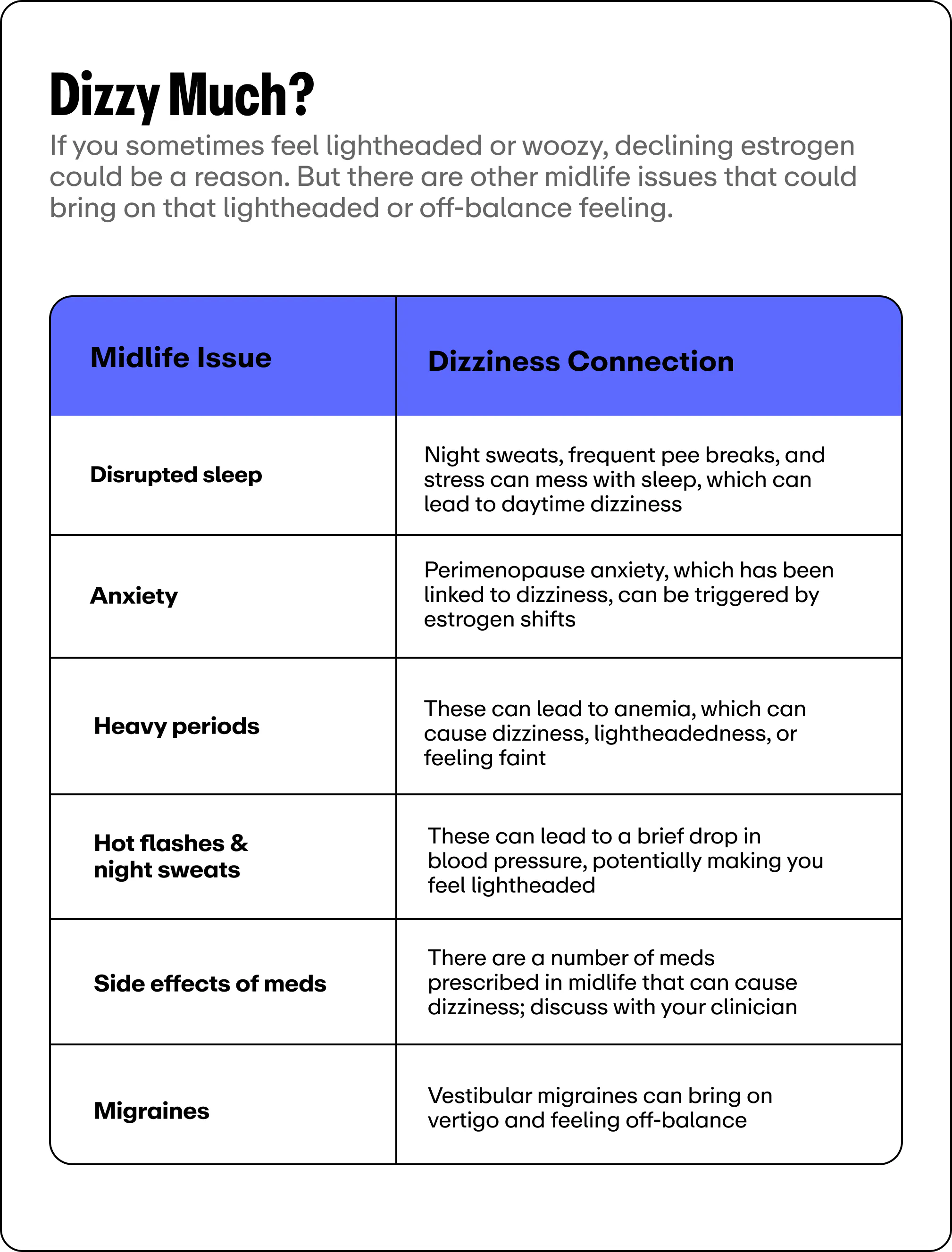
- Anxiety: Perimenopause anxiety is common; it may be triggered by estrogen shifts, which in turn may increase the number of dizzy episodes that women experience. For example, the 2018 study of Japanese women mentioned earlier found that dizziness during perimenopause was closely linked to anxiety.
- Heavy menstrual bleeding: If you’ve been experiencing abnormally heavy periods, called menorrhagia, you might develop iron deficiency or anemia, which can cause dizziness. Menorrhagia can be more common as you’re approaching menopause.
- Hot flashes and night sweats: During a hot flash, blood vessels near the surface of the skin widen to release heat. This can cause a brief drop in blood pressure, which is one reason some women feel lightheaded during or right after a hot flash.
- Medication side effects: Many medications that you might be prescribed in midlife can have dizziness as a possible side effect, including SSRIs and SNRIs, gabapentin, spironolactone, and the low-libido medication flibanserin (Addyi).
- Migraine: A type of migraine called vestibular migraine can be accompanied by symptoms like vertigo, imbalance, and nausea in addition to a pounding headache. Women are more likely to experience this form of migraine, especially around the time of menstruation.
- Poor sleep: Many women struggle to get enough high-quality sleep during perimenopause and postmenopause, too. Menopause insomnia may be worsened by night sweats, stress, and the need to get up more frequently to pee, and some women might experience dizziness during the day if they’re often dealing with poor sleep at night.
What Else Could Be Causing It? What to Rule Out
Certain underlying health issues may also cause you to feel dizzy, so your clinician may want to look into these possibilities when assessing your dizziness during perimenopause. They can include:
- Metabolic issues, such as hypoglycemia (very low blood sugar) or dehydration, can cause you to feel shaky, dizzy, and lightheaded, among other symptoms.
- Blood pressure changes are very common and can lead to dizziness. Same goes with high blood pressure, low blood pressure, and changes in blood pressure when you stand up.
- Thyroid dysfunction, such as hypothyroidism and hyperthyroidism (more common among women, especially after age 60), can cause dizziness, though that isn’t a key symptom.
- Inner ear conditions, such as BPPV, vestibular neuritis, and Meniere's disease, can cause balance issues, vertigo, and dizziness.
- Neurologic disorders, such as multiple sclerosis, myasthenia gravis, or Parkinson’s disease, could cause neurological symptoms that may include dizziness and lightheadedness.
- Heart conditions, including heart rhythm and heart valve problems, can reduce blood flow to the brain and bring on dizziness or lightheadedness.
When Should Dizziness Be Checked Urgently?
Seek emergency care if you experience any red flag signs, such as dizziness or vertigo along with:
- a severe headache or chest pain
- a rapid, irregular heartbeat
- trouble breathing, fainting, or seizures
- disorientation or severe anxiety
- numbness in your arms or legs, loss of movement, stumbling, or facial weakness
- double vision or changes in your hearing
- slurred speech or confusion
- signs of hypoglycemia or dehydration, such as dizziness and fainting, particularly if you’re taking GLP-1 weight loss medications
How to Stop Hormonal Dizziness (If Signs Point to It)
Trying natural remedies for dizziness during menopause most likely isn’t an option if you have an underlying health condition, such as anemia or a thyroid issue. But if you’re wondering how to stop hormonal dizziness, these strategies may help prevent that lightheaded feeling:
- Make sure you’re drinking plenty of water, since it’s possible to become dizzy from dehydration.
- Eat in a healthy, balanced way, getting plenty of protein and consuming regular meals to avoid blood sugar dips that may trigger dizzy spells.
- Prioritize getting good sleep, and ask your clinician about treatment options if menopause insomnia is making it difficult to get enough high-quality Zzzzs.
And when that whirly feeling hits, it’s best to lie down until the dizzy feeling passes, then get back up slowly.
What Success Looks and Feels Like
Can Hormone Therapy Help Perimenopause Dizziness?
Hormone replacement therapy (HRT, now commonly referred to as menopause hormone therapy, or MHT) isn’t prescribed for dizziness during perimenopause—its superpower is treating vasomotor symptoms, such as hot flashes and night sweats, along with genitourinary syndrome of menopause (GSM) symptoms. But when perimenopause symptoms (like hot flashes, poor sleep, and heavy bleeding) are improved, dizziness might ease up, too.
In terms of vertigo (as opposed to general dizziness or lightheadedness), some evidence suggests that HRT may reduce the risk of this loss-of-balance, spinning sensation. A 2017 study published in Frontiers in Aging Neuroscience found that estrogen hormone therapy lowered incidence of the BPPV form of vertigo among older Taiwanese women. But other research has contradicted this.
While HRT can improve menopause symptoms like hot flashes and can offer other benefits, such as supporting your bone health, it’s not right for everyone. Some women may be advised not to try hormone therapy, such as those with a personal history of hormone receptor-positive breast cancer.

Other Treatments Worth Asking About
The best approach to ease your dizziness will ultimately depend on what your clinician determines the likely cause is. For example:
- For the BPPV form of vertigo, a specialist can perform a procedure called the Epley maneuver, which moves crystals in the ear back where they belong and can often resolve vertigo within one session.
- For dizziness linked to iron deficiency anemia, iron supplements can help. Your clinician can also look at ways to manage heavier periods if that’s an issue.
- If a vitamin B12 deficiency is suspected, your clinician will run some blood tests to determine whether your levels are low, then prescribe or suggest options for vitamin B12 treatment.
Because dizziness can be linked to medication side effects, your clinician will likely also review your current prescriptions. If your medications are potentially playing a role, your clinician may recommend a dose reduction, a different formulation, or a brief break to see whether your symptoms improve.
Getting Evaluated by a Midlife Clinician
If you’re experiencing what you believe to be perimenopause dizziness, talk with your clinician. Fill them in on what it feels like, when it happens, how long it usually lasts, whether anything seems to make it better or worse, and if you’ve been experiencing any other symptoms lately.
It may help to keep a symptom log for a couple of weeks: Track your dizzy episodes along with sleep, meals, cycle days, and other perimenopause symptoms like hot flashes. Look for any potential patterns or triggers that seem to make dizziness worse. This can give your clinician clues about what might be going on.
Your clinician will probably start by evaluating you for symptoms that could be related, like weakness or fatigue, as well as review your current medications. They may also recommend some common blood tests to assess any nutritional deficiencies, as well as your metabolic health.
Remember: If you’ve been dismissed by healthcare professionals in the past about midlife symptoms or told that dizziness is probably “just stress,” it’s important to find a clinician, such as one at Midi, who will take your concerns seriously and support you in getting symptoms properly evaluated and treated.
Key Takeaways
- Perimenopause dizziness is a common though under-recognized midlife symptom. Some research has found that around one-third of perimenopausal women experience dizziness and lightheadedness from time to time.
- Can hormone imbalance cause dizziness? Experts are continuing to research this topic, but one theory is that declining levels of estrogen could affect parts of the inner ear responsible for controlling balance.
- Vertigo and menopause can also go hand in hand, though vertigo isn’t the same as dizziness. With vertigo, you feel the sensation that the ground or room is spinning.
- Shifting hormones may play a role in perimenopause dizziness, but other issues could cause this symptom too, such as anxiety (which is more common during perimenopause), heavier than usual menstrual periods, poor sleep, and medication side effects.
- Though dizziness during midlife may not be serious, seek emergency care if you experience it or vertigo along with severe pain, a rapid heartbeat, trouble breathing, fainting, seizures, double vision, slurred speech, numbness, loss of movement, or disorientation.
Frequently Asked Questions (FAQs)
When vertigo occurs during menopause, how long does it last?
Vertigo, meaning the sensation the room is spinning, can be more common during menopause. Midlife women may be more likely to develop a specific type of recurrent vertigo called BPPV. Episodes may last a few seconds and can increase with age.
What are the worst symptoms of perimenopause?
There are countless perimenopause symptoms, and what’s most bothersome varies from person to person. Hot flashes and night sweats are common and disruptive, but research has found that stress, brain fog, anxiety, mood changes, and fatigue are also among the symptoms that bug women the most, since they interfere with daily activities.
Can low iron or a thyroid problem also cause dizziness in midlife?
Hypothyroidism is typically associated with fatigue and weight gain, but dizziness is reported as a symptom as well.
Does dizziness in perimenopause mean something is wrong with my heart?
Research hasn’t found perimenopause dizziness to be a marker of cardiac risk. But more studies are needed, and it’s always a good idea to discuss any symptoms you’re experiencing, including dizziness, with a clinician to rule out any underlying health conditions.
Can starting hormone therapy make dizziness worse before it gets better?
There’s some research that micronized progesterone can have dizziness as a side effect (taking it before bed can help). But not many studies have been done in this area. If you’ve recently started hormone therapy and are experiencing persistent dizziness, let your clinician know.
If you’re in perimenopause or menopause and want guidance from clinicians who specialize in women’s midlife health, book a virtual visit with Midi today.
Hormonal change is at the root of dozens of symptoms women experience in the years before and after their period stops.
Our trained menopause specialists can help you connect the dots to guide you towards safe, effective solutions.
Whether you need personalized guidance or a prescription routine to tackle symptoms—including vaginal dryness and irritation, brain fog, hot flashes, sleep trouble, mood swings, and weight gain—we’ve got you covered.
Midi’s mission is to revolutionize healthcare for women at midlife, wherever they live and whatever their health story. We believe that starts with education, to help all of us understand our always-changing bodies and health needs. Our core values guide everything we do, including standards that ensure the quality and trustworthiness of our content and editorial processes. We’re committed to providing information that is up-to-date, accurate, and relies on evidence-based research and peer-reviewed journals. For more details on our editorial process, see here.