
 Amanda Alvelo-Malina, MD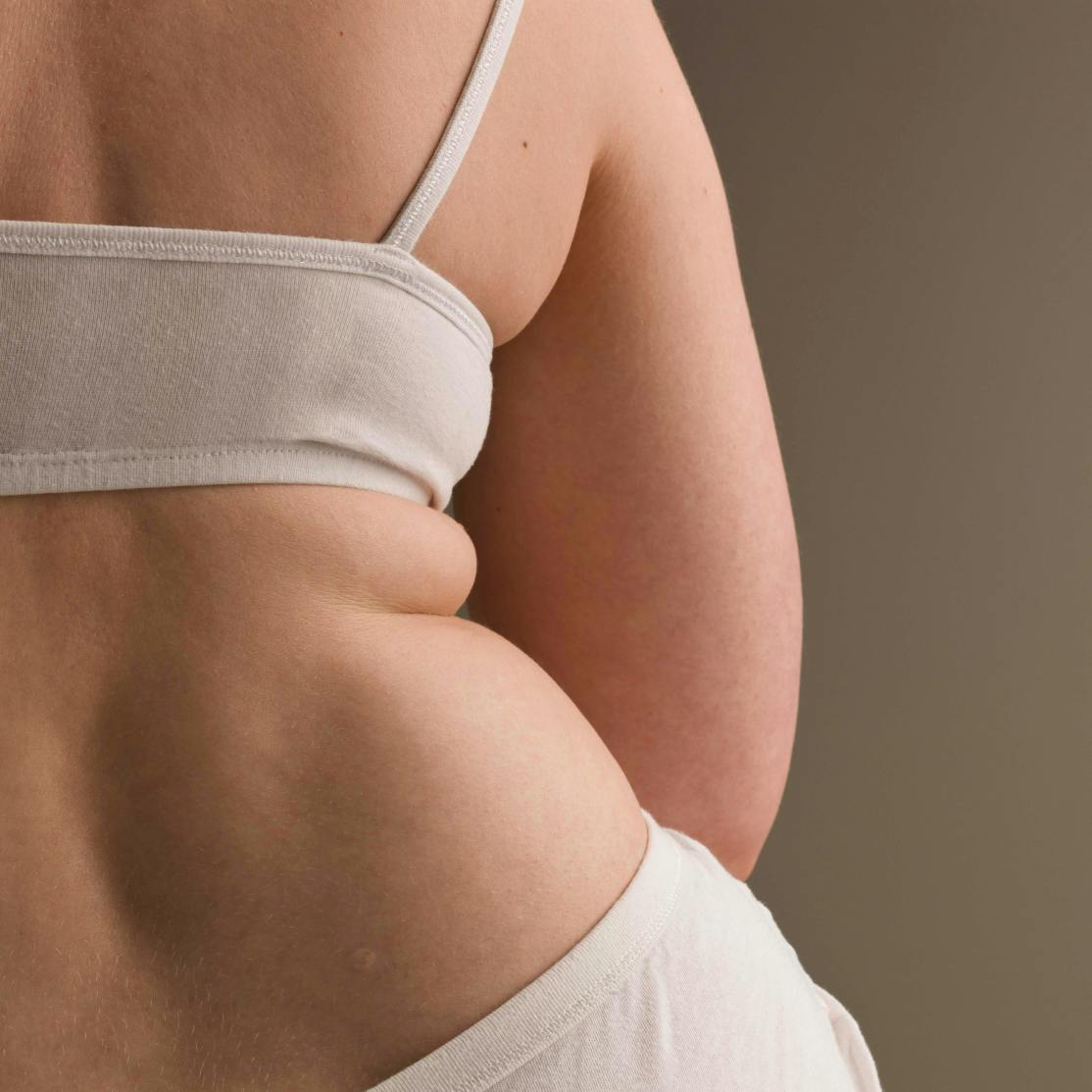
If you're frustrated by back fat showing up in midlife, you're not alone in wanting to get rid of them. This guide explains why back rolls happen, what actually works to reduce them, and why spot-reduction isn't possible—though targeted strength training, sustainable nutrition, and consistent movement can help.
If you're focused on getting rid of back fat, this is usually part of a larger conversation about changes in body composition that can naturally happen with age, and make some areas more noticeable. Understanding these changes is the first step toward feeling more confident. Midi's experienced clinicians have supported many women through this journey, whether you're dealing with bra-line bulges or lower back fat, and can help you create a personalized plan that fits your goals, your life stage, and your body.
It’s not the kind of fat you notice every day—until you do. That squishy bulge above or below your bra line can be frustrating, so many women want to know how to get rid of back fat. While spot-reduction isn’t possible, there are safe, effective ways to lose back fat over time. This guide breaks down what actually works, from strength training and nutrition to midlife-specific support, so you can feel more confident in your body, front and back.
Back rolls or lower back fat are a sore point for many women to notice on their bodies—especially when they show up in midlife and aren’t something you ever had to contend with before. That bra-line bulge can affect how clothing fits, but it can also mess with your confidence and leave you wondering how to lose back fat.
The first thing to know is that having fat on your back (yes, even a couple of rolls) is completely normal. What it looks like depends on a mix of factors, including genetics, overall body composition, and even posture. Clothing fit can also play a role: Too-tight bra bands are a common culprit, which is why making sure you’re properly fitted for a bra matters more than most people realize.
While you can’t spot-reduce back fat by doing endless back exercises or drastically cutting calories (fat loss happens throughout the body, not in one specific area), you can do a few things that may actually help:
- Start with proper nutrition: Eating a diet that’s higher in protein and fiber supports muscle and helps manage hunger. If weight loss is a goal, a small, sustainable calorie deficit can support fat loss without extreme restriction.
- Prioritize strength training: No single exercise will magically erase back fat, but back exercises for women that strengthen the traps, lats, and shoulders can improve muscle definition and shape as overall fat decreases.
- Focus on consistency: Losing lower back fat isn’t an overnight fix. But sticking with healthy habits—regular movement, strength training, adequate sleep, and supportive nutrition—can lead to visible changes over time.
For most women, success looks like reduced overall body fat and increased muscle definition, not perfection. You may notice progress more in terms of how your clothes fit and how you feel in your body than what the scale says.
How to Get Rid of Back Fat: The Truth About Spot-Reduction
It would be great if you could do one simple exercise a few times per day to get rid of back fat. Unfortunately, studies show that spot-reduction doesn’t work— fat loss is systemic, meaning it happens throughout the body, not just in one area.
That said, there are plenty of reasons to strength-train and include back exercises in your routine. Targeted exercises, when done consistently, can build muscle in the area and help improve your shape. Strength training overall also supports fat loss, if that’s one of your goals.
Back fat can be more noticeable due to genetics and changes that occur in midlife. As skin loses elasticity, fat may show more clearly. Your bra band can also accentuate rolls. Many women in perimenopause or menopause —which is defined as the day when you have gone 12 consecutive months without getting a period— may notice changes in fat distribution.
This is something you can discuss with your doctor—some people find that hormone replacement therapy (HRT) helps manage these changes. Midi Health clinicians can also talk with you about whether GLP-1 medications or other prescription medications that can help manage weight are right for you, as well as how to safely use them.
Remember, the goal isn’t just to reduce back fat. It’s to improve overall health—losing fat, gaining muscle, and improving posture are all wins that benefit your body in multiple ways!
Why Back Fat Happens (Common, Fixable Factors)
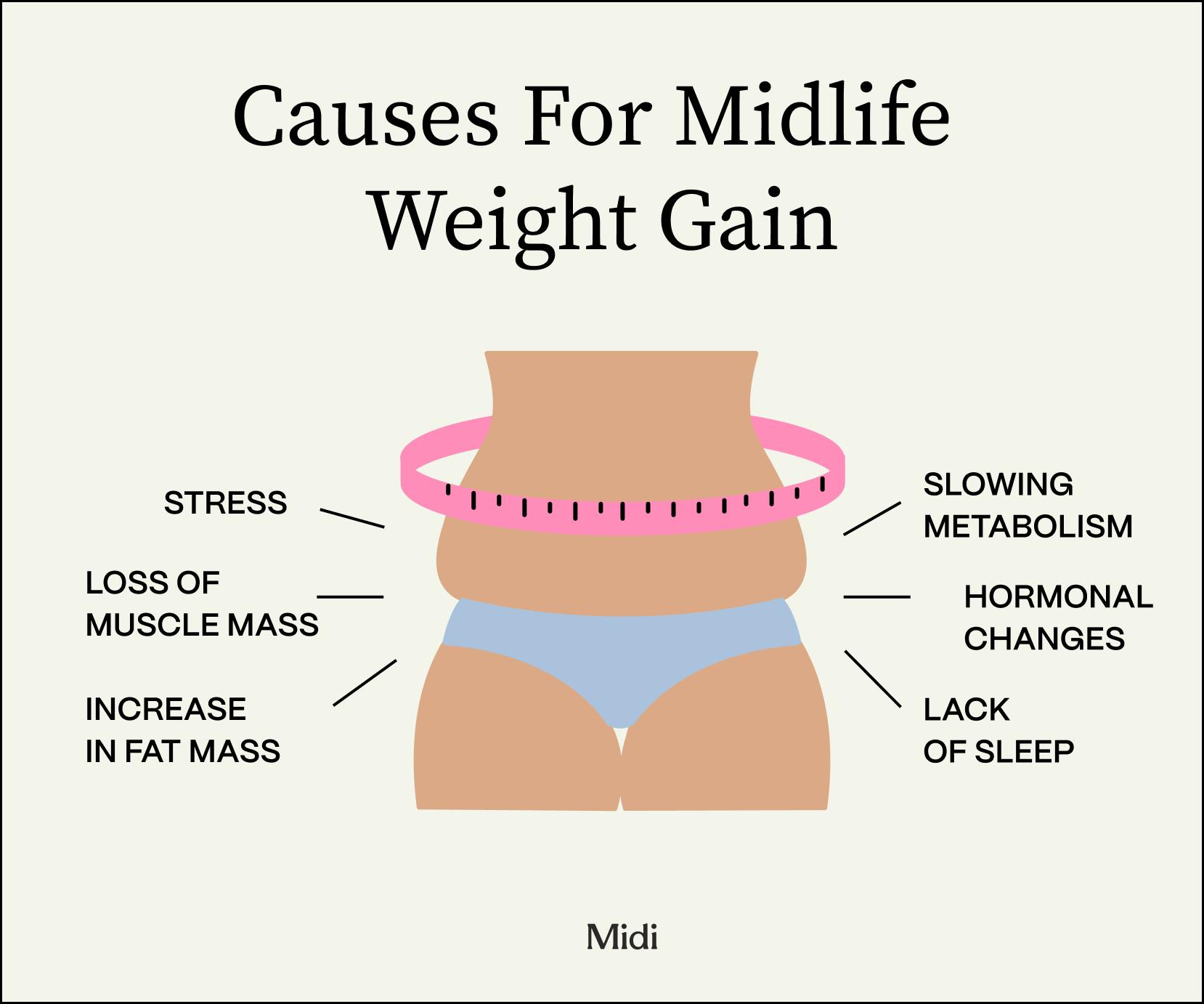
If you’re wondering how to get rid of back fat, the hard truth is that as you enter midlife, your overall energy needs tend to shift, which can lead to weight gain for many women. As you age—especially if you’re not consistently strength training—muscle loss becomes more noticeable, weakening the upper back and core and making fat rolls stand out more.
Posture also plays a role in why back fat may appear more prominent. Spending long hours at a desk or hunched over a phone can cause your shoulders to slump forward, which accentuates fat on the back.
Genetics influence where your body stores fat, too. For some women, fat collects in the hips, thighs, or belly, while others notice it more on their back. While you can’t change genetics, lifestyle factors can significantly affect not only your back rolls but your overall appearance and health. Things like accumulated sleep debt, chronic stress, excess alcohol, and a lack of daily movement all contribute to weight gain, sluggishness, and yes—that unwanted bulge above and below the bra line.
How to Lose Back Fat With Nutrition That’s Actually Sustainable
When women try to reduce back fat, the first step is usually a small calorie deficit. You can lose fat by reducing calories, and you don’t need to be overly restrictive to do so. In fact, you’re more likely to stick with a modest deficit than with a crash diet or extreme restriction that leaves you feeling hungry (or “hangry”) and uncomfortable.
Hitting your protein targets for your weight is also key to building and preserving muscle, which is especially important in midlife. Eating enough fiber—from leafy greens, fruits, and whole grains—can help you feel fuller longer, and staying hydrated can support appetite control. You can also try a fiber supplement to help you reach your goal.
You don’t need to cut out carbs or fats to lose weight (nor should you!). Focus on minimally processed foods whenever possible and track your intake in a way that works for you. This could be using the plate method (filling your plate with a balanced ratio of protein, carbs, and veggies), keeping a food log or journal, or using an app that lets you take pictures of your meals for analysis.
If rigorous tracking tends to trigger an all-or-nothing mindset, go easy on yourself. Even recording one meal per day or noting hunger cues can help you become more mindful of your eating habits without going to extremes.
Training Strategy: The Best Approach for Back Fat Reduction
If you’re ready to get rid of back fat—or simply want to take your overall health and fitness more seriously, it’s time to prioritize strength training. This is especially important for women in midlife, when building muscle plays a key role in improving body composition. Aim for 2 to 4 strength training sessions per week. You can add cardio for heart health and extra calorie burn, but don’t rely on it alone if your goal is to lose fat and look more toned. In midlife, building muscle is key not just for weight loss, but for building a body that’s lean and strong.
The simplest way to think about strength training is this: Gradually increase your reps, sets, and/or weight over time. This approach, known as progressive overload, helps prevent your body from adapting to the same routine and encourages continued strength and muscle gains.
Consistency matters more than a perfect plan. If you can work out 3 times per week for 12 weeks—whether at the gym or at home—that’s far more effective than doing a few “perfect” workouts for 2 weeks and then stopping altogether. You don’t have to feel amazing every time you exercise; you just have to show up and keep moving.
Finally, don’t overlook recovery. Your body needs time to rest and rebuild between workouts. Soreness isn’t a goal to chase—it’s simply a signal from your body. Prioritizing rest and recovery helps you stay consistent, avoid injury, and feel ready for your next workout.
Exercises for Back Fat: What to Do (and What to Skip)
Before you hit the gym, there are a few important things to know about exercises for back fat. First: Focus on big movements that build the upper back. This includes exercises that target your lats (the large, triangular muscles on either side of your back), your shoulders, and your core—which supports nearly every upper-body movement.
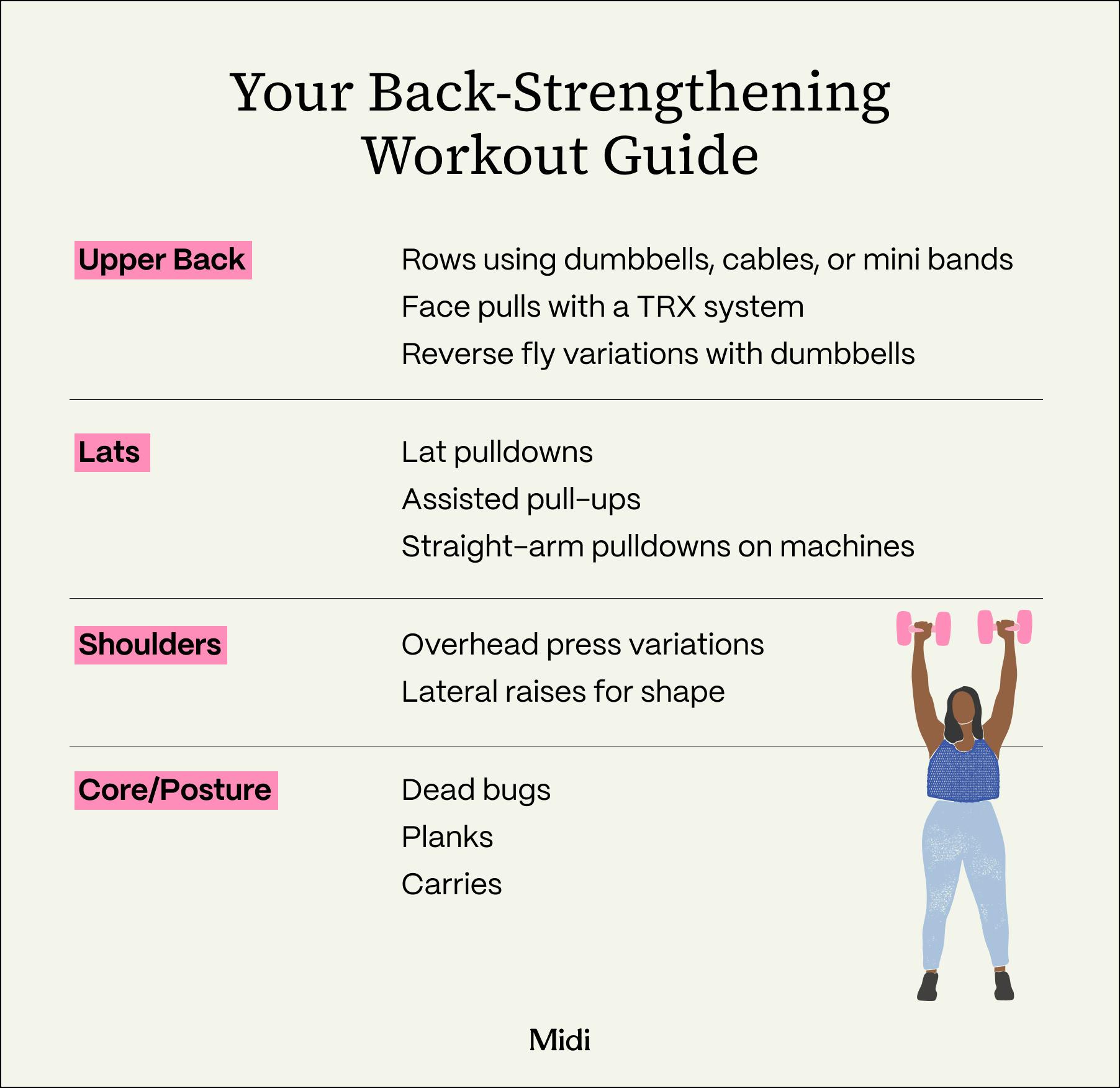
Here are some exercises to try. Always consider consulting with a trainer first to ensure proper form and reduce the risk of strain or overexertion:
- Upper back: rows using dumbbells, cables, or mini bands; face pulls with a TRX system; and reverse fly variations with dumbbells
- Lats: lat pulldowns, assisted pull-ups, and straight-arm pulldowns on machines
- Shoulders: overhead press variations (machines or free weights) and lateral raises for shape
- Core/posture: dead bugs (lying on your back, slowly moving opposite arms and legs), planks, and carries (walking while holding kettlebells or dumbbells)—focus on control and alignment over speed or weight
A few exercises popularized in 80s workout videos claim to target back fat but won’t do much to strengthen the area. Endless side bends or waist twisting can feel good, but they won’t build muscle or target fat loss, so don’t rely on them.
Back Exercises for Women: A Simple Weekly Plan
To make strength training easier to stick with, here’s a simple 3-day weekly plan you can follow. It’s designed to balance overall strength with back-focused exercises, and it works both at home (with bands or dumbbells) and at the gym.
Day 1: Upper body + back focus
- Rows: (dumbbells, cables, or bands) 3 sets of 10 to 12 reps
- Face pulls: (TRX or cable) 3 sets of 12 to 15 reps
- Overhead press: (dumbbells or machine) 3 sets of 8 to 10 reps
- Plank holds: 3 sets of 30 to 60 seconds each
Day 2: Lower body + core
- Deadlifts or hip-hinge variations: (dumbbells or barbell) 3 sets of 8 to 12 reps
- Glute bridges or hip thrusts: 3 sets of 12 to 15 reps
- Side plank or side-lying leg lifts: 2 to 3 sets of 30 to 45 seconds per side
- Optional: light cardio warm-up or cool-down (e.g., 10 to 15 minutes walking, cycling, or using the elliptical)
Day 3: Full body + back emphasis
- Lat pull-downs or assisted pull-ups: 3 sets of 8 to 10 reps
- Reverse flys: (dumbbells or bands) 3 sets of 12 to 15 reps
- Lateral raises: (dumbbells) 3 sets of 12 reps
- Carries: (farmer’s carry with dumbbells or kettlebells) 3 sets of 30 to 60 seconds each
Tips to save time and boost efficiency
- Try supersets: Pair two exercises back-to-back (e.g., rows + face pulls) to reduce workout time.
- Focus on form and control rather than heavy weight or speed.
- At home, use resistance bands or dumbbells to substitute for gym machines.
This simple plan hits your upper back, lats, shoulders, and core, helping you build strength and improve posture.
How to Reduce Back Fat: Midlife Body Composition Tips
At this stage of life, losing fat isn’t as simple as giving up bread for a few weeks or adding in an extra run each week. To really change your shape, you need to think about body composition—and for women in perimenopause or menopause, that means preserving and building muscle by getting enough protein and doing regular resistance training.
If your goal is to reduce back fat for female bodies, two areas you can’t ignore are stress and sleep. Adequate rest and managing anxiety play a big role in curbing appetite, reducing cravings, and helping your body recover from strength training workouts.
Many women feel like they’re “doing everything right” during the week, but weekends can derail progress. To see results, it helps to maintain healthy habits consistently. One strategy: Be less restrictive during the week so the weekend doesn’t have to become a “cheat day” that undoes your hard work.
Don’t despair—with small, consistent changes, you can make meaningful changes in both your overall health and appearance.
Lower Back Fat and “Love Handles”: What Helps Most
Most people will agree—love handles are not so lovely. But what are they, exactly? Lower back fat often overlaps with fat stored in the waist and hip region, creating this unwanted bulge. Depending on your anatomy, you may be more prone to developing lower back fat or love handles. Not everyone wants that bit of “extra” to grab onto, so if that’s you, you can take steps to reduce—if not eliminate—these rolls.
While overall fat loss through diet and exercise is key, glute- and hip-strengthening exercises can also improve shape in this area and support better posture. Exercises that target this region include hip hinges, Romanian deadlifts (which work the hips and glutes), hip thrusts, and carries. By gradually building strength, you can improve your overall power—and even more importantly, the way you carry yourself, which can make a noticeable difference in appearance.
Daily movement is equally important. Getting your steps in, taking breaks to stretch, and maintaining good posture can help reduce a stiff, slumped look that accentuates back fat. When sitting at a computer, roll your shoulders back, keep your monitor at eye level, and use a chair that supports your lower back.
Finally, clothing fit can dramatically improve appearance. Wearing the correct bra size with proper band placement can lift and support the chest while smoothing lower back rolls. Small adjustments like these can make a big difference in how your body looks and feels.
Diagnosis and Testing: When Back Fat Changes Might Signal Something Else
In most cases, noticing extra back fat, especially during midlife, is completely normal. But sometimes it can be a signal that something else is going on with your health—and it’s worth checking in with your doctor.
If you’ve experienced sudden weight gain, fatigue, or disrupted sleep, talk with your clinician. Changes in medication can also play a role, so keep a log of any new prescriptions or dosage adjustments.
Hormonal fluctuations during perimenopause or menopause, as well as metabolic factors, can influence body composition. Your doctor may recommend lab tests or other assessments to make sure nothing else is contributing to these changes. Be sure to mention any additional symptoms you notice.
Certain medications—including antidepressants, steroids, and others—can also affect your weight or how your body stores fat. Discussing these with your clinician can help you weigh risks and benefits and adjust plans safely.
Rapid or unexplained changes in weight or body composition should never be ignored. Early evaluation helps ensure that you’re addressing any underlying issues promptly.
Treatment Options: When Lifestyle Isn’t Enough
If you’ve tried improving your diet, incorporating strength training, moving regularly, getting enough rest, and managing stress but the back fat bulge still isn’t budging, it may be time to work with a professional.
Nutritional support from a registered dietitian can help you figure out how to eat at a sustainable deficit while ensuring you’re getting enough protein to support your goals and your life stage.
A certified personal trainer can offer guidance from a coaching perspective, providing a tailored plan and insights into exercises and schedules that best benefit your body while helping you avoid injuries.
Medications for weight management are also an option. GLP-1 therapies have gained attention for supporting weight loss in perimenopause and menopause, but there are many other options. Only a clinician who knows your medical history can determine what, if anything, is appropriate for you.
It’s also important to address the common barriers many women face in midlife. Pain, fatigue, and time constraints can make it difficult to stick to a plan, and even building the confidence to seek support can feel daunting. If this sounds familiar, know that you are not alone—reaching out is the first step, and you are worth it.
In some cases, procedures such as surgery may be appropriate for addressing back fat, but this is highly individual and should always be discussed with a clinician.
Working with a Healthcare Professional
Finding support from a trusted healthcare professional, like a Midi clinician, can make a meaningful difference in your health journey. Whether you’re navigating BMI concerns, comorbidities (medical conditions that occur alongside a primary issue), repeated cycles of weight regain, or other symptoms, a clinician can look at the full picture and help you develop a personalized plan.
That plan may take many factors into account, including sleep quality (and realistic strategies to improve it), stress management, lab work to better understand your overall health, and a thorough review of medications that could be affecting weight or body composition. Just as important, your doctor should consider the realities of your daily life—from caregiving responsibilities and demanding work schedules to relationship stress and time constraints.
Together, you can also set goals that go beyond the number on the scale. Strength gains, changes in waist measurements, improved energy levels, and healthier lab markers can all be meaningful indicators of progress. A clinician can help you track these safely over time and adjust your plan as needed, with an eye toward long-term maintenance—so any improvements you make are sustainable, not just short-term fixes.
When to Seek Care (Red Flags)
In most cases, dealing with unwanted back fat is something you can manage on your own and isn’t a cause for panic. However, a few red flags warrant medical attention if they arise.
If you notice unexplained rapid weight gain or swelling, reach out to your clinician. Severe fatigue, shortness of breath, or chest symptoms during exercise should also be evaluated promptly by a primary care professional or a doctor at an urgent care clinic.
New or severe back pain may signal an underlying issue that needs medical attention. Likewise, symptoms such as numbness or tingling, weakness, or changes in bowel or bladder function should be assessed by a healthcare professional.
While making nutrition changes can be part of a healthy plan, signs of disordered eating—including extreme restriction or rigid food rules—deserve evaluation and support. Your overall health and well-being matter far more than any perceived physical imperfection.
Finally, persistent sleep problems or mood changes that interfere with daily life or make it difficult to maintain healthy habits should be discussed with a medical professional.
Key Takeaways
- Back fat is normal and influenced by genetics, body composition, posture, and midlife changes.
- Spot-reduction doesn’t work; sustainable fat loss requires overall diet and strength training.
- Prioritize strength training 2 to 4 times per week, progressive overload, and core/posture work.
- Nutrition matters: moderate calorie deficit, adequate protein, fiber, and minimally processed foods.
- Lifestyle factors—sleep, stress, alcohol, and daily movement—impact body composition.
- Work with a healthcare professional if you notice rapid or unexplained weight changes or persistent symptoms, or if you need personalized guidance.
Frequently Asked Questions (FAQs)
How do you get rid of back fat fast?
There’s no quick fix for back fat. Spot-reduction doesn’t work, so the best approach is consistent strength training, overall fat loss through sustainable nutrition, and daily movement. Over time, building muscle and reducing body fat will improve your back’s appearance.
Why is back fat so hard to lose?
Back fat can be stubborn because it’s influenced by genetics, midlife hormonal changes, and where your body naturally stores fat. Muscle loss and poor posture can also make back fat more noticeable.
What are the reasons for back fat?
Back fat develops due to a combination of factors: genetics, body composition, age-related hormonal changes, posture, and lifestyle habits like diet, stress, sleep, and activity levels.
What's the hardest body fat to lose?
Fat stored in areas like the lower back, hips, and abdomen is typically harder to lose because it’s more resistant to hormones that mobilize fat. Consistent diet, exercise, and strength training are key.
What is the 3-3-3 rule for weight loss?
The 3-3-3 rule is a simple guideline for creating sustainable habits: Eat 3 balanced meals a day, include 3 hours of physical activity sessions per week, and aim for at least 3 bottles of water by 3pm. It’s designed to keep changes simple, consistent, and achievable.
If you’re in perimenopause or menopause and want guidance from clinicians who specialize in women’s midlife health, book a virtual visit with Midi today.
Hormonal change is at the root of dozens of symptoms women experience in the years before and after their period stops.
Our trained menopause specialists can help you connect the dots to guide you towards safe, effective solutions.
Whether you need personalized guidance or a prescription routine to tackle symptoms—including brain fog, hot flashes, sleep trouble, mood swings, and weight gain—we’ve got you covered. Learn more here.
Midi’s mission is to revolutionize healthcare for women at midlife, wherever they live and whatever their health story. We believe that starts with education, to help all of us understand our always-changing bodies and health needs. Our core values guide everything we do, including standards that ensure the quality and trustworthiness of our content and editorial processes. We’re committed to providing information that is up-to-date, accurate, and relies on evidence-based research and peer-reviewed journals. For more details on our editorial process, see here.