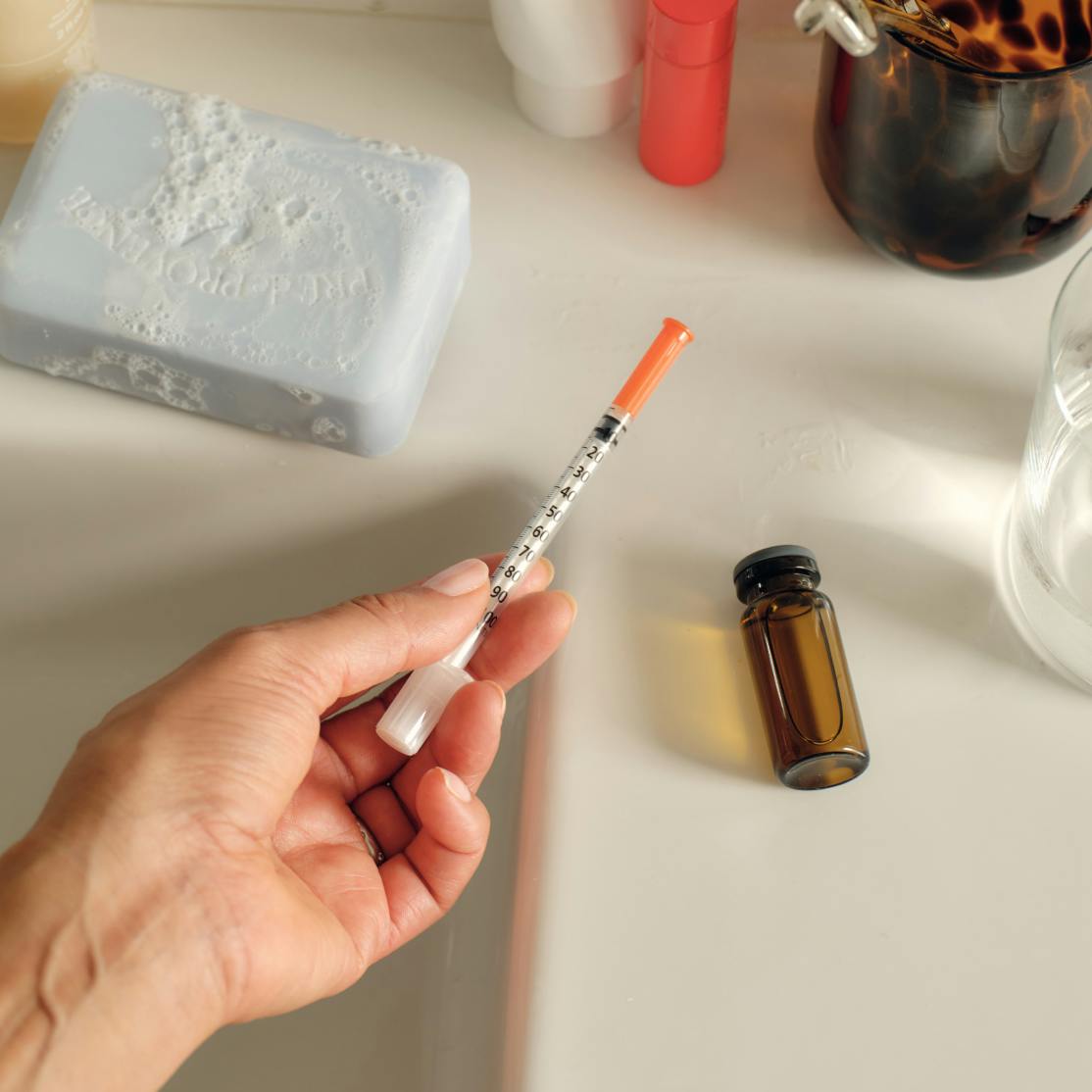


There’s a lot of buzz about the medication retatrutide—and how much it will cost is a big part of that conversation. The truth is that there’s no official retatrutide cost just yet. Since the new blockbuster weight loss drug hasn’t been FDA approved yet, it’s not legally being sold or prescribed outside of a research setting, so it’s hard to know what the price will be when it does come to market.
But we’ll tell you what’s known so far about the medication, including what goes into the pricing of GLP-1 medications and how much the retatrutide price could be compared with other similar drugs. Plus, we’ll tell you which red flags to watch out for when you see retatrutide prices online and why it’s so important to get guidance about weight loss medications from a trained healthcare professional, like a Midi Health clinician.
Thinking about trying an injectable weight loss medication? You’ve certainly got options, and eventually retatrutide may be one of them. The buzz about this medication comes from clinical trial results showing that people lost more weight on retatrutide than on any other weight loss medication in development or on the market so far. But if you’re wondering what the retatrutide cost is, there’s no solid answer: The new GLP-1 agonist is still in its clinical trial phase, meaning it hasn’t been FDA approved and isn’t being commercially sold just yet.
If you’ve seen any retatrutide prices online, they’re likely prices for gray-market products from pharmacies skirting the regulations on a drug that hasn’t been approved or not adhering to safe practices. These products have no guarantees on ingredients, dosing, or overall quality.
Currently, no insurance covers the medication, and no manufacturer savings cards exist yet either—again, this is because retatrutide is not officially on the open market yet as it awaits FDA review and approval. In other words, you can’t buy legitimate retatrutide right now. (Other GLP-1 medications may be covered by insurance, but it depends on your clinical situation and your insurance policy—more on this below.)
So, where do we go from here? Keep scrolling—we’ll go over what an approved launch price might look like and what goes into that decision, as well as Midi’s clinician-based advice on how to find a weight management plan that works for you and your budget.
What Does Retatrutide Cost Right Now?
Retatrutide is an injectable medication for weight management that is currently still in review by the FDA and completing its clinical trial phase. Again, there is no manufacturer list price for retatrutide right now because it hasn’t been approved and can’t be sold or prescribed yet.
However, that hasn’t stopped retatrutide “prices” and sales from popping up online. You might find charts and information on what starting doses of retatrutide will cost per month, along with annual price estimates, but these are just that—estimates, not actual prices. There can’t be a price based on a retatrutide starting dose because there is no official starting dose yet.
So, what are these prices you’re seeing? Most are coming from pharmacy sellers providing retatrutide for “research purposes” or from rogue pharmacies working outside standard regulations.
These costs have wide variations. Sometimes the prices are based on a single vial of medication. Other times they’re listed as a monthly cost, often showing the price for smaller starting doses rather than larger, titrated final doses. These various ways to list prices make it difficult to compare with other medications which might be using a different unit pricing. (When looking at price comparisons, be sure to look at these details.)
Why Online Retatrutide Prices Aren’t Referring to Approved Medications
In some instances, you might notice that a retatrutide price is attached to a product you can buy. Since fully FDA approved retatrutide is not for sale at the moment, these products may be labeled “for research use only” (meaning, they have not yet been approved for use in humans by the FDA). They’re often marketed and sold by pharmacies that skirt regulations or that may not be certified for safe practices, consistent dosing, or freedom from contaminants.
Buying vials of retatrutide—or any medication—from these gray-market sellers (sellers who operate in a legal gray area) is risky, as these medications aren’t guaranteed to be safe, sterile, or free from impure ingredients. Plus, many operate outside of regulatory oversight to confirm that the doses match what’s stated on the label.
Retatrutide Price per Month: How Those Numbers Get Calculated
We can’t say exactly how the retatrutide price will be calculated, but we do have an idea of how it might be calculated, based on how other injectable weight loss medications are priced.
With similar medications, such as semaglutide (Wegovy) and tirzepatide (Zepbound), the price typically depends on three things:
- Research and development: Pricing can depend in part on patents and availability. Patent time periods are designed to allow manufacturers to recoup the cost of researching and developing the medication. For example, Eli Lilly has patents and regulatory exclusivity for its medication Zepbound (tirzepatide) until the 2030s, which do not allow generic manufacturers to make a duplicate medication of Zepbound. Without the competition from generic manufacturers, pricing typically remains high because there’s currently no mass-manufactured FDA-approved generic for tirzepatide. The same will happen for retatrutide, potentially leading to a higher price point when it does get approved.
- Dosage amount: With other similar injectable medications, pricing depends on the dose. For semaglutide and tirzepatide, the lower the dose, the lower the price. As the dose is increased, so does the cost. (Doses start low to allow the body to get used to the medication, then increase at regular intervals until an effective maintenance dose is reached.) This means that pricing also increases as the dose increases and can be considerably more than the listed starting price.
- Delivery mechanism: Medications like semaglutide and tirzepatide can be offered in various forms, such as injectable pens or glass vials with needles. Injectable pens are typically more expensive than glass vials, but can offer ease of use and convenience.
What Could Retatrutide Cost After FDA Approval?
It’s hard to say exactly what the retatrutide price per month will be once it’s been FDA approved, but most anticipate it may be around the same price as for similar GLP-1 injectable medications.
Retatrutide prices may fall within roughly the same range, but it’s important to note that other factors could contribute to price differences. Because research shows that retatrutide may be more effective for weight loss than other similar medications, it might be priced higher. The final cost can also depend on the availability of manufacturer savings programs and insurance coverage, which are increasingly popular with this class of medication. Again, these are all guesses—until the medication becomes officially available, we can only hypothesize retatrutide’s manufacturer will also engage in these cost-savings programs.
Will Insurance Cover Retatrutide?
Once retatrutide is approved, insurances will likely cover it in the future, often with restrictions on who qualifies for the medication and prior authorization processes in place.
But again, at the moment, insurance does not cover retatrutide because there is no approved product to cover. And gray-market or “research use” medications are not covered by insurance. These costs are typically covered by research grants when part of a bonafide research study, while gray-market products wouldn’t be considered by insurance providers for coverage.
In general, there’s strict criteria for insurance coverage of weight management medications, with coverage depending on a person’s current health status and the individual insurance plan. For instance, some plans may require a clinician to document one of the following:
- morbid obesity with a BMI > 40
- obesity with a BMI > 30
- a BMI greater than 27 with a documented weight-related condition (like sleep apnea, high blood pressure, or high cholesterol)
- a type 2 diabetes diagnosis
Insurance coverage may also depend on retatrutide cost, and it could change over time. For example, Wegovy was not covered by many insurance companies when it first became available, but now many offer coverage.
How Retatrutide Cost Compares With Approved Options Available Today
It’s hard to say how retatrutide costs will compare with other similar options on the market. It may be priced similarly to semaglutide and tirzepatide, but since the medications are different, the pricing may differ, too. Here’s a quick look at each:
- Semaglutide: targets GLP-1 receptor
- Tirzepatide: targets GLP-1 and GIP
- Retatrutide: targets GLP-1, GIP, and glucagon
Because retatrutide is a triple agonist (meaning it targets three different types of hormone receptors), it appears to be more effective for weight loss and metabolic improvement, which could theoretically increase the price.
We also don’t know what retatrutide’s manufacturer, Eli Lilly, will offer when it comes to savings programs. For example, with Zepbound (another injectable medication from Eli Lilly), a savings card program lets you pay less for certain types of the medication, depending on your eligibility. And in some cases, you can find manufacturer coupons and direct-pay offerings that can lower the cost.
If retatrutide is approved but ends up being beyond your budget, another medication that works similarly may fit better with what you can afford or with your insurance coverage. A Midi clinician can help you find the treatment that works best for you all around.

The One Way to Access Retatrutide at No Cost
Right now, there’s only one way to get retatrutide legitimately and for no cost: to be accepted into a clinical trial. In a clinical trial, participants are supplied with the medication being studied at no charge. You also may be compensated for time spent at the clinic and extra visits required for the research. Some may compensate you for travel expenses, but typically not for things like time taken off work or childcare.
If you’re interested in being part of a clinical trial for retatrutide or any other medication, you can search for recruiting studies on ClinicalTrials.gov. Be sure to confirm the details with the listed study contact to make sure it’s the right fit for you. Signing up for a clinical trial doesn’t mean enrollment is guaranteed—and many trials include a placebo group, so you won’t always know whether you’re actually getting the medication. Many of the large scale trials for retatrutide are nearing completion, but other drugs in this category are entering development and may be an option, too.
When Will Retatrutide Be Available to Buy?
Retatrutide’s manufacturer, Eli Lilly, doesn’t plan on submitting retatrutide for FDA approval until early 2027. Before that stage, the company has to complete, analyze, and submit data from clinical trials and show that the drug’s benefits outweigh the risks.
Once the application is in, the FDA often takes anywhere between 6 and 10 months to review an application, suggesting that retatrutide may not be available until late 2027 or 2028 (but it’s impossible to say for sure, as the FDA has been adjusting processes here, too).
At this time, there’s no confirmed launch date for retatrutide, and submission from Eli Lilly could always be pushed back (that’s already happened before).
In the meantime, though, there are plenty of other options. Several proven weight loss medications are already available, backed by solid clinical evidence and years of real-world use.
True Stories Of Transformation
Red Flags When Someone Quotes You a Retatrutide Price
It’s a good idea to avoid retatrutide products being made and marketed by gray-market sellers—ones that you see for sale at this point. Here are some red flags to look out for—with retatrutide products as well as any similar GLP-1 medications:
- The source says that no prescription is required, or a “prescription” is issued only after payment is made.
- “Research use only” or “not for human consumption” language is stated on the product page or label
- The label or product page relays that the product has not been FDA approved
- Prices seem extremely discounted or too good to be true. (There are often hidden fees and prices escalate greatly as you titrate up to the needed effective dose.)
- The medication arrives looking different than it did on the website or is in broken or damaged packaging.
- A medical screening or interaction by a licensed provider isn’t required.
- You have to pay via cryptocurrency, wire transfer, or other non-reversible payment methods.
- You see spelling errors on the packaging or the website.
- There’s no opportunity or plan for clinical check-ins or follow-ups. These medications have several potential side effects, and getting advice and support along the way can be the difference between therapeutic failure and clinical success. (At Midi, clinicians prescribe GLP-1s with care visits and check-ins along the way.)

Building a Weight Care Plan That Fits Your Budget and Goals
While retatrutide and other newer drugs continue through the research pipeline, there are many existing, effective options that you can get started on now. Whether that’s a GLP-1 medication (like semaglutide, tirzepatide, or orforglipron), another weight loss medication (like Contrave or Metformin), lifestyle changes, or another treatment, there are plenty of options available today to reach your weight goals.
A weight loss specialist, like a Midi clinician, can help you sort through the various prescription and non-prescription options with your budget in mind. Midi clinicians often combine an array of complementary strategies to help you reach your goals. Your clinician will build a personalized Care Plan around what your body actually needs: proven medications, hormone support if it makes sense, and lifestyle changes that fit your needs and deliver results. Not to mention, Midi has a prior authorization team that can help determine coverage on approved medications.
Plus, Midi is in network with most insurance providers, the visits are virtual and convenient to book, and the care is tailored to you and what you need. Book a visit to learn more.
Key Takeaways
- Retatrutide has not yet been approved by the FDA and is still in a clinical trial phase, so there is no official retatrutide price per month.
- Any retatrutide prices online refer to “research only” or non-regulated compounded medications that are potentially contaminated or not the dose stated on the label.
- Once retatrutide is approved by the FDA, pricing will be influenced by available patents, the dosage amount prescribed, and the delivery mechanism being used. Prices may be comparable to current GLP-1 medications like semaglutide and tirzepatide, though retatrutide availability and cost is unknown at this time.
- Retatrutide won’t be approved until after the clinical trials are completed.
- There are other effective weight loss medications currently available that a healthcare professional, like a Midi Health clinician, can prescribe.
Frequently Asked Questions (FAQs)
Can you purchase retatrutide?
Retatrutide is not currently available for legal purchase because it is still in its clinical trial phase and has not been FDA approved.
Do you need a prescription for retatrutide?
Retatrutide is not FDA approved, so it is currently not on the market at all. Assuming it is eventually approved and available, you will need a prescription for it.
How much weight can you lose in a month on retatrutide?
It hasn’t been established how much weight you could lose on retatrutide in 1 month. A phase 3 clinical trial has shown a significant amount of weight was lost by most patients after 18 months of use. In that trial, participants lost 20% of their body weight on average when taking a weekly 9-mg dose and 23% with a weekly 12-mg dose.
Will retatrutide be cheaper than Zepbound or Wegovy?
It’s hard to say what the retatrutide price will be compared to Zepbound and Wegovy. Since retatrutide is a triple-agonist that has been shown to have more effective results, it could cost more than other medications, but there is no way of knowing until it’s been FDA approved and the manufacturer has set the price.
If you’re in perimenopause or menopause and want guidance from clinicians who specialize in women’s midlife health, book a virtual visit with Midi today.
Hormonal change is at the root of dozens of symptoms women experience in the years before and after their period stops.
Our trained menopause specialists can help you connect the dots to guide you towards safe, effective solutions.
Whether you need personalized guidance or a prescription routine to tackle symptoms—including brain fog, hot flashes, sleep trouble, mood swings, and weight gain—we’ve got you covered. Learn more here.
Midi’s mission is to revolutionize healthcare for women at midlife, wherever they live and whatever their health story. We believe that starts with education, to help all of us understand our always-changing bodies and health needs. Our core values guide everything we do, including standards that ensure the quality and trustworthiness of our content and editorial processes. We’re committed to providing information that is up-to-date, accurate, and relies on evidence-based research and peer-reviewed journals. For more details on our editorial process, see here.