Liz Krieger
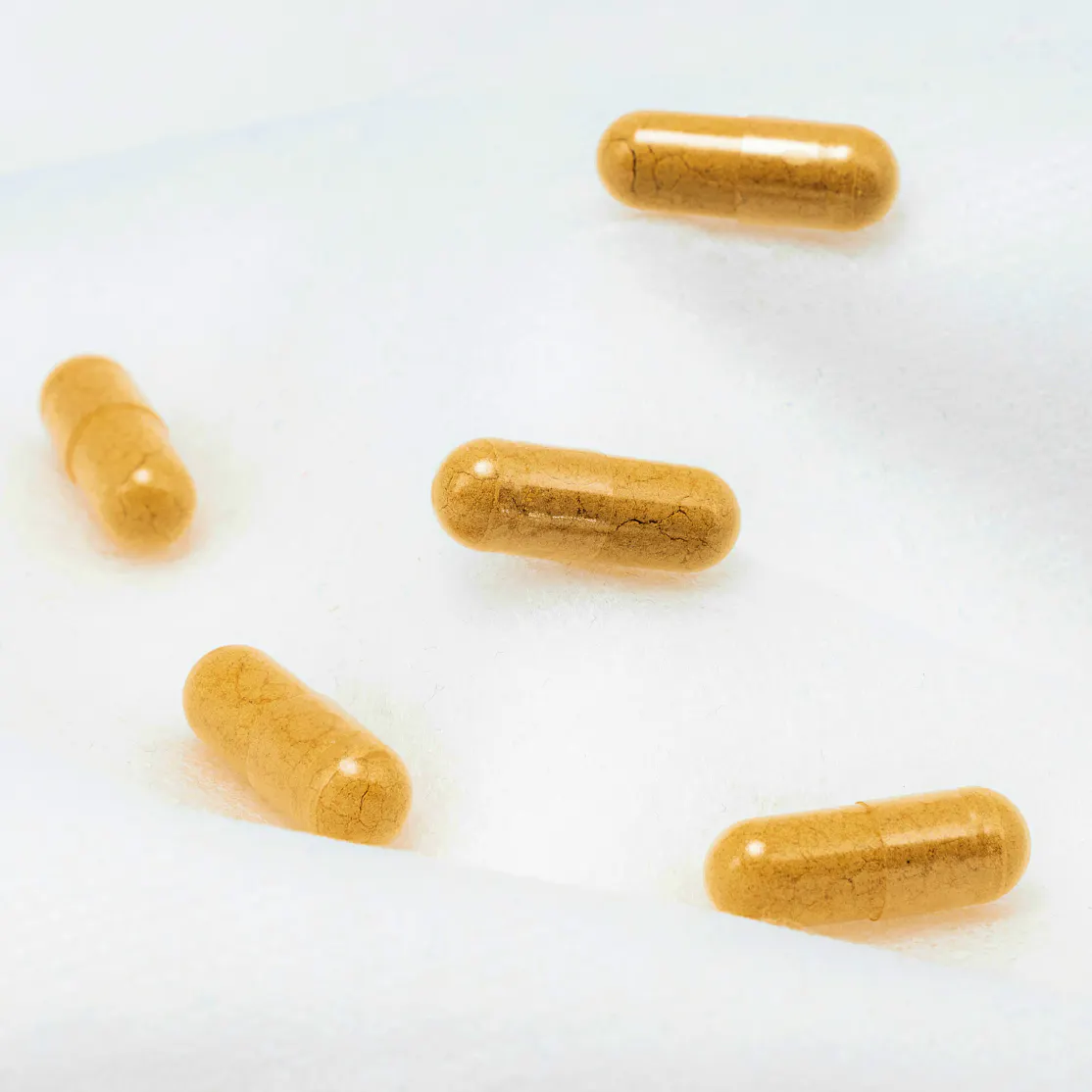
Saffron has gone from a spice-rack curiosity to an internet-favorite mood enhancer, with saffron supplements promising everything from better sleep to smoother menopause symptoms. The research on saffron is more legitimate than what’s available for some other wellness products out there, especially when it comes to mood—but saffron is not a fix-all, and its quality varies wildly from product to product. Here’s what the evidence actually shows, who should be cautious, and how a Midi Health clinician can help you figure out whether saffron supplements deserve a spot in your routine.
Saffron supplements have become one of the most talked-about “natural mood” products on the internet, showing up in stacks next to magnesium and ashwagandha with claims that it can lift your spirits, help you sleep, and ease frustrating perimenopause symptoms. While science suggests modest but intriguing benefits for mood, sleep, and some menopause-related symptoms, saffron isn’t a cure-all, and not every bottle on the shelf will contain what the label promises.
It makes sense that midlife women are interested in finding the best saffron supplement and learning about saffron benefits for females. Mood changes, poor sleep, and cravings are some of the most common—and most disruptive—concerns in perimenopause and menopause, and some women prefer to reach for botanical solutions before trying a prescription medication.
But is saffron good for women specifically, and is it worth adding to your routine? Below, we break down the evidence, safety caveats to know, and how to actually choose a quality product.
What Are Saffron Supplements?
Saffron is the dried, hand-picked, thread-like part of the Crocus sativus flower. It’s famously labor-intensive: It takes roughly 75,000 flowers, all harvested by hand, to produce a single pound of saffron threads. That’s largely why it’s one of the most expensive spices in the world.
Researchers studying saffron’s effects on the body focus on four active compounds: crocin and crocetin (the carotenoids responsible for saffron's red-orange color), safranal (which gives it that distinct aroma), and picrocrocin (which provides its flavor). Those first three compounds (crocin, crocetin, and safranal) are most consistently linked to saffron’s effects on mood and inflammation.
Most clinical research on the botanical uses standardized saffron extract capsules that contain a set amount of crocin, crocetin, and safranal—not the loose culinary threads you’d toss into a paella. That distinction matters: A saffron supplement’s effects depend on how much crocin and safranal actually make it into the capsule, so using a measured extract is a lot more consistent (and testable) than a pinch of threads from that jar in your spice drawer.
What Is Saffron Good For? A Look at the Evidence
Saffron has been studied for a fairly wide range of uses: mood and depression, sleep, PMS, menopause symptoms, eye health, and appetite. Here’s a rough look at how strong the evidence is on saffron benefits, so you can calibrate your expectations:
- Strongest evidence: mood and mild-to-moderate depressive symptoms
- Promising evidence: sleep quality, PMS and premenstrual dysphoric disorder (PMDD) symptoms, menopause-related mood symptoms, and hot flashes
- Preliminary evidence: eye health when it comes to age-related macular degeneration (AMD), appetite/snacking, and cognition
Still, most of the research trials on saffron supplements are small—often with only several dozen to a couple hundred participants—and they last only several weeks to a few months long. They're limited in geographic range and population subsets too, with most run primarily out of research groups in Iran and a handful done in Australia. That’s not disqualifying, but it does mean that saffron’s track record is thinner than that of a well-established medication with lots of large-scale clinical trials behind it.
But the science behind saffron’s mood-related benefits is the exception: It’s been through actual meta-analyses pooling multiple trials, which is a much better form of evidence. (More on that below.)
True Stories Of Transformation
Saffron Benefits for Mood and Depression
Of all the saffron benefits you might have heard about, the most-established evidence relates to the supplement’s effect on mood and depression.
A 2019 meta-analysis pooling data from randomized, placebo-controlled trials found that saffron significantly outperformed a placebo treatment for mild-to-moderate depression. It also performed about as well as prescription antidepressants in head-to-head comparisons.
A more recent 2025 meta-analysis compared saffron directly against selective serotonin reuptake inhibitor (SSRI) medications, the most widely prescribed type of antidepressant. Researchers found no significant difference in how much depressive or anxiety symptoms improved—but saffron came with meaningfully fewer side effects.
Here’s the theory behind it: Saffron’s compounds appear to affect serotonin activity in the brain in a way that resembles how SSRIs work, on top of providing general antioxidant and anti-inflammatory effects. That said, it’s critical to note that saffron supplements are not a replacement for prescription medications or treatments recommended by a healthcare professional.
Just because saffron appears to be comparable to prescription drugs in some scientific trials—many of which rely on data from animal studies rather than human clinical trials—that doesn’t necessarily mean it’s a better or safer option for you. If you’re dealing with persistent low mood or diagnosed depression, that’s a conversation for a clinician, not a supplement aisle.
If your healthcare professional determines that saffron supplements are right for you, they’ll share a recommended dose—evidence generally suggests 30 milligrams (mg) may be effective—and whether they recommend taking it alone or alongside an antidepressant medication.
Can Saffron Improve Sleep?
Saffron may benefit your sleep, but we need more research to say for sure. The science behind saffron’s benefits for sleep is newer and thinner than the science behind its benefits for mood, but it’s trending in a consistent direction.
A 2022 meta-analysis of randomized controlled trials found that saffron supplementation improved several sleep measures compared with a placebo, including how restored people felt and how severe their insomnia symptoms were. That said, the most meaningful effects were seen at higher doses, around 100 mg (which is higher than most standard doses).
A more recent 2025 randomized, placebo-controlled trial tested 20-mg and 30-mg doses of a standardized saffron extract in adults with moderate insomnia over 4 weeks and found measurable improvement in insomnia symptoms at the higher 30-mg dose. It's worth noting, however, that since saffron is also known to support mood, it's hard to tell whether the sleep improvements were a direct effect or due to saffron's mood-related benefits instead.
Saffron Benefits for Women: PMS, Perimenopause, and Menopause
Saffron may deliver helpful benefits for women, particularly as it relates to PMS, perimenopause, and menopause—but again, we need more information to fully understand what saffron is good for.
When it comes to menstrual health, one systematic review and meta-analysis found that saffron produced a significant reduction in PMS symptom severity when compared to a placebo. And in a head-to-head randomized controlled trial, saffron performed comparably to fluoxetine (a common SSRI prescribed for PMDD) at reducing symptoms over two menstrual cycles.
The menopause-specific data behind saffron is smaller but encouraging. A randomized, placebo-controlled trial in postmenopausal women with depression and hot flashes found that 30 mg of saffron daily significantly improved both hot-flash interference and depressive symptoms over 6 weeks, with no more side effects than a placebo.
A separate 12-week trial in perimenopausal women taking 28 mg of saffron extract daily found improvements in mood and quality-of-life measures, though this particular trial didn't find a significant effect on hot flashes specifically—a good reminder that results vary by study and by symptom. What’s more, this trial was funded by pharmaceutical companies in the supplement industry.

Other Potential Benefits: Eye Health, Appetite, and More
A few other possible saffron benefits come up often enough to mention, though the evidence here is more preliminary:
- Eye health: Several small trials, including a longer-term randomized trial in people with AMD, have found that daily saffron supplementation modestly improved measures of retinal function over months of use. It’s certainly not a replacement for standard AMD care, but it’s an interesting area of ongoing research.
- Appetite and snacking: This is the saffron claim most likely to be oversold. A 2022 meta-analysis pooling 25 randomized trials in people who were overweight or living with obesity found no significant effect on body weight, BMI, or waist circumference overall (though it did find a modest reduction in waist-to-hip ratio). Some individual small trials on snacking frequency have shown more optimistic results, but don't expect saffron to move the needle on midlife weight changes the way it might for mood or sleep.
- Memory and cognition: Some studies suggest that saffron’s antioxidant compounds might support cognitive function, but this research needs further exploration.
Saffron Side Effects and Safety
At the doses used in most clinical trials—typically about 28 to 30 mg total each day—saffron has generally been well tolerated. Saffron side effects are uncommon and, when they do occur, tend to be limited to mild gastrointestinal (GI) upset, such as nausea, dizziness, or an upset stomach.
Still, it’s important to remember that “natural” doesn't mean “unlimited.” Don’t take more saffron than is recommended by your clinician—too-high doses could harm your long-term health or even be life threatening.
A few groups should be especially cautious or avoid saffron supplements altogether:
- people who are pregnant or trying to conceive, since high doses have historically been linked to uterine stimulation and increased miscarriage risk
- anyone taking mental health medications or blood thinners or anyone undergoing certain cancer treatments due to the potential for interactions (while saffron supplements may be used as an adjunct for antidepressant drugs, it’s important to ask your clinician if that’s a safe or worthwhile option for you)
- anyone with upcoming surgical procedures
How to Choose a Quality Saffron Supplement
Here’s the catch with saffron specifically: Because it’s so expensive to produce, it’s also one of the most commonly adulterated spices in the world, meaning some products have been made weaker or lower quality.
A 2022 study found that only about 40% of the saffron samples tested qualified as the highest purity grade, and the rest were cut with fillers, dyes, or other plant material at meaningful rates. Translation: The bottle on the shelf may not contain what it says it does.
Here’s what to look for on a label:
- a standardized extract matching what’s used in clinical research, ideally with a stated crocin and/or safranal content, not just “saffron powder”
- third-party testing from an independent body, which verifies both purity and potency
- capsules over loose threads or tea for anything you’re taking for a specific health effect, since capsules are what’s actually been tested in trials
- a dose recommended by your clinician and backed by science, which may change from person to person—for people who can safely try saffron, Midi’s clinicians generally recommend taking 30 mg per day or 14 mg twice daily of a standardized extract like Affron for patients with mild symptoms of depression
If a saffron supplement is priced dramatically lower than others on the market, that’s often a red flag rather than a deal.
Is Saffron Enough? When to Get Expert Support
For some, saffron supplements can take the edge off mild to moderate depression symptoms, as well as potentially other symptoms. But if your low mood, insomnia, or hot flashes are disrupting your daily life, that's worth an evaluation from a healthcare professional—not just another bottle on the nightstand.
A Midi clinician can review your symptoms, current supplements and medications, and health history, and they can help you build a complete Care Plan—which might include hormonal treatments, non-hormonal medications, lifestyle strategies, and/or supplements and botanicals like saffron. The goal isn’t to talk you out of saffron; it’s to make sure it’s a healthy, worthwhile, and effective treatment for you.

Key Takeaways
- As a supplement, saffron’s best-supported use is for mood and mild-to-moderate (as well as major) depressive symptoms.
- Sleep, PMS, and menopause-related symptoms all have intriguing yet smaller research behind them. Saffron is not shown to meaningfully support weight loss.
- Side effects are uncommon and typically limited to mild GI upset, but pregnant women and anyone taking an SSRI or blood thinner should talk with a healthcare professional before trying saffron.
- Because saffron is so frequently adulterated, look for standardized, third-party-tested extracts.
Frequently Asked Questions (FAQs)
Can I take saffron with my SSRI?
Talk with your clinician first. Generally, saffron supplements may be used alone or as an adjunct to antidepressant medication. But because saffron may affect serotonin activity in a way similar to SSRIs, combining the two could theoretically increase the risk of excess serotonin activity, even though this hasn't been widely studied in humans. That’s why it’s important to get the OK from a healthcare professional who knows your health history and current medication list.
Can you take saffron if you have epilepsy?
There isn’t strong human research on saffron and epilepsy specifically, so it’s best to talk with your neurologist or prescribing clinician before adding it to your routine. Another thing worth noting: Epilepsy medication tends to be especially sensitive to herb-drug interactions, so it's really important to check with a healthcare professional before trying anything new.
Does saffron help with ADHD?
Some very early, small studies have looked at saffron alongside attention-deficit hyperactivity disorder (ADHD) medications, but the evidence is far too limited to draw conclusions. Saffron isn’t a substitute for established ADHD treatment.
Does saffron help with anxiety?
Some of the same trials that studied saffron for depression also measured anxiety symptoms and found improvements, but the anxiety-specific evidence is less robust than the depression research.
Why is saffron so expensive?
Saffron can be pricey because each flower produces only three tiny stigmas, and every one has to be hand-picked. It takes roughly 75,000 flowers to yield a single pound of saffron threads.
If you’re in perimenopause or menopause and want guidance from clinicians who specialize in women’s midlife health, book a virtual visit with Midi today.
Hormonal change is at the root of dozens of symptoms women experience in the years before and after their period stops.
Our trained menopause specialists can help you connect the dots to guide you towards safe, effective solutions.
Whether you need personalized guidance or a prescription routine to tackle symptoms—including brain fog, hot flashes, sleep trouble, mood swings, and weight gain—we’ve got you covered. Learn more here.
Midi’s mission is to revolutionize healthcare for women at midlife, wherever they live and whatever their health story. We believe that starts with education, to help all of us understand our always-changing bodies and health needs. Our core values guide everything we do, including standards that ensure the quality and trustworthiness of our content and editorial processes. We’re committed to providing information that is up-to-date, accurate, and relies on evidence-based research and peer-reviewed journals. For more details on our editorial process, see here.