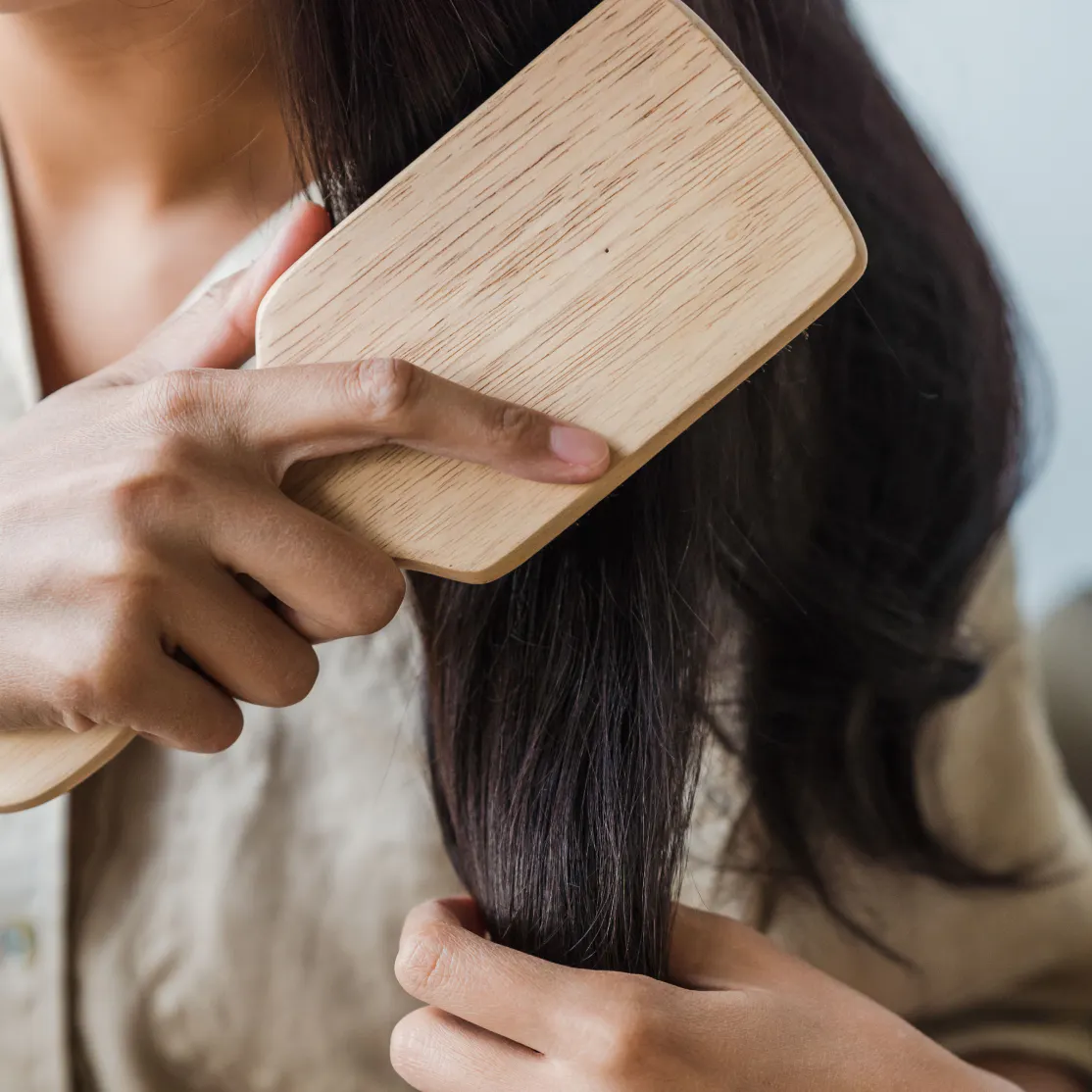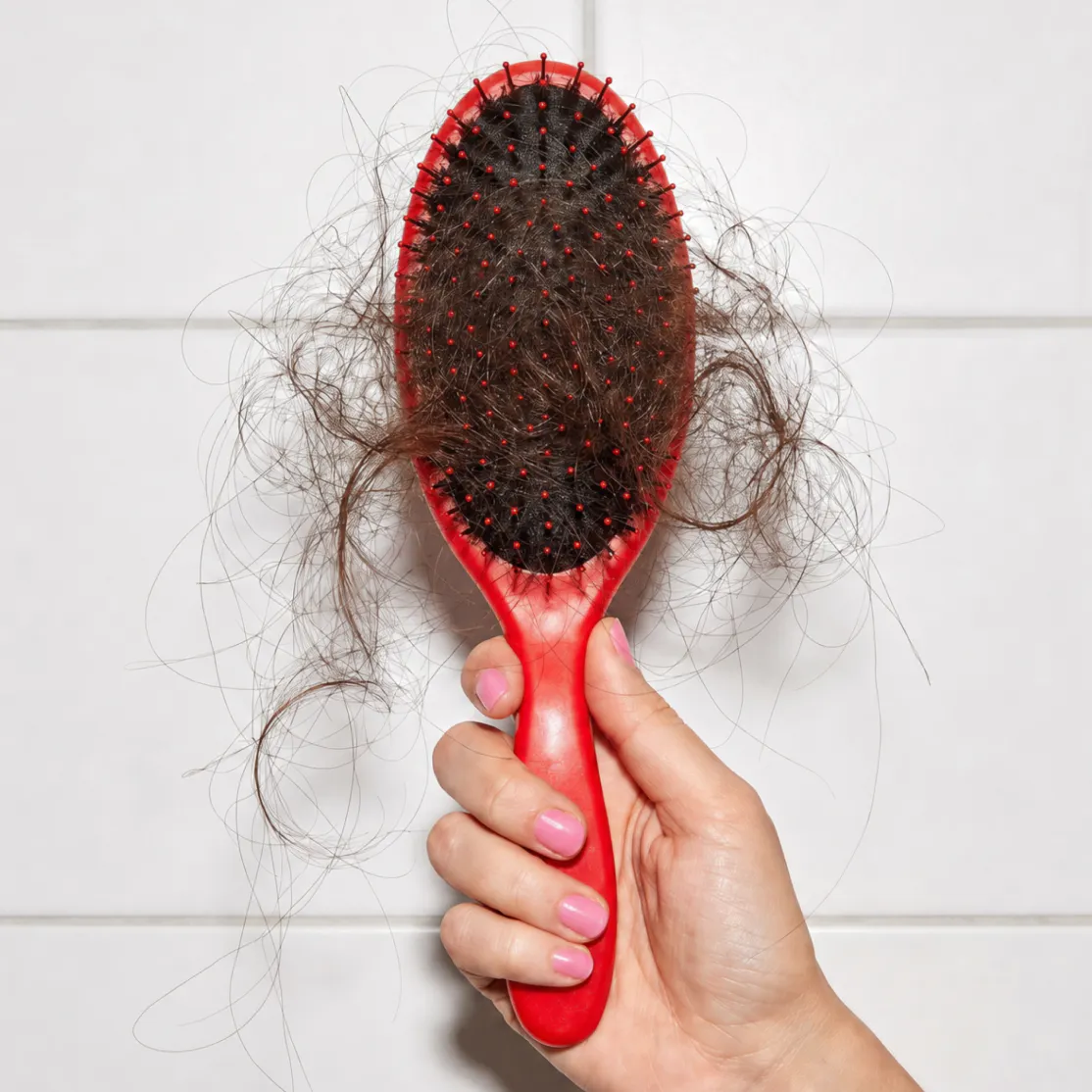

Finding more hair than usual at the bottom of the shower or in your hairbrush is yet another change that can happen during the menopause transition. Hair thinning is common in midlife, but you don’t have to ignore it. Treatments like spironolactone, a medication prescribed off-label for hormone-related hair loss, can help.
But does spironolactone for hair loss actually work? It depends on what’s causing hair changes. Keep reading to learn how spironolactone works, who it’s best suited for, and what the research says. When you’re ready to explore your options, Midi Health clinicians, who specialize in menopause care, can help you create a personalized treatment plan for hair loss.
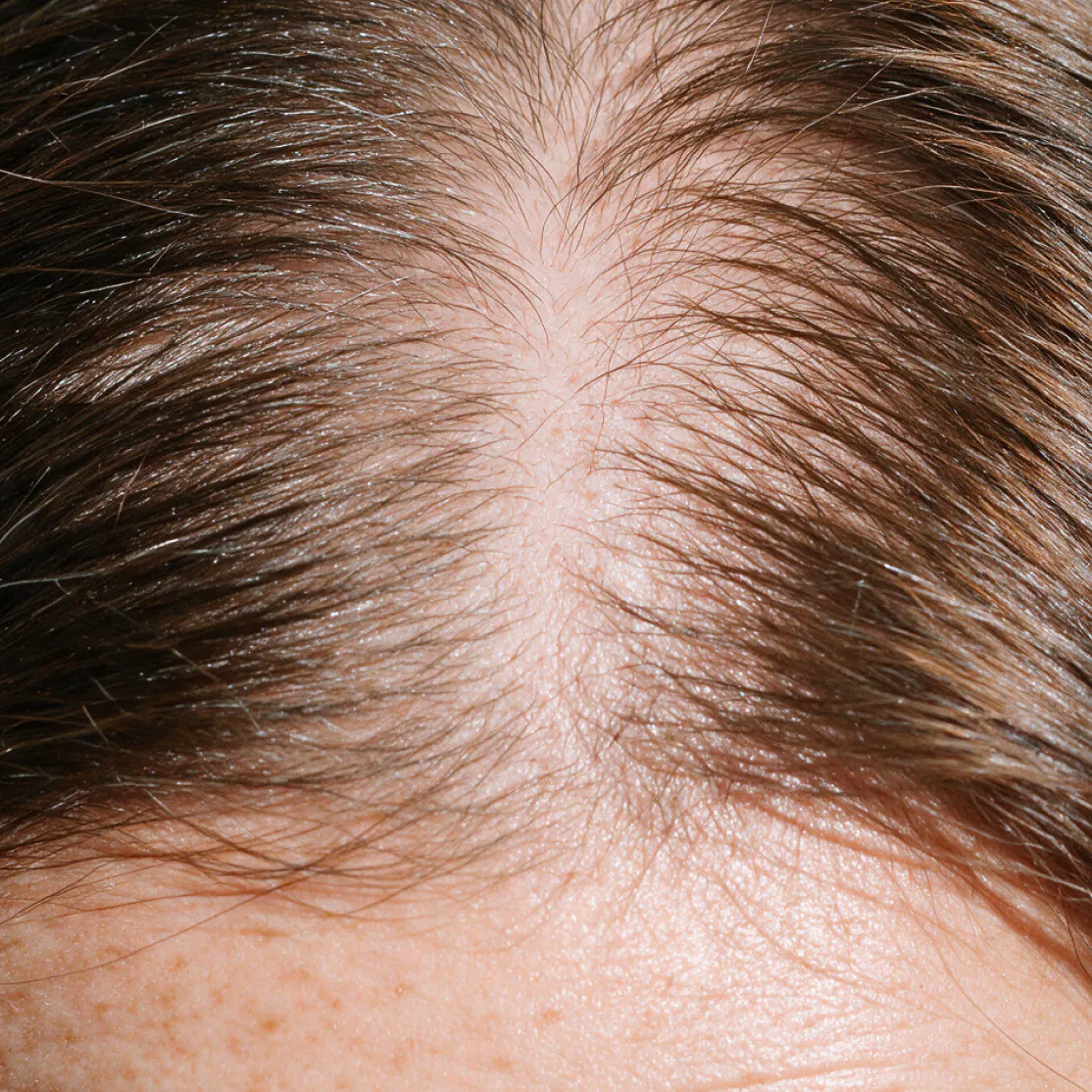
During the menopause transition, you might notice that your hair seems…different. Maybe your part looks wider or your ponytail suddenly doesn’t feel as voluminous as before. It’s not your imagination: hair thinning is common in midlife as hormones fluctuate.
Spironolactone, an FDA-approved medication for high blood pressure and heart failure, is often prescribed off-label for female-pattern hair loss and other hormone-related concerns, like acne and unwanted facial hair. And the research is there to back it up, suggesting that spironolactone may improve hair loss in some women.
Below, you’ll learn how spironolactone works for hair loss, how long it can take to see results, and what to know about dosing and side effects. We’ll also look at how it compares with other hair loss treatments and when it may be worth talking with a healthcare professional, like a Midi clinician.
What Is Spironolactone, and Why Is It Used for Hair Loss?
Spironolactone is a prescription diuretic that’s FDA approved to treat high blood pressure and heart failure. It’s commonly known by its brand name, Aldactone, or referred to as a water pill.
So, why are we talking about a blood pressure medication for hair loss? Clinicians can prescribe spironolactone off-label to help treat female-pattern hair loss, which may show up as a widening part or gradual thinning along the top of the scalp.
It might be especially helpful for midlife women dealing with menopause hair thinning or loss. As estrogen levels decline during the menopause transition, the effects of androgens may become more noticeable. Although they’re often called “male” hormones, women naturally produce androgens, too—and higher levels or greater sensitivity to them can contribute to hair loss.
That’s where spironolactone comes in: It acts as an anti-androgen, potentially blocking some of those effects. The potential benefits don’t stop at hair loss, either. Spironolactone can also help reduce unwanted facial hair and hormonal acne. Because it blocks androgens, it can cause unwanted side effects in men and is generally not recommended for male hair loss.
How Does Spironolactone Work to Treat Hair Thinning?
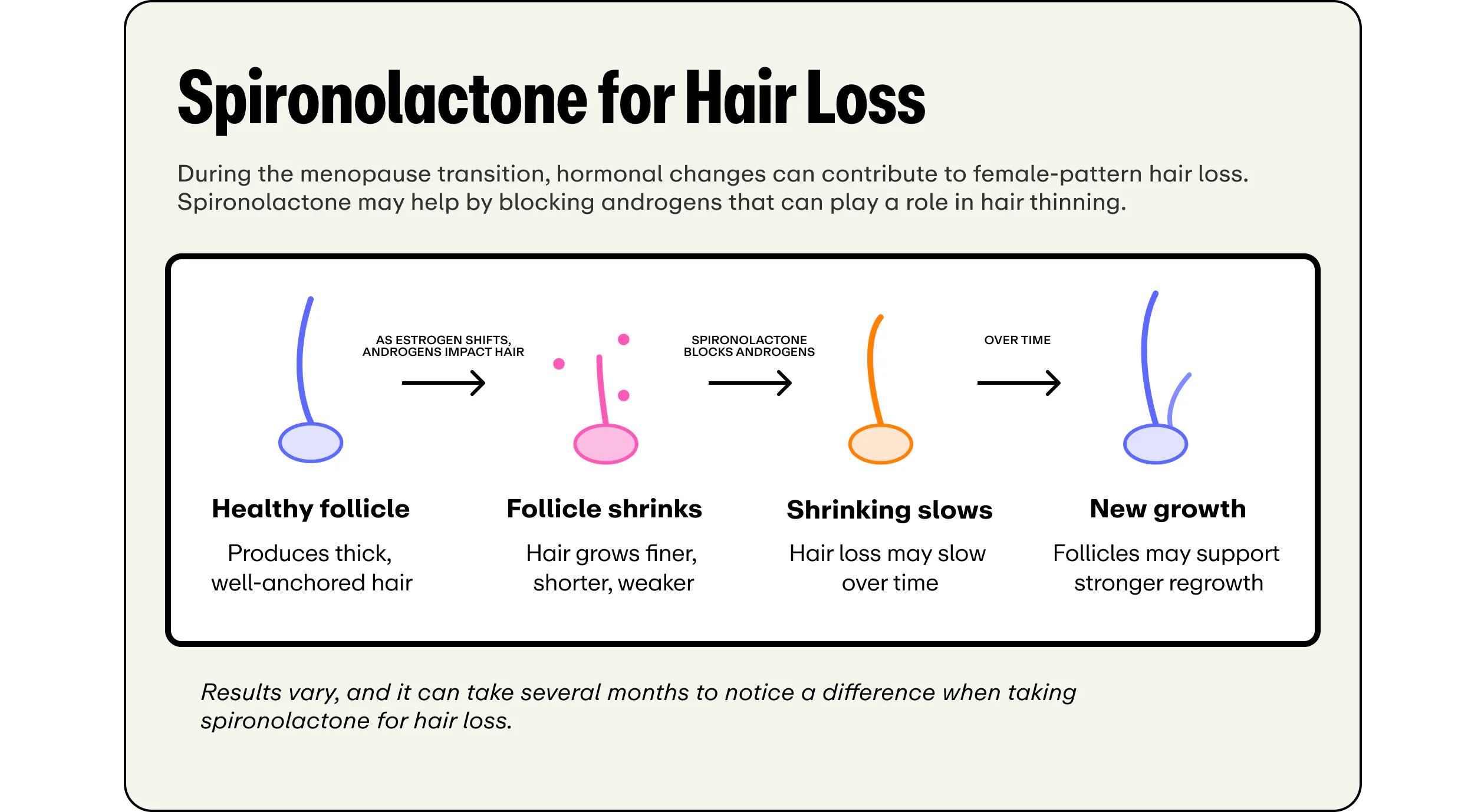
The key to spironolactone’s potential hair benefits is its anti-androgen effects. When estrogen declines during the menopause transition, the balance between estrogen and androgens shifts. That can cause androgens like testosterone to play a bigger role in hair growth.
One androgen in particular, dihydrotestosterone (DHT), is worth noting here. DHT can bind to receptors in sensitive hair follicles, causing them to gradually shrink; spend less time in the active growth phase; and produce finer, shorter hairs over time.
Spironolactone disrupts this process in a couple of ways: It blocks androgen receptors, limiting the effects of hormones like DHT and testosterone on hair follicles, and it can reduce androgen production. Together, these effects can help prevent hair follicles from shrinking, slow hair loss, and support new hair growth.
But spironolactone hair growth doesn’t happen overnight. It may take several months to see a difference, and the process won’t look the same for everyone. That wait can raise another question: Does spironolactone cause hair loss before it helps? While hair loss isn’t a common side effect, some women may experience temporary hair shedding when they first start taking spironolactone.
Does Spironolactone Actually Regrow Hair? What the Research Shows
Spironolactone can help regrow hair for some women, although results vary.
That said, the research behind spironolactone for hair loss is promising. A 2023 review found that about 57% of women taking spironolactone saw improvement in female-pattern hair loss. The rate was about 43% for those taking spironolactone alone and 66% among those combining it with other treatments. In a 2022 review, nearly half of the women taking spironolactone had less hair loss and increased hair density over time.
But improvement doesn’t necessarily mean dramatic regrowth. Spironolactone may help slow further hair loss, maintain current hair density, or support visible regrowth for some women, while others may notice little change.
Plus, results take time. Clinicians may recommend taking spironolactone for at least 6 months before assessing how well it’s working.
Who May Be a Good Candidate, Plus the Menopause Connection
Spironolactone isn't a one-size-fits-all treatment for hair loss. Because it works as an anti-androgen, spironolactone may be an option for women with female-pattern hair loss, including hair thinning during menopause or perimenopause. A clinician may also consider it if you have polyendocrine metabolic ovarian syndrome (PMOS, formerly known as polycystic ovary syndrome, or PCOS) or other signs of higher androgen activity, such as acne or excess facial or body hair.
Menopause can play a role because declining estrogen shifts the balance between estrogen and androgens, which may make androgen-related hair changes more noticeable. But not all thinning hair during menopause is caused by androgens, so figuring out what's behind your hair loss is an important first step.
While it can be effective, spironolactone isn’t the right fit for everyone. You may not be a good candidate if:
- You’re pregnant or trying to conceive: You should avoid spironolactone if you are pregnant or trying to conceive because it may affect a developing baby, particularly males.
- You have certain heart or kidney problems: Because spironolactone can increase potassium levels, it may not be safe for people with certain heart or kidney conditions.
- You take medications or supplements that raise potassium: Some medications, including certain blood pressure medications and types of birth control, as well as potassium supplements, may further increase the risk of high potassium when combined with spironolactone.
- You’re using a testosterone supplement: Using spironolactone to decrease testosterone while also taking a testosterone supplement can decrease the effectiveness of both therapies.
That’s why it’s so important to speak with a clinician––like the women's-health specialists at Midi––if you’re considering spironolactone for hair loss. They can look into what’s behind hair thinning or other changes, review your health history and medications, and order blood tests to check your kidney function and potassium levels before you start treatment.

Spironolactone Dosage and How Long It Takes to Work
A typical spironolactone dosage for hair loss can range from 50 to 200 milligrams (mg) per day. But there isn’t one standard dose that works for everyone. Your clinician may start as low as 25 mg per day and adjust your dose based on how well you tolerate the medication and how your hair responds.
When it comes to results, they can take some time. It generally takes 3 to 6 months to notice changes, but it can take up to a year or longer to see significant improvement. Spironolactone affects everyone differently, so results can really vary.
In one study of women with female-pattern hair loss, spironolactone doses ranged from 25 to 200 mg daily, with an average dose of 100 mg per day. Women saw improvements after 6 months, with benefits continuing through a year or longer. A 2022 review similarly found that better results were generally seen after at least 12 months of treatment at doses of 100 to 200 mg per day.
Keep in mind that spironolactone is a maintenance treatment, rather than a cure for hair thinning or loss. The benefits generally last only as long as you continue taking it. If you stop treatment, hair loss may gradually return.
You may be able to combine spironolactone with other hair loss treatments like minoxidil. Talk with your clinician about whether adding another treatment can improve your results.

Side Effects and Safety Considerations
Like any medication, spironolactone can cause side effects, including:
- headaches
- dizziness or drowsiness
- increased urination
- gastrointestinal issues such as nausea, diarrhea, and stomach pain
- breast tenderness
- menstrual cycle changes
- low sex drive
- high potassium levels
High potassium is one side effect that’s especially important to be aware of. Signs can include muscle weakness, an irregular heartbeat, and tingling or numbness.
Your clinician can regularly check your kidney function and potassium levels, see how you’re responding to treatment, and adjust your dose or treatment plan if needed.
Combining Spironolactone With Other Hair Loss Treatments
Spironolactone is often used with other hair loss treatments, especially minoxidil. The two drugs work differently:
- Spironolactone targets androgens that can contribute to female-pattern hair loss.
- Minoxidil acts directly on hair follicles to promote growth. (There's also an oral version of minoxidil that can help with hair loss.)
A small 2025 study found that women who took spironolactone while using topical minoxidil were more likely to see noticeable improvements in their hair loss after 6 months than women who used minoxidil alone.
Your clinician may also consider finasteride, another medication that’s sometimes prescribed off-label for female-pattern hair loss, particularly after menopause. While spironolactone mainly blocks the effects of androgens on hair follicles, finasteride works by actually lowering DHT levels. In a small clinical trial, both spironolactone and finasteride improved hair density and hair loss when combined with topical minoxidil.
For women experiencing thinning hair during the menopause transition, hormone therapy may also be part of the conversation, depending on your symptoms and overall health. But hormone therapy isn’t used specifically to treat female-pattern hair loss, and more research is needed to understand how it affects hair growth.
It’s also important to look for other factors that could be contributing to hair loss. Depending on the cause, your clinician may recommend addressing nutritional deficiencies like low iron, checking your thyroid health, or finding ways to manage stress.
Ultimately, the best approach depends on the causes behind your hair loss, your health history, and your treatment goals. Your clinician can help you put together a personalized plan that may include spironolactone alone or alongside other treatments.

How to Get Started With a Clinician
Hair loss during midlife is common, but that doesn’t mean you have to live with it. Certain treatments may help slow hair thinning or support regrowth.
If you’re interested in taking spironolactone for hair loss, your first step is speaking with a clinician. Midi clinicians specialize in midlife women’s health, so they can look at the bigger picture, including whether hormonal changes may be contributing to your hair loss. You’ll start with a medical evaluation to go over your symptoms and health history, along with any appropriate lab work.
From there, your clinician can decide whether spironolactone is a good fit. If it is, they can prescribe the medication and monitor how you respond to treatment.
Once you start taking spironolactone, try to track your hair changes by taking photos every few months and noting any side effects. And give it time: It can take several months to notice changes and up to a year or longer to see significant improvement.
Key Takeaways
- Spironolactone is a prescription diuretic that clinicians can prescribe for female-pattern hair loss, including hair thinning during the menopause transition.
- The medication works by blocking the effects of androgens on hair follicles, which can make it especially helpful for hormone-related hair loss. It may help slow hair loss and support new hair growth.
- Spironolactone can cause side effects––such as increased urination, dizziness, and high potassium levels––and it isn’t the right fit for everyone. A clinician (like the ones at Midi) can help determine whether the medication is appropriate for you.
- It can take several months to notice changes and up to a year or longer to see significant improvement from spironolactone for hair loss.
- Combining spironolactone with other hair loss treatments, such as minoxidil, may improve results for some women. The best treatment plan depends on what’s causing your hair loss, your health history, and your individual goals.
Frequently Asked Questions (FAQs)
Is it worth taking spironolactone for hair loss?
Research suggests that spironolactone may be an effective treatment for female-pattern hair loss. It’s been shown to help slow hair loss and support regrowth for some women, but whether it’s worth taking depends on what’s causing your hair loss and your individual treatment needs.
How long can you stay on spironolactone for hair loss?
You may need to take it for around 3 to 6 months to see results and use it longer term to maintain your results, since hair loss can gradually return after you stop treatment.
Which is better, minoxidil or spironolactone?
Neither is necessarily better for everyone. Minoxidil and spironolactone can both help treat female-pattern hair loss, but they work differently. Minoxidil acts directly on hair follicles to promote growth, while spironolactone blocks androgen activity that can contribute to hair thinning. Also worth considering: Because minoxidil is effective in very low doses, it’s less likely to have side effects than spironolactone. Your clinician may recommend both, depending on your needs.
What is better for female hair loss, finasteride or spironolactone?
There isn’t a clear winner when comparing spironolactone versus finasteride for female hair loss. Both can help treat female-pattern hair loss, but there isn’t enough evidence to say that one is better overall. The best option depends on what’s behind your hair loss, your health history, and treatment goals.
Does spironolactone work for postmenopausal women?
Spironolactone can help treat female-pattern hair loss in postmenopausal women, particularly when androgen activity is contributing to hair thinning.
If you’re in perimenopause or menopause and want guidance from clinicians who specialize in women’s midlife health, book a virtual visit with Midi today.
Hormonal change is at the root of dozens of symptoms women experience in the years before and after their period stops.
Our trained menopause specialists can help you connect the dots to guide you towards safe, effective solutions.
Whether you need personalized guidance or a prescription routine to tackle symptoms—including brain fog, hot flashes, sleep trouble, mood swings, and weight gain—we’ve got you covered. Learn more here.
Midi’s mission is to revolutionize healthcare for women at midlife, wherever they live and whatever their health story. We believe that starts with education, to help all of us understand our always-changing bodies and health needs. Our core values guide everything we do, including standards that ensure the quality and trustworthiness of our content and editorial processes. We’re committed to providing information that is up-to-date, accurate, and relies on evidence-based research and peer-reviewed journals. For more details on our editorial process, see here.