
 Rebecca Yee, MD

When you’re in midlife, the stages of menopause becomes a hugely fascinating (and sometimes confusing) topic. Major hormonal changes are underway, and it may seem hard to draw a line between one stage and another. Nonetheless, menopause is a journey, and each stage has its own symptoms and treatment options. You deserve to understand what you’re experiencing—and have a real forecast for what’s ahead. Know, too, that Midi Health clinicians are here to help you thrive through perimenopause, menopause, and postmenopause.
The stages of menopause unfold over years, not months. Yes, years—but there is a bright side: Knowing where you are in the process can make a meaningful difference in understanding your symptoms and knowing how to treat them.
Too often, women move through these stages without knowing what’s supposed to happen next. Adding to the confusion, the word “menopause” is used to describe the entire transition. But menopause is actually one specific point in time—the 12-month mark after your final period. The years leading up to it are perimenopause, and everything after it is postmenopause.
This is one of the biggest hormonal shakeups that your mind and body experience in life. So, consider this your menopause roadmap. We’ll break down the stages of menopause and symptoms, typical age ranges, and your treatment options. We’ll also cover when it makes sense to get support from a menopause-informed clinician, like one at Midi.
What Are the Stages of Menopause?
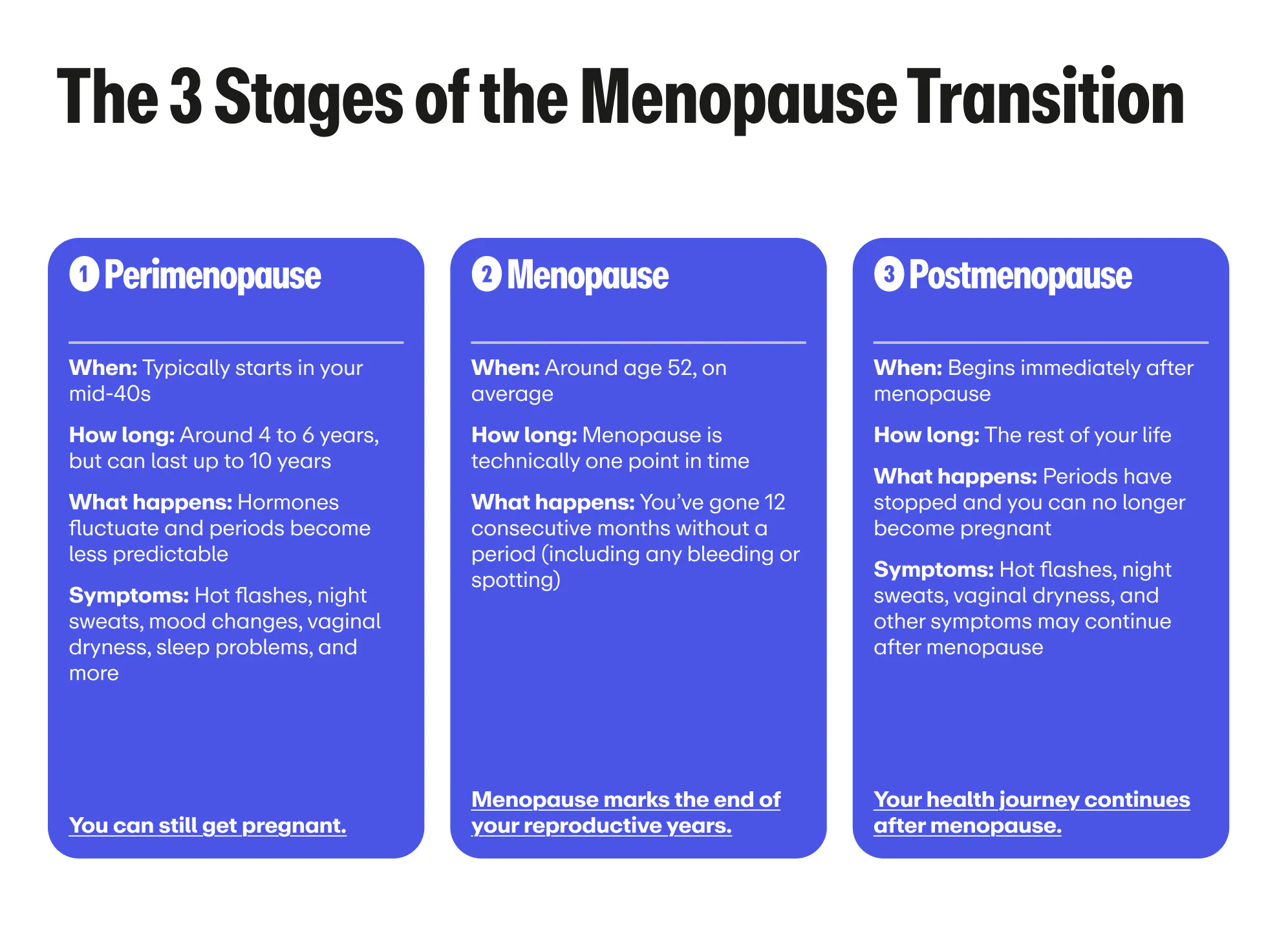
The menopause transition is far from linear. There’s a whole period leading up to menopause, followed by a whole lot of life after. Here are the three stages:
- Perimenopause: the years-long transition leading up to menopause, when hormone levels start fluctuating and your periods begin to change
- Menopause: the single point in time when you’ve gone 12 months in a row without a period (assuming there isn’t another health explanation)
- Postmenopause: all the years after menopause
Simple enough, right? Well, this is menopause we’re talking about, so naturally, there’s a little more nuance. For instance, you may see references online to four stages instead of three. That’s because perimenopause is often divided into early and late stages. You may also come across STRAW+10, a detailed framework that clinicians may use (we’ll get into that below).
One of the most important takeaways—and one of the most misunderstood—is that menopause itself isn't really a “stage.” It’s a milestone, the point at which you’ve gone 12 months without a period. So, when people talk about menopause symptoms, they’re usually talking about symptoms that show up during perimenopause, around menopause, and in postmenopause.
Having a handle on where you are in the transition can make conversations with your clinician and decisions about your care more useful. Plus, it can help you anticipate what’s to come.

The STRAW Staging System, Explained in Plain Language
If you’ve ever googled “menopause symptoms,” you may have stumbled across STRAW+10 (aka the Stages of Reproductive Aging Workshop). This is the very official-sounding name of the framework that some healthcare professionals use to map the stages of reproductive aging.
Those stages are:
- reproductive years
- early perimenopause
- late perimenopause
- menopause
- early postmenopause
- late postmenopause
The framework mainly reflects your menstrual cycle, because your period is often the best real-time clue about where you are in the transition.
Here’s what the basic progression generally looks like in terms of STRAW+10:
- In early perimenopause, menstrual cycles start to shift (changing from your usual by 7 or more days).
- In late perimenopause, longer stretches (60 days or more) without a period become more common.
- Menopause is confirmed after 12 consecutive months without a period.
- Postmenopause begins after that point.
The STRAW+10 framework isn't perfect for everyone. If your periods aren’t predictable—due to a hysterectomy, birth control, or certain medical conditions—it can be harder to use these phases as a guide.
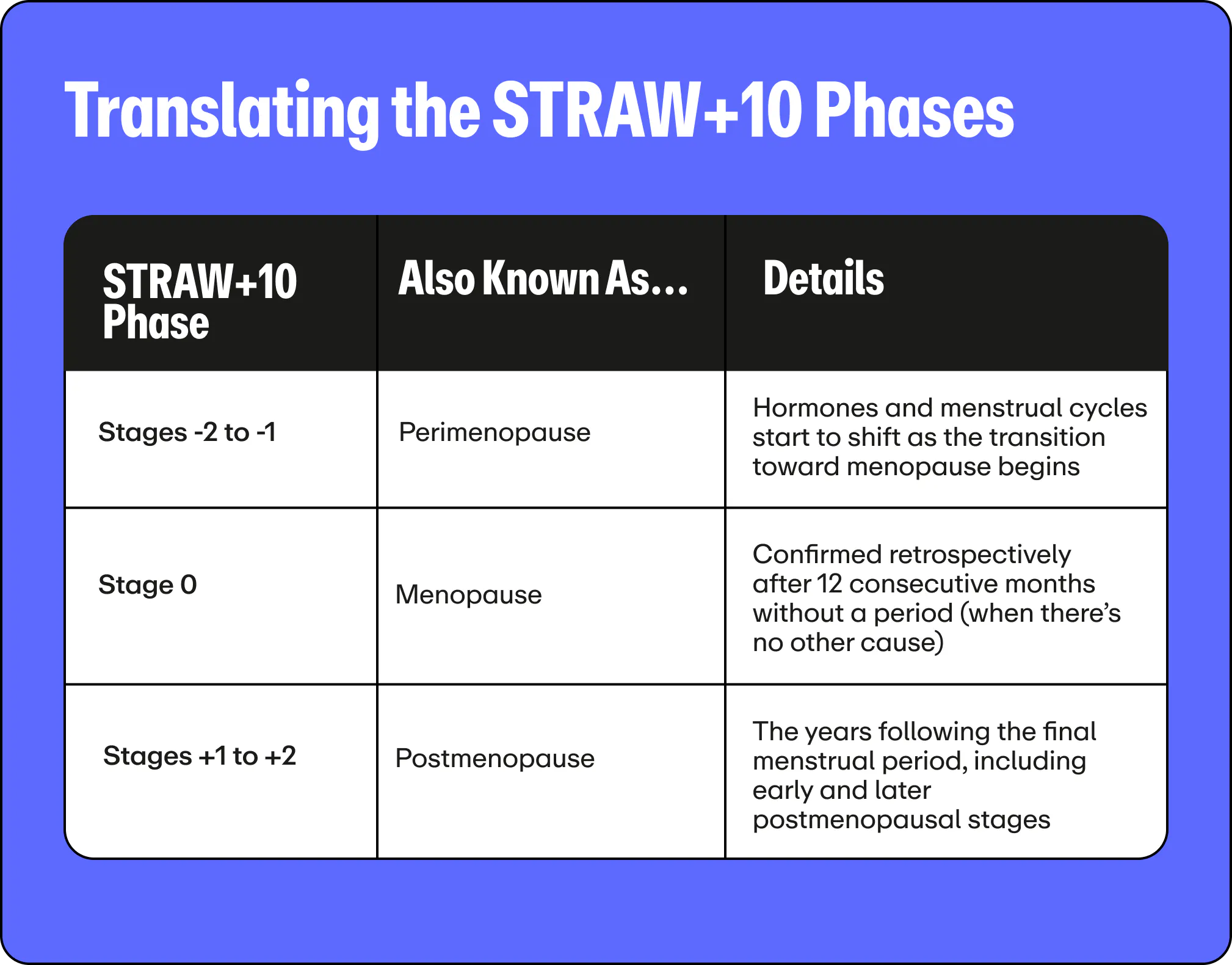
But remember, because the STRAW+10 framework is mainly used in clinical contexts, most women think of the menopause transition in three main phases: perimenopause, menopause, and postmenopause.
Stage 1: Perimenopause
Perimenopause is the years-long lead-up to menopause. It’s often broken down into two stages of its own: early perimenopause and late perimenopause.
Early perimenopause
Early perimenopause is often where things start getting a bit…erratic. Your period may still show up most months, but it’s not quite as consistent as it used to be.
One of the hallmarks is a change in your cycle length—typically a difference of 7 or more days between consecutive cycles—and in flow, whether that means heavier or lighter periods. Specifically, cycle lengths are often shorter.
And because your hormones, especially estrogen and progesterone, are starting to shift, your period probably isn’t the only thing that feels different. You may notice:
- new PMS-like mood changes
- sleep disruption
- breast tenderness
- occasional hot flashes
The typical starting age is early to mid-40s, though it could start in the late 30s. For some lucky ducks, this stage lasts only 1 or 2 years, but it’s a years-long process for others. Everyone’s experience is unique, but research has suggested that women who enter perimenopause at a younger age tend to spend more time in this early peri stage.
Late perimenopause
While early perimenopause may hint that things are “off,” late perimenopause is typically anything but subtle.
One of the biggest changes is that periods may start getting much farther apart. In the STRAW+10 framework, going 60 days or more between periods is one marker of late perimenopause. You might even go months without one, then suddenly get what feels like the period of the century.
Hot flashes and night sweats may peak during this time, which—shocker—can mess with your sleep. Your emotional thermostat can also feel a tad glitchy (which may rhyme with another word for how you’re really feeling), and some women might develop vaginal or urinary symptoms. But there’s no universal experience; some women barely notice any changes, while symptoms are seriously disruptive for others.
Another reality of late perimenopause: If you’re still ovulating, pregnancy is possible. So if pregnancy isn't on your peri bucket list, be sure to use contraception until menopause has been confirmed.
Stage 2: Menopause
Menopause isn't a stretch of time—it’s a milestone (and, for many women, a hallelujah). Clinically, menopause is the point when you’ve gone 12 months in a row without a period.
In the United States, the average age to hit menopause is 52, although there’s a pretty wide range of “normal.” Menopause before age 45 is generally considered early menopause, while menopause before age 40 is considered premature menopause. In some cases, that can be related to primary ovarian insufficiency or another medical cause. Experiencing menopause this early should be discussed with your clinician.
The timing can also be influenced by genetics, smoking, certain medical treatments, and surgery. When both ovaries are removed or medications suppress ovarian function, menopause can happen abruptly, rather than gradually. This is known as surgical or medically induced menopause.
Stage 3: Postmenopause
Gone a full year without a period? Welcome to postmenopause—aka, the rest of your life.
The first 5 to 6 years after menopause are sometimes called early postmenopause. Hot flashes, sleep problems, and mood changes may start to ease—or can stick around for a while.
As estrogen levels remain low, the focus starts to shift. Vaginal and urinary symptoms can become more noticeable, and protecting your long-term health becomes even more important—especially your bones, heart, and metabolic health. This new era comes with new priorities, and it’s a great time to stay on top of preventive care.
At What Age Does Each Stage Start, and How Long Does It Last?
It can be maddening to hear ranges instead of nice, neat ages for each stage. But everyone’s timeline is different.
The reason the whole transition typically takes 4 to 8 years or even longer? Your ovaries don’t suddenly stop producing estrogen and progesterone. Instead, hormone production tapers down gradually and unpredictably.
Here’s what the typical age range looks like for each stage of the transition:
- Perimenopause: On average, it begins in your mid-40s and lasts for 4 years. In a 2026 Midi survey, 42% of respondents first noticed perimenopause symptoms between ages 40 and 44. But it can start as early as your 30s or as late as your 50s, and it may be relatively short-lived or last several (or more) years.
- Menopause: The average age of menopause in the United States is 52, though it can happen earlier or later. After this milestone, you’re officially onto…
- Postmenopause: Because you are considered postmenopausal as soon as you hit menopause, the average age is also 52. This stage lasts for the rest of your life.
Everything from your genetics to your medical history to your current health can influence the timing. One of the best guesses you may have is knowing the age your mother reached menopause, though it’s still not a guaranteed predictor.
What Success Looks and Feels Like
Symptoms by Stage: What Changes and When
If you’ve ever wondered why one woman sails through perimenopause while another gets every symptom in the book, welcome to the hormonal lottery. You can do everything “right” and still have a starkly different experience than your sister or best friend.
That said, here are the most common symptoms by stage:
- Cycle changes: This is often one of the first signs of perimenopause. Your periods may become longer, shorter, heavier, lighter, or generally less predictable.
- Hot flashes and night sweats: These moments of heat can start during perimenopause and are often especially noticeable around the menopause transition.
- Sleep problems: Trouble falling asleep, staying asleep, or waking up feeling like you actually slept? Yep, perimenopause can definitely have you cursing at imaginary sheep—and it may continue through postmenopause, too.
- Mood and anxiety: Hormonal fluctuations during perimenopause can play a role in mood changes and anxiety, while sleep disruptions, hot flashes, stress, and other midlife demands can pile on. These symptoms can sometimes continue in postmenopause.
- Brain fog: Forgetfulness, difficulty concentrating, and feeling easily distracted are all common complaints during perimenopause—and they can continue into postmenopause.
- Joint aches: Achy or stiff joints are commonly reported during perimenopause and postmenopause (although they can have plenty of causes unrelated to hormones, too).
- Weight and body composition shifts: Changes in weight and where your body stores fat often start in perimenopause and continue as you age.
- Libido changes: Throughout the transition, you may feel less or more interested in sex, or you might notice no change. Hormones, sleep, mood, relationship factors, and vaginal or sexual discomfort can all come into play.
- Vaginal and urinary symptoms: Vaginal dryness, painful sex, urinary urgency, and other symptoms—collectively known as genitourinary syndrome of menopause—can begin in perimenopause and often become more noticeable in postmenopause, when estrogen levels remain consistently low. Unlike hot flashes, these symptoms don’t usually fade and may worsen without treatment, but they’re absolutely treatable.
Certain symptoms deserve prompt medical attention. If you’re experiencing heavy bleeding, bleeding after menopause, or new severe pain, seek medical care as soon as possible.
How Are the Stages of Menopause Diagnosed?
Figuring out where you are in the menopause transition isn’t about one magic number. Clinicians typically look at the bigger picture—your age, menstrual history, and pattern of symptoms—to get a sense of where you are.
A single blood test isn’t diagnostic, since hormones like follicle-stimulating hormone (FSH) and estradiol can swing quite a bit day to day during perimenopause. At-home menopause tests aren’t a menopause crystal ball, either, due to those fluctuations. Plus, they can’t put your levels into the context of your cycle history and symptoms.
That doesn’t mean labs never have a role. Your clinician may recommend testing if you’re experiencing menopause earlier than expected to rule out other possible causes of symptoms (like thyroid problems) or when your periods aren’t giving you much to go on—for example, after a hysterectomy or when birth control makes your cycle difficult to track.
Keep in mind: You don’t need to “prove” you’re in perimenopause before you get help. If symptoms are affecting how you feel or function, that’s reason enough to talk with a clinician.

Treatment Options at Each Stage of Menopause
Wherever you are in the menopause transition, you have options to help smooth the ride.
When you’re in perimenopause and your periods start doing their own thing, hormonal birth control or cyclic progesterone can help make them more predictable. If hot flashes and night sweats are keeping you uncomfortable, hormone replacement therapy (HRT, now commonly referred to as menopause hormone therapy, or MHT) may help. It’s considered the most effective treatment for hot flashes, night sweats, and some other symptoms—symptoms that can continue into postmenopause.
If you have a uterus, hormone therapy generally involves estrogen plus progesterone (the latter of which helps protect the uterine lining). HRT can come as a patch, gel, or pill, as well as in other forms, and whether it’s right for you depends on your symptoms, age, health history, and personal risk factors. For vaginal and urinary symptoms, low-dose local vaginal estrogen is a first-line treatment. Many patients continue to take hormone therapy through early and late menopause as well.
At any stage, hormone-free options can ease some symptoms, too. Certain SSRIs/SNRIs, gabapentin, and newer non-hormonal medications can help with hot flashes.
And don’t underestimate the basics. Midlife is the time to focus on things that keep your body healthy for the long haul, including:
- Strength training: for muscles and bones
- Adequate protein: to support muscle and metabolic health
- Good sleep habits: to support healthy weight, stress relief, and overall wellness
- Not overdoing alcohol: to reduce peri symptoms and improve sleep
- Bone and heart health: to prevent issues in the decades ahead
There’s no gold-star way to do menopause. Having a menopause-aware clinician in your corner, like one at Midi, can help you make sense of your options and adjust your plan along the way as needed.
When to Talk With a Menopause Specialist
Menopause doesn’t always follow an orderly timeline, and you don’t have to tough it out or wait until symptoms are unmanageable to ask for help. It’s worth talking with a menopause specialist if symptoms are affecting your work, sleep, or relationships; or you’re experiencing heavy or irregular bleeding.
At Midi, clinicians are trained in perimenopause and menopause. In a virtual visit, they’ll listen to your symptoms and health history, help you understand where you are in the menopause transition, and create a personalized Care Plan. Depending on your needs, that may include hormone therapy, non-hormonal treatments, and lifestyle support. Midi is in network with most major insurance providers, so getting expert care may be more accessible than you think.
Key Takeaways
- There are three general stages of the menopause transition: perimenopause (the years-long transition leading up to your final period), menopause (the milestone after 12 months without a period), and postmenopause (everything that follows).
- There’s no one-size-fits-all timeline for the menopause stages. Perimenopause typically begins in your 40s, and menopause happens around age 52 on average. But there’s a wide range of what’s considered normal, and each person’s timeline and overall experience can look different.
- Symptoms and treatment options can vary at each stage. Depending on your symptoms, health history, and preferences, options can include hormone therapy, non-hormonal medications, lifestyle strategies, and more.
- You deserve support at any stage in the menopause transition. Your age, period patterns, and symptoms usually give more insight into where you’re at than a single blood test, and a menopause-aware clinician can help you understand what’s happening and provide the right support.
Frequently Asked Questions (FAQs)
What is the hardest stage of menopause?
Everyone’s experience is different, but late perimenopause is widely considered the most disruptive stage. Hormonal fluctuations can lead to peak body and mind symptoms, which typically lessen during postmenopause, once estrogen settles down into a steadier state.
What are the signs menopause is coming to an end?
The biggest telltale signs that menopause is around the corner is experiencing longer gaps between periods (with months between cycles) and changes in how much you bleed (whether that’s heavier or lighter).
What age is menopause at its worst?
There’s no definitive age that menopause is most tough to manage, but late perimenopause (typically your late 40s or early 50s) is commonly described as a particularly rough patch.
What are the signs and symptoms of menopause at 40?
At 40, you may experience the first signs of early perimenopause. These can include hot flashes, mood changes (especially anxiety and irritability), and trouble sleeping.
Do you still go through the stages of menopause after a hysterectomy?
If your ovaries are removed, you go through surgical menopause right away (the day of the surgery). If your ovaries stay in after a hysterectomy, you may enter menopause a few years earlier than normal.
If you’re in perimenopause or menopause and want guidance from clinicians who specialize in women’s midlife health, book a virtual visit with Midi today.
Hormonal change is at the root of dozens of symptoms women experience in the years before and after their period stops.
Our trained menopause specialists can help you connect the dots to guide you towards safe, effective solutions.
Whether you need personalized guidance or a prescription routine to tackle symptoms—including vaginal dryness and irritation, brain fog, hot flashes, sleep trouble, mood swings, and weight gain—we’ve got you covered.
Midi’s mission is to revolutionize healthcare for women at midlife, wherever they live and whatever their health story. We believe that starts with education, to help all of us understand our always-changing bodies and health needs. Our core values guide everything we do, including standards that ensure the quality and trustworthiness of our content and editorial processes. We’re committed to providing information that is up-to-date, accurate, and relies on evidence-based research and peer-reviewed journals. For more details on our editorial process, see here.