


If you’re receiving estrogen therapy for symptoms like hot flashes and night sweats, you may be wondering when to increase your estrogen dose—especially if you don’t feel the relief you were expecting. Estrogen therapy helps make up for the loss of estrogen during perimenopause and menopause, and dosage changes should be based on a thorough conversation with a trained menopause specialist, like one at Midi Health. But you can look out for certain signs that indicate it’s time to have that check-in about whether a higher dose may be right for you. Read on to learn what to watch for and how to get the conversation rolling with your clinician.
So many things in life need tweaking—and estrogen therapy is no exception to that truth. It’s the most effective treatment for those hot and sweaty surges that disrupt your days and interrupt your sleep during midlife, as well as for other perimenopause and menopause symptoms. But sometimes you need an adjustment to the form or dose of estrogen you’re taking.
The right estrogen dose is usually the lowest dose that relieves symptoms with the fewest side effects, but many women could benefit from a change. This might happen when you’re just starting hormone replacement therapy (HRT, now commonly referred to as menopause hormone therapy, or MHT). Or it could occur even after you’re well into treatment, when your body and its needs have changed.
This is all normal, and it doesn’t mean that hormonal therapy isn’t working for you. Consider it another opportunity to personalize your treatment with the help of a menopause specialist (like a clinician at Midi), so that it works well for you.
When to Increase Estrogen Dose: The Short Answer
Whether you could benefit from a higher dose of estrogen is an important issue to bring up with your clinician. That’s because hormone therapy—and any changes to your personal protocol—should always be individualized to your situation and symptoms.
You should talk with your clinician about possibly changing your dosage during certain scenarios, such as when:
- Your symptoms persist despite consistent use of estrogen therapy.
- You have new symptoms.
- There’s a change in your medical history.
- You’re taking new medications.
The official recommendation for hormone therapy is to start at the lowest dosage possible and increase from there when needed for symptom relief. If you experience side effects when the dosage is increased, your clinician may lower it again.
Needing an HRT adjustment is common, which is why regular follow-up care is so important. This allows your clinician to assess how you’re doing and feeling. Then, if needed, they can make adjustments to the amount or timing of the dose you’re receiving, as well as to the type or form of medication.
True Stories Of Transformation
How Estrogen Dosing Works in Menopause Care
The estrogen used in hormone therapy is the same or similar to the estrogen in your body, and it can treat symptoms caused by declining hormone levels, including hot flashes and night sweats. It can also help prevent bone loss after menopause.
Estrogen may also help with:
- painful sex
- mood symptoms
- sleep trouble
- period problems
- weight gain
- brain fog
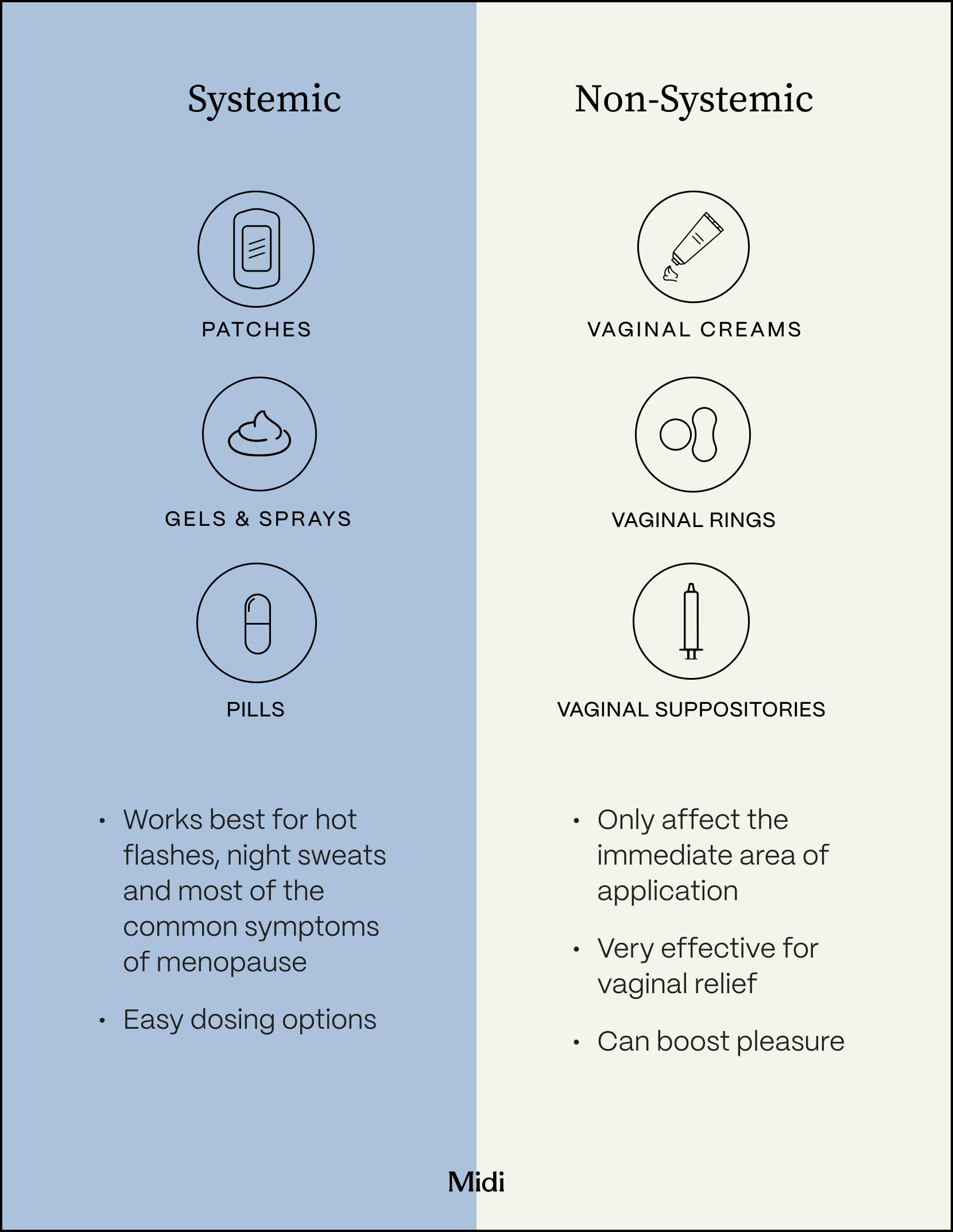
One common form of estrogen is systemic estrogen (meaning, estrogen is sent all around your body), delivered via pills, patches, gels, or sprays.
Another form is vaginal estrogen, a local estrogen (meaning, it remains in vaginal tissues and very little gets into your bloodstream). Vaginal estrogen is used to treat genitourinary syndrome of menopause (GSM), which includes symptoms like vaginal dryness, painful sex, and urinary urgency and incontinence.
If you have a uterus, a clinician typically will also prescribe progesterone alongside estrogen. This helps protect the uterine lining from an overgrowth of endometrial tissue, which can increase the risk of endometrial cancer.
Signs Your Estrogen Dose May Be Too Low
With estrogen therapy, your clinician will work with you to find the most appropriate and effective dosage for your treatment goals, assessing it along the way to make sure everything’s on track.
Consider talking with your clinician about possibly increasing your dosage if it isn’t adequately managing your symptoms or you’re not satisfied with your treatment. For example:
- You have ongoing hot flashes and night sweats. (Keep in mind that it may take 6 to 8 weeks of lower dose hormonal therapy to notice a benefit, though in some women symptoms ease sooner.)
- You’re not sleeping better. In particular, you’re still waking up in the middle of the night with night sweats.
- You haven’t experienced improvements in vaginal dryness or irritation or in urinary symptoms like discomfort, sudden urges to urinate, or urine leakage.
- Your symptoms are interfering with work or relationships, or they are messing with your quality of life.
What to Track Before Asking About a Higher HRT Dose
Ideally, when you first started estrogen therapy, you and your clinician talked about your goals and when you could expect to feel the benefits. For example, it can take up to 2 months to feel a difference in hot flash frequency or severity after starting estrogen—so being aware of that timeline can help you know what to expect. Sometimes, all it takes is more time.
Having a follow-up visit on the calendar is also helpful, because it gives you a natural framework to talk about medication adjustment, if needed. But you should feel comfortable reaching out to your clinician any time you have questions or need clarification.
At your follow-up visit, you’ll be better able to answer your clinician’s questions clearly if you bring a list of specifics about what you’re experiencing. Here’s what we recommend tracking:
- your main symptoms, plus their frequency and severity
- sleep quality, especially night sweats
- mood, energy, libido, and brain fog
- vaginal and/or urinary symptoms
- side effects of HRT you’re experiencing (and their severity), such as breast tenderness, bloating, mood shifts, headaches, and vaginal bleeding or irregular spotting (Note: If you’re postmenopausal and having vaginal bleeding or have any unexplained vaginal bleeding, you should discuss this with your clinician immediately.)

HRT Dosage Chart: Low, Standard, and Higher Estrogen Doses
Here’s an at-a-glance HRT dosage chart breaking down how estrogen doses compare across forms. (These are systemic forms; vaginal estrogen, which is a local estrogen, can be used alone or in conjunction with these.) Keep in mind that the doses are not directly interchangeable across forms. When your menopause-informed clinician changes your dosage or the form of estrogen you’re taking, they’ll understand how to make recommendations that are individualized for you.
What Happens if You Take Too Much Estrogen
Clinicians start with the lowest dosage of estrogen treatment to limit potential side effects and risks. In some instances, you may need an increase in your dose, which is common and can be safe.
But you need to be under the care of a menopause specialist during estrogen therapy, because too much can cause severe side effects, including:
- excessive vaginal bleeding
- fluid retention
- mood changes
- damage to liver, kidneys, and gallbladder
Reasons Symptoms May Persist Besides Estrogen Dose
Although estrogen therapy is effective, not all women are satisfied with their treatment. If you haven’t gotten the relief you were hoping for, here are some possible reasons why:
- You haven’t spent enough time at your current dosage.
- You’re not consistently following your prescribed regimen.
- You haven’t had regular follow-up visits to assess your regimen.
- Non-hormonal factors are contributing to your symptoms, such as poor sleep habits or relationship problems that affect sexual function.
- You may need a different form of estrogen.
- You have vaginal or urinary symptoms (aka GSM) that are better served with local vaginal estrogen than systemic estrogen.
Safety Checks Before Increasing Estrogen
Before increasing your estrogen dose, your clinician should consider the following:
- your personal health history, especially blood clots, stroke, heart attack, or liver disease
- history of breast, uterine, or estrogen-sensitive cancer
- unexplained vaginal bleeding
- untreated high blood pressure
- new medications or supplements
Make sure your clinician has all the info they need to give you the best advice about estrogen doses.
How a Midi Clinician Can Help Personalize Your Dose
The wonderful thing about having a partnership with a clinician is that you won’t have to steer the menopause ship on your own. A menopause-informed specialist, such as a Midi clinician, will review your symptoms and treatment goals, confirm that you’re using hormone therapy correctly and consistently, and recommend next steps.
Those next steps might include layering on additional treatments like non-hormonal medications or supplements and lifestyle changes that maximize the effectiveness of estrogen.
Your Midi clinician will adjust the dose or form of estrogen therapy (or both) when appropriate. They’ll also create a follow-up plan to track benefits and side effects, as well as monitor safety. The goal is the same: to create a Care Plan that you feel good about.

Key Takeaways
- Estrogen therapy is an effective treatment for menopause symptoms like hot flashes and night sweats.
- If the hormone therapy you’re currently taking is not helping relieve your symptoms, you may need a change in treatment, such as an increase in dose.
- Beyond dosage, there are other reasons why hormone therapy may not be working, including not receiving it long enough for it to kick in fully, the form of estrogen you’re taking, or not using it consistently.
- Talk with a menopause-informed clinician about your concerns and whether you should consider a higher dose. Never adjust the dose of hormone therapy on your own, as this can increase your risk of side effects or serious health concerns.
Frequently Asked Questions (FAQs)
How do I know if I need a higher dose of HRT?
Talk with your clinician if you’re unsatisfied with the level of symptom relief you’re getting from hormone therapy. They’ll discuss your options, which may include changing your dose or the form of estrogen you’re taking (such as patch, gel, pill, or spray).
How long should I wait before increasing estrogen?
The exact timing should be driven by your clinician, based on your health history, menopause symptoms, and treatment goals. For some benefits, results take weeks. For example, relief from hot flashes and night sweats can take 6 to 8 weeks after starting low-dose estrogen.
What is the lowest dose of estrogen for menopause?
Estrogen comes in many forms, including pills, patches, gels, and sprays, as well as localized vaginal estrogen. Each of these has its own dosing protocol, which includes the lowest dose used. However, the doses are not interchangeable across forms, which is why there isn't an exact number to give.
What is considered a high dose of estrogen?
High-dose estrogen differs between the various forms of estrogen used, and these doses are not interchangeable.
What happens if you take too much estrogen?
Taking too much estrogen comes with potential side effects, such as excessive vaginal bleeding; fluid retention; mood changes; and damage to the liver, kidneys, and gallbladder.
Can I increase my estrogen dose myself?
Do not increase your estrogen dose on your own. The optimal estrogen dose for you is one that maximizes benefits and minimizes risks and side effects. A menopause-informed clinician who specializes in hormone therapy treatment can put together a personalized treatment protocol that works for you.
If you’re in perimenopause or menopause and want guidance from clinicians who specialize in women’s midlife health, book a virtual visit with Midi today.
Hormonal change is at the root of dozens of symptoms women experience in the years before and after their period stops.
Our trained menopause specialists can help you connect the dots to guide you towards safe, effective solutions.
Whether you need personalized guidance or a prescription routine to tackle symptoms—including brain fog, hot flashes, sleep trouble, mood swings, and weight gain—we’ve got you covered. Learn more here.
Midi’s mission is to revolutionize healthcare for women at midlife, wherever they live and whatever their health story. We believe that starts with education, to help all of us understand our always-changing bodies and health needs. Our core values guide everything we do, including standards that ensure the quality and trustworthiness of our content and editorial processes. We’re committed to providing information that is up-to-date, accurate, and relies on evidence-based research and peer-reviewed journals. For more details on our editorial process, see here.