

If you’ve been (rudely) woken up because you’re so sweaty you soaked through your pajamas, your first thought might be filled with expletives. And then: “What is going on, and why do I sweat in my sleep?” There are many potential night sweats causes, especially for midlife women who may be experiencing hormonal changes related to menopause. Your environment, medications, or blood sugar or thyroid levels are other possible contributors. Learn what’s triggering the 3 a.m. overheating, what you can do about it, and how a menopause-trained clinician, like one at Midi Health, can help you find solutions.
You never forget your first night sweat. For me, it was around 2 a.m. one night, when I woke up icky and damp. The night before, I’d had a couple glasses of red wine. I threw off my covers in a huff and lay there under the fan, cursing the pinot and wishing to be cool again. I know what contributed to my overheating that night. But when you ask, “Why do I sweat in my sleep?,” well, that can happen due to any number of reasons when you’re a woman in midlife.
Sweating in your sleep is extremely common. Usually it has an identifiable, treatable, and not-scary cause. For women over age 35 in perimenopause or menopause, the most common culprit is fluctuating estrogen levels, though it’s not the only possible reason.
Here, we’ll talk about how your body regulates its temperature in its sleep, the most likely causes of night sweating in women, red flags to pay particular attention to, and what actually helps. And we’ll share how one of the menopause-informed clinicians at Midi can guide you in finding the best solutions for you.
What Counts as Night Sweats, and What Is Just Being Warm?
When you have night sweats, you know it. It's more than waking up hot or throwing one leg out of the covers—it’s the type of sweating that may soak your pajamas or bedding. The sweating may be severe enough to wake you up or make you drag out of bed to change your pajamas. But night sweats don’t have to be that dramatic to be bothersome. It can simply be sweating at night, even when your room isn’t warm.
As your body is getting ready for sleep, your core body temperature decreases. This is a response to several physiologic changes that play a role in sleep regulation. A cool environment is critical for good sleep. Hot surroundings disrupt sleep stages and make it easier to wake up.
If night sweats happen to you once, it’s easy to move on—you may not have to do anything about it. But if they’re affecting you regularly and cutting into your sleep, then you’ll want to investigate what could be going on. Sometimes the fix is easy, and sometimes it requires a little detective work between you and your clinician.
Is It Your Bedroom, Your Bedding, or Your Body?
Or…is it all three?! First step: What’s your bedroom environment like? There are generally three rules for setting up your bedroom for peaceful slumber: Your room should be cool, dark, and quiet.
It’s the first feature—a cool bedroom—that we’re homing in on here. Research found that many people sleep in a too-warm bedroom, which is linked to poorer sleep and more awakenings. Added to this are other factors that increase heat, such as non-breathable sheets, heavy duvets, a partner’s oven-like body heat, or a heat-trapping mattress. All of these factors can raise your core temperature higher than is comfortable for sleep, and then—wham!—you wake up in a sweat.
No matter the cause of your night sweats, focus on making changes to your bedroom to stay cooler at night. That might not be the only stop-sweating fix you need, but it may bring you closer to a more comfortable sleep.
Perimenopause and Menopause: The Most Common Cause in Midlife
Of the many night sweats causes, this is the most common: A full 80% of women have night sweats (which are simply hot flashes that occur at night) during menopause, and these symptoms can last 7 to 10 years on average, according to The Menopause Society.
You might start sweating around your neck and chest at night as a sudden, intense heat rises in your upper body and lingers for up to 5 minutes. After the heat, there’s a chill as the sweat cools. At night, you might wake up hot and sweaty or cold, damp, and shivering.
Fluctuating estrogen levels are behind these vasomotor symptoms, which is why they can persist for so long. It’s believed that women with these symptoms have a smaller thermoneutral zone, so small temperature changes can trigger a hot flash or night sweat. (The thermoneutral zone is the range of core temperatures in which the body can stay at a normal temp without kicking on its internal furnace or cooling system.)
Research also suggests that hot flashes and night sweats become more common the closer you get to menopause (when it’s been 12 months since your final period), and they tend to be worse in summer months when the weather is warmer. (Thanks a lot, hormones.)

Thyroid, Blood Sugar, and Other Hormonal Causes
Estrogen isn’t the only potential hormone that’s at play here. Dysregulation in thyroid hormones or blood sugar, as well as other endocrine disorders, can independently cause sweating in your sleep.
For example, if you have hyperthyroidism (an overactive thyroid), your body’s metabolism is faster. Not only can you experience heart palpitations, nervousness, and weight loss, but you can also have heat intolerance that leads to night sweats.
If your blood sugar dips low while you sleep, that’s called nocturnal hypoglycemia. It can happen to anyone, but people with diabetes are especially vulnerable. One symptom of hypoglycemia is sweating.
Finally, other hormonal causes include endocrine tumors and ovarian failure. It’s good to have these on your radar, but they’re far less common.
Medications That Cause Night Sweats
A whole list of medications can cause night sweats. If you’ve started on a new prescription or a new dose of a medication and start to experience sweating in your sleep, it’s time to bring that up with your clinician.
Some medications that can lead to night sweats in women include:
- antihistamines
- beta blockers
- corticosteroids
- decongestants
- insulin
- non-steroidal anti-inflammatory drugs (NSAIDs)
- thyroid hormone replacement
- selective serotonin reuptake inhibitors (SSRIs)
The list above isn’t exhaustive, and keep in mind that we often don’t ask about or look at the side effect profile of medications we take. (That list can be long.) So even if your medications aren’t on the list above, it’s still worth it to ask your prescriber or pharmacist whether the medications could cause sweating at night.
True Stories Of Transformation
Alcohol, Caffeine, and Evening Habits
There’s a link between alcohol and night sweats in midlife women, even for light drinkers. Research on the topic is conflicting, but alcohol may affect hormone and neurotransmitter levels in ways that promote hot flashes and night sweats. Because (like with me) alcohol tolerance often changes in midlife, drinking can start to be disruptive even if it never had an impact on you before.
Caffeine and certain foods, such as a high-fat, high-sugar diet or heavy meals, might also trigger night sweats. And if you know that spicy foods are one of your hot flash triggers, it’s also a good idea to avoid these at dinner.
Sleep Apnea, Anxiety, and Nighttime Stress Response
Obstructive sleep apnea (OSA) is a sleep disorder that, in women, is much more likely to start in midlife. And for women, it often presents with symptoms other than the classic loud, rumbling snoring. Instead, you might have insomnia, morning headaches, fatigue, and mood problems, which are difficult to untangle from menopause symptoms. Other research found that frequent nighttime sweating was three times more frequent in people with untreated OSA than in those without the disorder.
Anxiety is another key issue for midlife women; it can be the result of hormonal changes, increased stressors, problems sleeping, and more. Waking up with night sweats is anxiety-provoking enough—and then the next night, you may worry about waking up drenched in sweat in the middle of the night again. Then you’re in a loop of sleep disruptions that trigger more anxiety, which just makes insomnia worse.
Both OSA and anxiety are important issues to discuss with your clinician to help you get the restful sleep that’s so key to good health.
When Night Sweats Are a Red Flag
Night sweats are most often the result of women’s bedroom and sleep environment, hormonal changes, medications, and other lifestyle habits (or a combo of those things). Sometimes, though, they’re a red flag that should spark a conversation with your clinician for a deeper evaluation and possible testing.
While the overwhelming majority of night sweats are not caused by serious illness, it’s always worth getting checked out if any of the below apply to you:
- persistent fevers or chills
- severe, unexplained weight loss
- swollen lymph nodes
And seek out emergency care if you have new chest pain, significant shortness of breath, fainting, or a hypertensive emergency (blood pressure that quickly spikes to 180/110 mm Hg).
What Actually Helps: From Bedroom Fixes to Hormone Therapy
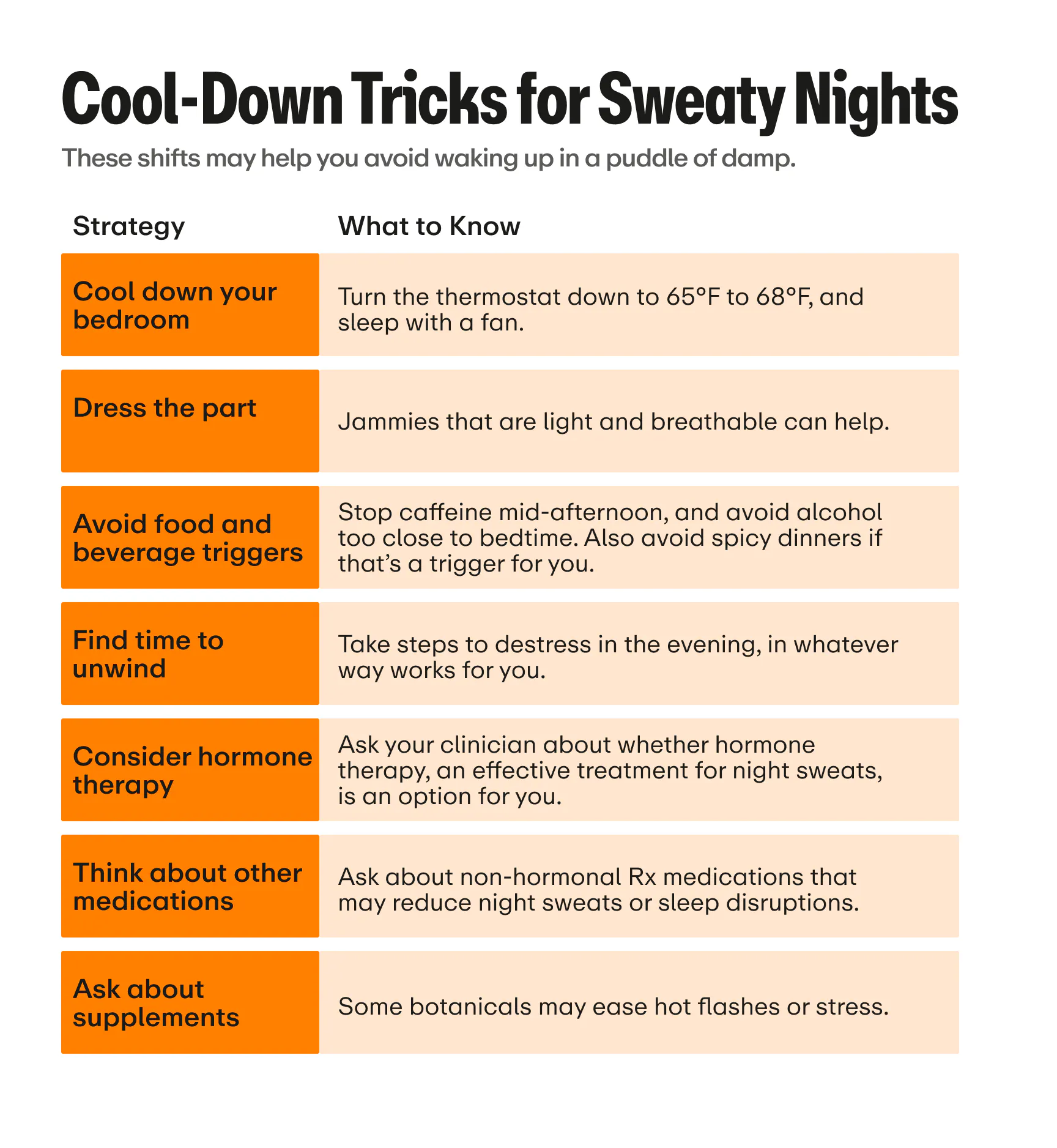
Tackling night sweats sometimes means bringing in several treatments, so here’s what you can do:
- Change your bedroom environment: Keep your bedroom at a cool 65°F to 68°F; turn on a fan; and wear lightweight, breathable pajamas.
- Rethink your habits: Avoid caffeine after mid-afternoon (or earlier if it seems to affect you), and stay away from alcohol, spicy foods, and heavy meals too close to bedtime.
- Practice calm: You know what helps you de-stress, whether that’s reading, meditating, or taking a walk. Cognitive behavioral therapy has been found to reduce the frequency and severity of hot flashes and night sweats. The Evia app for self-hypnosis is a good option, too; it’s strictly focused on menopausal hot flashes and night sweats.
- Consider hormonal management: Hormone therapy is a highly effective treatment for vasomotor symptoms.
- Look into non-hormone Rx medications: If you’re looking for a non-hormonal option, FDA-approved medications like fezolinetant (Veozah) and elinzanetant (Lynkuet) address hot flashes, while gabapentin is often used off-label before bed to reduce sleep disruptions from night sweats.
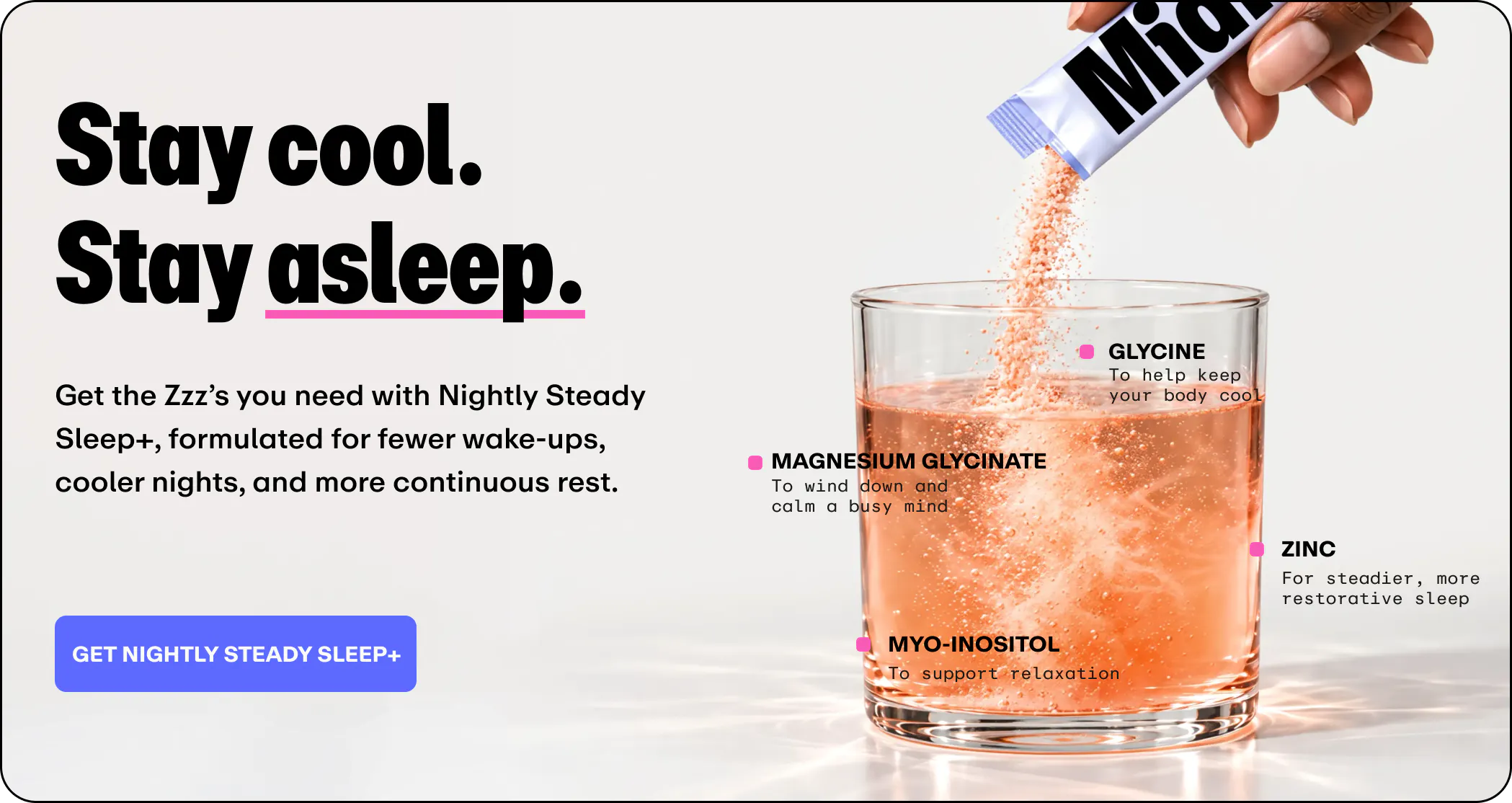
- Talk about botanical options: Supplements may provide some night flash relief, improved sleep, or reduced stress, such as black cohosh, Siberian rhubarb, maca, Midi’s Daily Cortisol Support, or Midi's Nightly Steady Sleep+. Always talk with your clinician before adding supplements to your treatment plan, and look for a brand that uses third-party testing to ensure potency and purity.
Connecting with a clinician specializing in women’s health, like one from Midi Health, can help you formulate a treatment plan that includes one or several of the methods above, individualized to your circumstances.

How to Prepare for a Visit About Night Sweats
Before your visit with a clinician, it can help you both connect the dots of what may be going on if you first gather some info about your symptoms, when they occur, and possible triggers.
- Keep a symptom log and track how often you have night sweats, their timing, and any triggers you’ve noticed. For instance, jot down whether you had a glass of wine with dinner or an espresso afterward, what time you ate, plus any notes about stress or anxiety.
- Also note include associated symptoms, such as persistent fatigue, heart palpitations, weight changes, fever, or mood changes. And write down a list of medications and supplements you’re taking.
- Consider your sleep environment, too, noting your bedroom temperature, what kind of bedding you’re using, and what you typically wear to bed.
Know that you can—and should—take night sweats seriously. They may be overwhelmingly common for women in midlife, but you deserve to be heard and get good treatment for this symptom, so that you can have snoozier nights and happier days.
Key Takeaways
- Night sweats are a common symptom in midlife, when you wake up damp or drenched, and you often feel wrung out and tired the next day.
- They’re not usually a sign of a serious health problem but are disruptive to sleep, which can lead to a cascade of other health issues. They shouldn’t be shrugged off by a clinician; the cause should be evaluated.
- One common cause is hormonal changes in perimenopause and menopause. Night sweats and hot flashes are vasomotor symptoms, which affect at least 3 out of 4 women in midlife
- Other possible causes of night sweats include medication side effects, underlying conditions like thyroid disease, behavioral habits like eating heavy meals before bed or drinking alcohol, and an uncomfortably hot sleeping environment.
- Rarely, night sweats are caused by serious illness. If they are accompanied by fever, unexplained weight loss, and chest pain or shortness of breath, consult a healthcare professional right away for an evaluation.
Frequently Asked Questions (FAQs)
Why am I sweating in my sleep in a cold room?
Night sweats while you sleep in a cold room could be due to hormone changes around menopause. They can also be a response to low blood sugar as you sleep, be a side effect of medication, or have other medical causes. It’s best to connect with your clinician if night sweats are frequent and persistent.
Is it healthy to sweat a lot in your sleep?
Although our bodies go through temperature changes as we sleep, it’s a good idea to connect with a clinician if you’re sweating a lot in your sleep. It could be due to a hot room, bedding or a mattress that traps heat, or an underlying medical condition.
Why are night sweats a red flag?
Most causes of night sweats are not related to a serious illness. However, when accompanied by other symptoms, like fevers, fatigue, unexplained weight loss, enlarged lymph nodes, or cardiac symptoms, persistent night sweats should raise a red flag and be brought to a clinician’s attention.
What are the 10 causes of night sweats?
There aren’t only 10 causes of night sweats, but some common causes include menopause; autoimmune disorders; endocrine conditions like diabetes, hyperthyroidism, and obstructive sleep apnea; obesity; infections; pregnancy and postpartum issues; your environment (sleeping in a hot room or overdressing); anxiety and depression; and medication side effects.
When should I be concerned about night sweats?
Night sweats may be a red flag when they’re accompanied by persistent fevers or chills; severe, unexplained weight loss; swollen lymph nodes; chest pain; shortness of breath; fainting; or a hypertensive emergency (blood pressure over 180/110 mmHg).
If you’re in perimenopause or menopause and want guidance from clinicians who specialize in women’s midlife health, book a virtual visit with Midi today.
Hormonal change is at the root of dozens of symptoms women experience in the years before and after their period stops.
Our trained menopause specialists can help you connect the dots to guide you towards safe, effective solutions.
Whether you need personalized guidance or a prescription routine to tackle symptoms—including brain fog, hot flashes, sleep trouble, mood swings, and weight gain—we’ve got you covered. Learn more here.
Midi’s mission is to revolutionize healthcare for women at midlife, wherever they live and whatever their health story. We believe that starts with education, to help all of us understand our always-changing bodies and health needs. Our core values guide everything we do, including standards that ensure the quality and trustworthiness of our content and editorial processes. We’re committed to providing information that is up-to-date, accurate, and relies on evidence-based research and peer-reviewed journals. For more details on our editorial process, see here.