

Can ashwagandha cause weight loss? There’s some clinical evidence that the herbal supplement may help reduce feelings of stress, so many claims have been made about its possible indirect weight loss benefits. Successfully losing weight, however, results from a multifaceted approach that includes healthy eating; moving your body regularly (ideally including strength training); and making lifestyle shifts, such as getting a good night’s rest most nights. We’ve waded through the most current science to look at whether ashwagandha is worth adding to your wellness routine. As always, talk with a healthcare professional to find out what’s right for you.
If all the online chatter is to be believed (chatter that we should always take with a big ol’ grain of salt), the herbal supplement ashwagandha has some amazing fat-burning, metabolism-boosting powers for women in midlife. Simplified, the thinking goes something like this: The stress of midlife can pack on perimenopause pounds, and ashwagandha is reported to have calming properties, so taking it can reduce stress and lead to weight loss.
However, as popular as ashwagandha is with certain social-media crowds and menopause influencers, are there actual ashwagandha benefits for female weight loss? Some evidence suggests that ashwagandha may help support lifestyle changes that can definitely help with weight loss—including restful sleep and keeping stress in check. But the weight loss claims should be viewed with a skeptical eye.
Below, learn what the research specifically shows about this herbal supplement, how to use it, who should skip it, and how to actually and effectively bolster weight loss goals.
Can Ashwagandha Cause Weight Loss? The Quick, Honest Answer
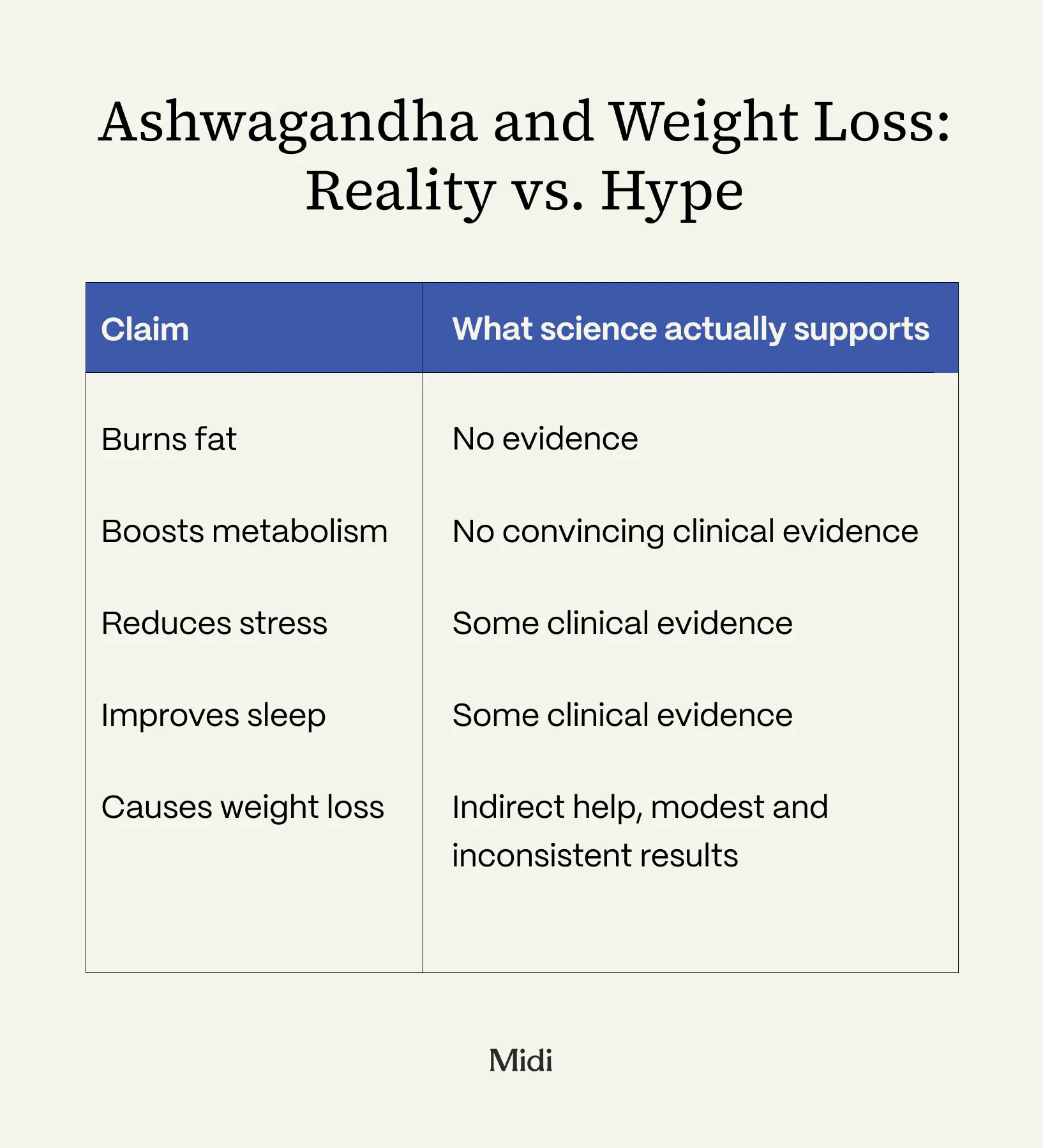
Ashwagandha may help some people with weight loss to a very small degree—but the results are inconsistent and modest, and any effects the herbal supplement has are indirect. It does not directly cause weight loss. It does not burn fat. Instead, small studies indicate it may help ease feelings of stress, one possible factor in weight gain.
Taking ashwagandha—or any supplement—is not a substitute for healthy eating, keeping up an active lifestyle, or getting clinician-guided medical care. Ashwagandha may modestly help in ways that go beyond the scale (such as sleep, stress-related cravings, or stress management) but the fat-burning, metabolism-boosting claims simply aren’t backed by science.
Does Ashwagandha Help With Weight Loss? What the Evidence Suggests
Ashwagandha is a plant that’s available as an herbal supplement and has a very long history in traditional Ayurvedic and Unani medicine systems. It’s often described as an “adaptogen,” a term used for compounds that are thought to help the body respond to stress.
Some research has looked at the potential connection between ashwagandha and weight loss. One small study found that ashwagandha helped people lose 3% of their body weight in 8 weeks—but only 14 of the 50 people studied were women, and half of them got a placebo, so that’s much, much too limited a finding to cheer about. Also, the study looked at those with high reported stress, so the modest weight loss may have been connected to ashwagandha’s stress-regulating impact.
A more recent meta-analysis found that ashwagandha may lower stress and cortisol, and it may possibly influence food cravings. However, the researchers also reported that any weight loss results were small and only indirectly related to ashwagandha.
Weight gain and loss is dictated by a variety of factors, and obesity is a complex health condition. The people who may potentially benefit the most from ashwagandha are those who, say, could use support in stress-related eating. But again, the benefits will probably be limited. It seems best to consider ashwagandha as a possible weight management support, if your clinician gives it the OK—but not your main or only strategy.
Weight Loss Success Stories
Ashwagandha and Weight Loss: Likely Mechanisms
Chronic stress can be a factor in weight gain and obesity. Experts think of their connection as a cycle, as illustrated in one review in the International Journal of Preventive Medicine. It points out that stress:
- can interfere with self-regulation and affect your habits, making it tougher to focus on healthy things like prepping and eating a balanced meal (there’s a reason that having emotional-support candy at your desk is called stress eating!)
- triggers hunger hormones, which can prompt overeating
- increases the secretion of cortisol (the “stress hormone”), promoting storage of belly fat
- interferes with sleep—getting adequate sleep helps control hunger and behavior and is an independent factor in weight management
The relationship between stress and weight gain might be bidirectional: Some studies found that weight gain has been shown to trigger higher perceived stress, suggesting that the connection between stress and obesity can result in sort of a vicious cycle.
Anything that helps reduce your stress levels has the potential to make it easier for you to respond to cravings with a clear head (instead of reaching for snacks) or get better sleep. With the right mood support, healthy routines might be easier to stick with. So while ashwagandha isn’t a weight loss tool on its own, it could help in an indirect way.
Ashwagandha Benefits for Female Weight Loss: Midlife Context
Perimenopause and menopause symptoms can stack the deck against you when it comes to weight loss:
- Sleep disruptions: Those night sweats can keep you from getting restful Zzzzs, and the lack of shut-eye can lead to next-day cravings and less control over your appetite.
- Mood and anxiety ups and downs: These emotional shifts can make it harder to stick to healthy routines.
- Muscle loss with age: As body composition changes, weight loss can become harder.
These factors affect your appetite regulation, metabolism, and activity levels, all setting the stage for weight gain. And the way those factors often interact makes it tougher: Who wants to hit a workout class or do a bunch of vegetable shopping-and-chopping when they’re exhausted or super-stressed?
Although core habits (we’ll cover these below) are far more important in this conversation, ashwagandha can be a small add-on to help you reach your goals.
Who Might Notice a Difference vs. Who Probably Won’t
Whether or not ashwagandha will give you that small boost towards your weight loss goals comes down to your existing sleep habits and stress levels. If you have other modes of stress management (such as a regular yoga practice or a running routine) and are good at prioritizing healthy sleep, ashwagandha may not affect you at all.
If you’re looking for something to help you take a breath and better process stress, then ashwagandha might be worth trying. But it won’t turn you into the chillest person you’ve ever met, and you’ll probably still need to do other things to manage stress, like getting good sleep.
Consider your goals, too. If you have large weight loss goals, then weight loss medication may be better suited for you, so long as your healthcare provider recommends it. Supplements don’t cause significant weight loss, but they can make healthy habits more doable in your life.
Diagnosis and Testing: What to Rule Out Before Blaming Cortisol
It’s important to talk with a clinician (like one at Midi Health) before deciding to take ashwagandha—or any supplement. Several underlying issues can cause symptoms like fatigue, anxiety, mood problems, and insomnia, and it’s important to suss out any medical causes.
Those include thyroid issues, nutrient deficiencies, and metabolic dysregulation, like blood sugar imbalances. Another thing to discuss with a clinician are possible side effects to medications you’re on. These issues all require different treatment than an herbal supplement.

Treatment Options: What Actually Helps You Reach Midlife Weight Goals
Successful weight loss in midlife has several components, and tackling them will lead to the best results:
- Healthy eating: A plant-based and protein-forward way of eating is a healthy way to go. The combination of protein and fiber will help keep you full, support gastrointestinal (GI) function, and promote muscle maintenance.
- Exercise: Daily cardio movement, such as brisk walks, plus a dedicated strength training routine (twice per week), will support muscle growth and body composition.
- Good sleep: Aim for 7+ hours per night, sticking to a consistent sleep and wake time. Treat night sweats with lifestyle changes (such as sleeping in a cool environment) as well as possible medication and non-hormonal prescriptions.
- Stress management: We’re all in this wild life together. What you need to find some calm will be different from the next person, but sleep, exercise, social connection, therapy techniques like cognitive behavioral therapy, and antianxiety or antidepressant medications are available options to help you navigate stress in midlife.
Ashwagandha for Weight Loss: How to Use It More Safely
Natural doesn’t mean risk-free: Herbal supplements have physiological impacts on the body. If you choose to use ashwagandha after checking with your clinician, pick a reputable brand that conducts independent third-party testing on its products. Also consider proven extracts such as Sensoril or KSM66, or standardized root extracts featuring 2.5-5% withanolides. Start with lower, recommended doses (ask your clinician and follow instructions on your product—Midi suggests 300-500 mg, once or twice a day) and adjust as tolerated.
We all react to things differently, so pay attention to how you feel when taking it. Does it make you feel chill and sleepy? Take it near bedtime. Does it help clear stress-induced brain fog so you feel less fatigued? Then earlier in the day may be better for you. If you experience side effects or feel worse after starting ashwagandha, stop taking it and discuss with your clinician.
Side Effects, Interactions, and Who Should Avoid It
Ashwagandha is generally safe for short-term use (3 months), though long-term safety isn’t well known, per the National Institutes of Health. Some things to consider:
- Watch for side effects like loose stools, nausea, and drowsiness.
- Ashwagandha could affect liver function, so talk with your clinician to get their approval before adding it to your routine.
- If you have a thyroid disorder, talk with your clinician about that; it can increase certain thyroid hormone levels.
- Discuss with your clinician first if you have an autoimmune condition; depending on your condition, the herb could make it worse.
- It can interact with certain medications, so discuss that with your clinician as well.
- If you are pregnant or breastfeeding, the general consensus is to avoid taking ashwagandha.
Working with a Healthcare Provider: How to Get Personalized Guidance
Not every provider will be knowledgeable about using herbal supplements like ashwagandha. If you’re interested in taking it, your best bet is to work with a clinician who is comfortable providing advice and guidance on this type of supplement. Once you have a trusted provider in place, here’s how to work with them to get the individualized recommendations you need:
- Talk about your major pain points and goals, whether that’s improving sleep, decreasing stress eating, bolstering your energy, or losing weight. (It’s perfectly fine to have multiple goals, too.)
- Bring or have on hand a full list of any meds or supplements you’re taking (along with dose and timing). Your provider can consider how they’d potentially interact with ashwagandha.
- Get clear about what results you’re looking for and set guideposts (in terms of timing, symptoms, or generally how you feel) that will help gauge success.
- Discuss next steps: Plan for a follow-up appointment and talk at a high level about what potential additional or alternative options are available to you if needed.

Red Flags That Indicate It's Time to Seek Care
When adding something to your routine, you’ll want to be on the lookout for signs of harmful side effects or other problems (that may or may not have anything to do with the new supplement). Call your doctor if:
- You experience rapid, unintentional weight loss or gain without a clear reason.
- You have abnormal heart palpitations, heat intolerance, or worsening insomnia.
- You notice an increase in anxiety or depression symptoms.
- You have new, unexplained, and concerning symptoms after starting ashwagandha.
Key Takeaways
- Ashwagandha is an herbal supplement that’s considered an adaptogen, meaning it has properties that are thought to help the body respond to stress.
- Stress can contribute to weight gain in several ways, including sleep and appetite disruption. Reducing stress may therefore indirectly support weight loss.
- Ashwagandha won’t be effective for every woman in midlife when it comes to stress reduction, and it doesn’t directly influence weight loss (meaning, it doesn’t “burn fat”). What you eat, how you move, and how well you sleep all matter more.
- For the most part, ashwagandha is safe, especially when taken in the short term. However, talk with your clinician before taking it to make sure it’s safe for you and that it makes sense in a lifestyle plan that helps you reach your goals.
Frequently Asked Questions (FAQs)
What happens when you take ashwagandha daily?
You may experience a reduction in stress, which could help reduce emotional food cravings, as well as support good sleep. However, these results are not guaranteed.
Is ashwagandha good for diabetic patients?
There is limited clinical evidence that ashwagandha might be helpful for people with diabetes; early research suggests that it may improve insulin sensitivity. If you are treating an underlying medical condition like diabetes, get the go-ahead from your endocrinologist before adding a supplement. It shouldn’t be relied on to treat diabetes.
How fast does ashwagandha work for weight loss?
Ashwagandha weight loss is not guaranteed. There’s some limited research that showed a small amount of weight loss in people with chronic stress after 8 weeks. Weight loss depends on many different factors, including diet, exercise, and sleep habits. Ashwagandha on its own is not a significant route to weight loss.
What are the downsides of ashwagandha?
Ashwagandha can cause mild side effects like loose stools, nausea, and drowsiness.
When to take ashwagandha for weight loss
If you are trying to manage high stress levels, including stress-triggered emotional eating, ashwagandha may fit into your stress management routine. However, it’s likely you’ll need to make other changes in your life targeting your stress, as well as make changes in your eating and exercise habits, in order to gain significant and lasting benefits.
If you’re in perimenopause or menopause and want guidance from clinicians who specialize in women’s midlife health, book a virtual visit with Midi today.
Hormonal change is at the root of dozens of symptoms women experience in the years before and after their period stops.
Our trained menopause specialists can help you connect the dots to guide you towards safe, effective solutions.
Whether you need personalized guidance or a prescription routine to tackle symptoms—including vaginal dryness and irritation, brain fog, hot flashes, sleep trouble, mood swings, and weight gain—we’ve got you covered.
Midi’s mission is to revolutionize healthcare for women at midlife, wherever they live and whatever their health story. We believe that starts with education, to help all of us understand our always-changing bodies and health needs. Our core values guide everything we do, including standards that ensure the quality and trustworthiness of our content and editorial processes. We’re committed to providing information that is up-to-date, accurate, and relies on evidence-based research and peer-reviewed journals. For more details on our editorial process, see here.