



In some circles, there’s debate about whether semaglutide or tirzepatide should be crowned the best medication for weight loss. But in truth, it doesn’t need to be a battle—choosing a medication is rarely a one-size-fits-all affair. Both semaglutide and tirzepatide are incredibly effective, but your individual health history, insurance coverage, and other personal factors matter when it comes to choosing one or the other. This is especially true in midlife, when hormonal changes, sleep loss, and stress also come into play. We’ll dig into the issue of tirzepatide vs. semaglutide for weight loss and look at how to make a safe, informed decision based on personalized clinician-led guidance. Always discuss the best option for you with a healthcare professional, such as a Midi Health clinician.
You may have heard some debate over weight loss medications—specifically, about which is better, tirzepatide or semaglutide. Maybe you overheard people hashing it out on social media or at the table next to you in a cafe. The truth is both are effective for weight loss, and both have advantages and anticipated side effects. So when it comes to tirzepatide vs. semaglutide for weight loss, is one better?
Let’s jump into the research and expert advice to look at the key differences between the two medications, how they work, and what option might be best for you. We’ll delve into their upsides and potential side effects, as well as how a clinician can help you stay on track and why your lifestyle habits are a major part of your success.
Tirzepatide vs. Semaglutide for Weight Loss: A Quick Comparison
Here’s a quick rundown on semaglutide vs. tirzepatide. Both are weekly weight loss injections. (Oral semaglutide is also newly approved and available.) Both of these medications reduce appetite and slow digestion, allowing you to eat fewer calories and feel full, resulting in weight loss when they’re paired with healthy habits like a balanced diet and exercise.
Semaglutide and tirzepatide both target the GLP-1 hormone receptors in the body. Tirzepatide also targets a second hormone pathway called GIP.
The two medications have some minor differences, both in expected weight loss as well as other health effects. Accessibility via insurance plan coverage often matters, too.

Difference Between Semaglutide and Tirzepatide: How They Work
Both semaglutide and tirzepatide are effective weight loss medications; the vast majority of people lose weight with either. But they have some key differences.
Semaglutide
- This is a GLP-1 receptor agonist drug, meaning it mimics GLP-1, the body’s natural hunger-regulating hormone.
- It is available in a few forms: an injection once every 7 days and an oral pill.
Tirzepatide
- This is dual-acting: In addition to mimicking GLP-1, it also activates GIP, another peptide hormone that reduces appetite.
- It is available only as an injection once every 7 days.
People generally experience changes in their appetite with either of these two meds. They both slow digestion, affect appetite centers in the brain, and improve glucose metabolism. They also help quiet food noise—that "What am I going to eat next?" preoccupation that may affect your life. With less focus on cravings, you can better stick to healthy eating habits.
One thing to keep in mind is that the response to these meds varies widely person to person, even at the same dose. That’s why partnering with a clinician is key—if something’s not working for you, they can help you change course.
Is Tirzepatide Better Than Semaglutide? How to Think About “Better”
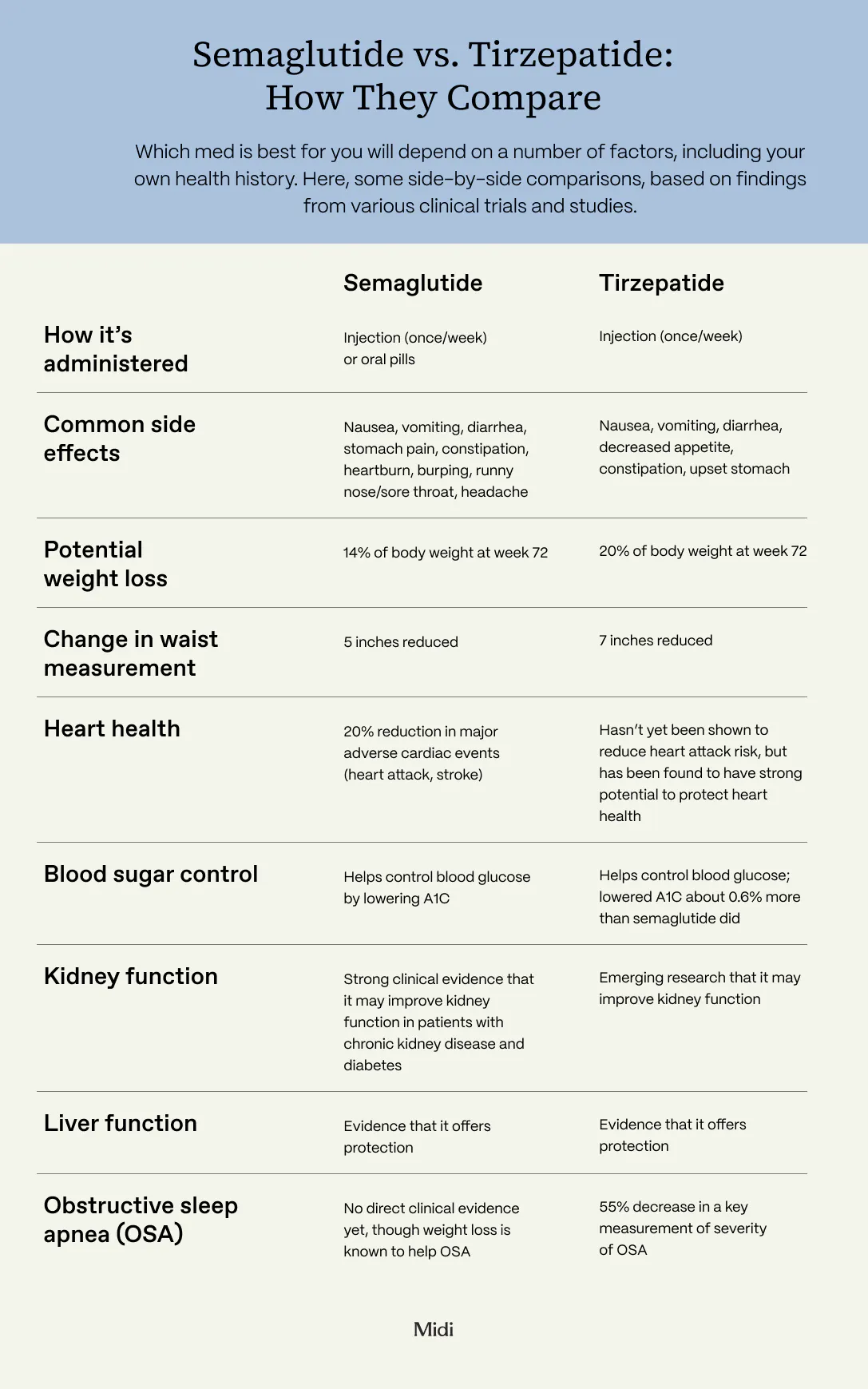
Whether one of these medications will be better for you depends on your goals and your individual reaction to them. On average, tirzepatide has been shown in research to lead to a greater amount of weight loss: People with obesity in clinical trials for tirzepatide lost, on average, 20% of their body weight at week 72 (and about 7 inches off their waistlines), compared with about 14% of their body weight (and about 5 inches off their waistlines) with semaglutide. For people wanting to lose smaller amounts of weight, either drug can be effective. Those who want to lose large amounts of weight may choose to start on semaglutide for insurance-coverage purposes, then can switch over to tirzepatide if weight loss stalls.
That said, individual responses can affect how much weight is lost—and it can differ with each drug. With both medications, side effects can happen, too. The most common side effects are gastrointestinal (think: constipation, diarrhea, or an upset stomach). They occur in about three-quarters of people on either semaglutide or tirzepatide. The best medication for you will be the one you can take safely and consistently and the one that delivers the benefits you’re looking for. A clinician (like those at Midi Health) can help you sort through these issues.

Expected Results: What Weight Loss Can Look Like on Each Option
Is tirzepatide better than semaglutide? In clinical trials, tirzepatide has resulted in larger amounts of weight loss than semaglutide. That said, both are considered effective, with similar response rates—meaning that most people will lose weight on either drug. Individual responses may vary in terms of how much weight is lost, with people on tirzepatide tending to lose larger amounts. Each medication has other, demonstrated positive health impacts (see the chart below), which can also drive the decision to use one over the other.
As for what to expect with both medications:
- Weight loss is gradual over months: This is normal and expected.
- The dosage is ramped up step by step: In the early weeks, you’ll start on the lowest dose and gradually increase from there. Doing this helps build your body’s tolerance, so side effects don’t hit you as hard.
- You can expect plateaus in weight loss: This doesn’t mean that the medication isn’t working, but it does provide valuable information. For example, you may need to make medication adjustments or lifestyle changes to support your goal.
- These medications don’t work alone: For success, these drugs are intended to be used alongside a healthy diet and exercise regimen. That might mean you need to make significant changes to what you eat or boost your activity levels. As your appetite is diminished, leaning into a balanced diet is needed to make sure you still meet your nutritional needs. All weight loss, too, comes with some muscle mass loss, so partnering these medications with exercise will help you maintain strength.
- Setting goals beyond the scale can help: Pay attention to positive changes in your blood work, overall energy, sleep, pain, and cravings. This can keep you motivated to maintain lifestyle changes.
Other Benefits of Tirzepatide and Semaglutide
Your goal may be weight loss, but these medications may significantly boost your health in other ways, too:
- Heart health: There’s significant evidence that semaglutide reduces the risk of heart attack and stroke, plus promising indications that tirzepatide may similarly boost heart health as well.
- Blood sugar control: Both medications help manage blood glucose; research shows that tirzepatide may have a stronger impact than semaglutide in people with diabetes.
- Kidney function: There’s strong evidence that semaglutide helps protect kidney function in people with obesity or diabetes and emerging research that tirzepatide may provide that as well.
- Liver function: Research has shown that semaglutide results in improved liver fat and scarring, and MASH (which stands for metabolic dysfunction-associated steatohepatitis) is an FDA-approved indication. Tirzepatide is showing a similar impact but is not yet FDA approved for this indication.
- Obstructive sleep apnea (OSA): Clinical trials of tirzepatide showed significant improvement of OSA. For semaglutide, research is ongoing, but weight loss is known to improve OSA.
Side Effects: What’s Common and How to Manage It
Some people tolerate tirzepatide and semaglutide well, while others struggle with the side effects. They’re similar for both drugs, with gastrointestinal (GI) effects topping the list for each.
- Tirzepatide common side effects include nausea, vomiting, diarrhea, decreased appetite, constipation, and upset stomach.
- Semaglutide common side effects include nausea, vomiting, diarrhea, stomach pain, constipation, heartburn, burping, runny nose/sore throat, and headache.
For many people, the side effects can be managed well. These tips can help:
- Eat smaller, more frequent meals, which may be easier on your digestion.
- Focus on fresh, minimally processed foods; high-fat, greasy foods are hard to digest.
- Hydrate, which is key for GI health.
- Get good sources of fiber, which helps with digestion and regularity.
Dosing makes a difference, too. How the dose is escalated is highly individual; many patients may benefit from a slower dose increase or even maintaining treatment at a lower dose. Note, too, that some people report that side effects peak on or around injection day, so during that period you may have to make more changes to your diet. Working closely with an experienced clinician can make sure your treatment is adjusted based on your needs in order to maximize benefits and minimize side effects.
You’re not supposed to feel so lousy that you can’t eat at all while taking these medications. That would put you at risk of undereating, which can result in nutrient deficiencies and muscle loss. If your symptoms are severe or getting worse, talk with your clinician.
True Stories Of Transformation
Who Might Be a Good Fit—and Who Needs Extra Caution
Tirzepatide and semaglutide are prescription medications, which means you need an evaluation by a healthcare professional. You may be a good fit for one of these medications if you have weight-related health risks (like high blood pressure or cholesterol), have gone through repeated lose-and-regain cycles (aka yo-yo dieting), or feel really bothered by food noise.
These are incredibly effective medications, and part of the evaluation involves screening you for health conditions or relevant family medical history. Some things to know:
- If you have a personal or family history of medullary thyroid cancer or multiple endocrine neoplasia syndrome type 2, semaglutide and tirzepatide may not be right for you. (Note: Most thyroid cancers are papillary, not medullary, so it’s important to know what type of thyroid cancer you’ve had if you’re exploring these medications.)
- If you have pancreatitis, diabetic retinopathy, gastroparesis, or gallbladder disease, it’s best to discuss the possible risks and benefits with your clinician.
- If you’re pregnant, want to become pregnant, or are breastfeeding, it’s best to defer these medications.
- If you’re on oral hormonal birth control, know that tirzepatide and semaglutide can change the metabolism of these drugs and decrease their efficacy. You may need a backup birth control plan while on these medications.
Diagnosis and Testing: What to Review Before Starting or Switching
When discussing semaglutide or tirzepatide with your clinician, they'll ask about your weight history, check your blood pressure, and go over your current medications and supplements.
In certain cases, you might need labs, such as A1C testing for blood sugar or liver and kidney function tests if indicated by your health history. And depending on symptoms, your clinician may recommend checking thyroid levels, testing for sleep apnea, or reviewing your medications to evaluate for other causes of weight change.
Partnering with a clinician will help guide you in making the best choice and aid you in setting expectations for what successful treatment looks like at 3, 6, and 12 months—and beyond.
Treatment Options: Building a Full Plan Around the Medication
Semaglutide and tirzepatide are designed to be used with a combination of healthy diet and exercise. For instance, research shows that exercise:
- helps maintain muscle mass, which is important for a speedy metabolism and your body’s ability to use glucose
- improves belly fat, inflammation, and overall metabolic health more than the medications alone
- helps you maintain weight loss after stopping medication
Each week, aim for 150 minutes of moderate-intensity cardio exercise (or 75 minutes of vigorous cardio). Research recommends knocking out 60 to 90 minutes of strength or resistance training per week and adding in balance and mobility work for bonus benefits.
As for your diet, you can expect significant changes to your appetite and food preferences, especially if you’re also managing side effects. Focus on eating balanced meals that prioritize protein. This macronutrient helps preserve muscle and bone, which is especially important for women in the menopausal transition who may already be dealing with reductions in both.
Although many people need to stay on semaglutide or tirzepatide long-term, some folks can come off these medications. Because maintenance takes planning, continue to have an open, ongoing conversation with your clinician about next steps after reaching your goal weight.
How to Choose Semaglutide or Tirzepatide While Working With a Clinician
When considering semaglutide vs. tirzepatide, there isn’t one “right” answer. Approach the issue with an open mind—your clinician can provide a recommendation after you discuss goals, side effect concerns, health history, and cost/accessibility.
Your clinician may suggest ways to track your progress, which may include measuring your waist circumference along with weight changes, as well as possible body composition testing if available.
You should come away from the appointment with a clear sense of how the dosage will be titrated, best ways to manage side effects, and when to call with concerns. And get your next appointment on the calendar, so you can stick to a plan of continued care.
Don’t stop taking your medications without talking with your clinician first. If side effects are bad or you don’t feel that the drug is effective, you may need a change in your dosage or the type of medication. Your clinician can also suggest lifestyle adjustments that could help.

When to Seek Care: Red Flags
For most people, side effects are mild to moderate and feel manageable. But there are risks to any medication. Seek medical help right away if you notice:
- severe or persistent abdominal pain and/or constipation, repeated vomiting, inability to keep fluids down, or fainting
- signs of an allergic reaction, such as swelling, hives, or trouble breathing (seek emergency care)
- any new, concerning, or sudden symptom after starting the medication or increasing the dose that doesn’t improve
Key Takeaways
- Semaglutide and tirzepatide are effective and safe weight loss medications that are designed to be paired with a healthy diet and exercise.
- Clinical studies show that tirzepatide leads to, on average, larger weight loss than semaglutide, though that doesn’t mean it’s the right choice for everyone looking to start a weight loss medication. Results vary by individual, and not everyone is looking for large weight loss.
- Personal and family health history, weight loss and health goals, side effects, access, and cost are some of the factors clinicians consider when prescribing one of these medications.
- Connecting with a trusted clinician who is experienced in prescribing these medications is key to getting the personalized guidance needed for long-term weight loss success.
Frequently Asked Questions (FAQs)
Which is better: semaglutide or tirzepatide?
Both semaglutide and tirzepatide are FDA-approved medications for weight loss and diabetes. Clinical trials have shown that they are effective and safe for reducing appetite and managing blood sugar.
How long does it take to lose 20 pounds (lb) on tirzepatide?
Weight loss will differ from person to person based on starting weight, dosage, and adherence to a healthy lifestyle. That said, research does provide clues as to how quickly weight loss happens on tirzepatide. One study found that adults with obesity lost about 9 lb after 30 days on tirzepatide.
At Midi, clinicians typically target 1 to 2 lb of weight loss per week as we titrate your medication dosing. Clinicians also start at low doses to minimize side effects, and go up monthly on dosing until you are achieving weight loss at 1 to 2 lb per week. Note that some people with more insulin resistance will not lose weight until they're on the slightly higher dose in the second or third month.
Which weight loss injection is best?
There's no one "best" weight loss injection for everyone. Your individual health, vulnerability to side effects, access to medications, insurance coverage, and medication costs all factor into the weight loss injection that’s best for you.
What are the drawbacks of tirzepatide?
Common side effects of tirzepatide are nausea, vomiting, diarrhea, decreased appetite, constipation, and upset stomach.
Should I switch from semaglutide to tirzepatide?
If you're experiencing side effects on either medication that are making you think of switching, talk with your clinician. Often, dose reduction and side-effect management can work well. For some, switching is the right decision, but that decision should be made on an individual basis in consultation with your clinician.
If you’re in perimenopause or menopause and want guidance from clinicians who specialize in women’s midlife health, book a virtual visit with Midi today.
Hormonal change is at the root of dozens of symptoms women experience in the years before and after their period stops.
Our trained menopause specialists can help you connect the dots to guide you towards safe, effective solutions.
Whether you need personalized guidance or a prescription routine to tackle symptoms—including brain fog, hot flashes, sleep trouble, mood swings, and weight gain—we’ve got you covered. Learn more here.
Midi’s mission is to revolutionize healthcare for women at midlife, wherever they live and whatever their health story. We believe that starts with education, to help all of us understand our always-changing bodies and health needs. Our core values guide everything we do, including standards that ensure the quality and trustworthiness of our content and editorial processes. We’re committed to providing information that is up-to-date, accurate, and relies on evidence-based research and peer-reviewed journals. For more details on our editorial process, see here.


