 Heather Hofflich, DO
In the English language, two words may sometimes mean the same thing. Fireflies and lightning bugs? Interchangeable. Couches and sofas? Identical. Estrogen and estradiol? Well…not so fast. They may sound similar, but if you’re comparing estradiol vs. estrogen, there are some pretty important differences. Knowing what those differentiators are can help as you navigate perimenopause and menopause, consider treatments, and talk with a healthcare professional (such as a Midi Health clinician) about the symptoms and midlife body changes you’re experiencing. Keep reading for the ultimate estradiol vs. estrogen guide.
Estrogen and estradiol sound similar—and, in many ways, they are similar—but the two words don’t refer to exactly the same thing. “Estrogen” is an umbrella term for a group of hormones, whereas “estradiol” refers to one type of estrogen. This distinction matters: Quite a few menopause symptoms are caused by low estradiol levels, and many hormonal treatments for menopause symptoms specifically use estradiol.
Below, learn all about the differences when it comes to estrogen vs. estradiol, how menopause affects them, and how a healthcare professional like a Midi clinician can help you find relief. Remember: While hormonal changes are normal, the disruptive symptoms they cause have solutions and deserve care.
Estradiol vs. Estrogen: The Simplest Difference
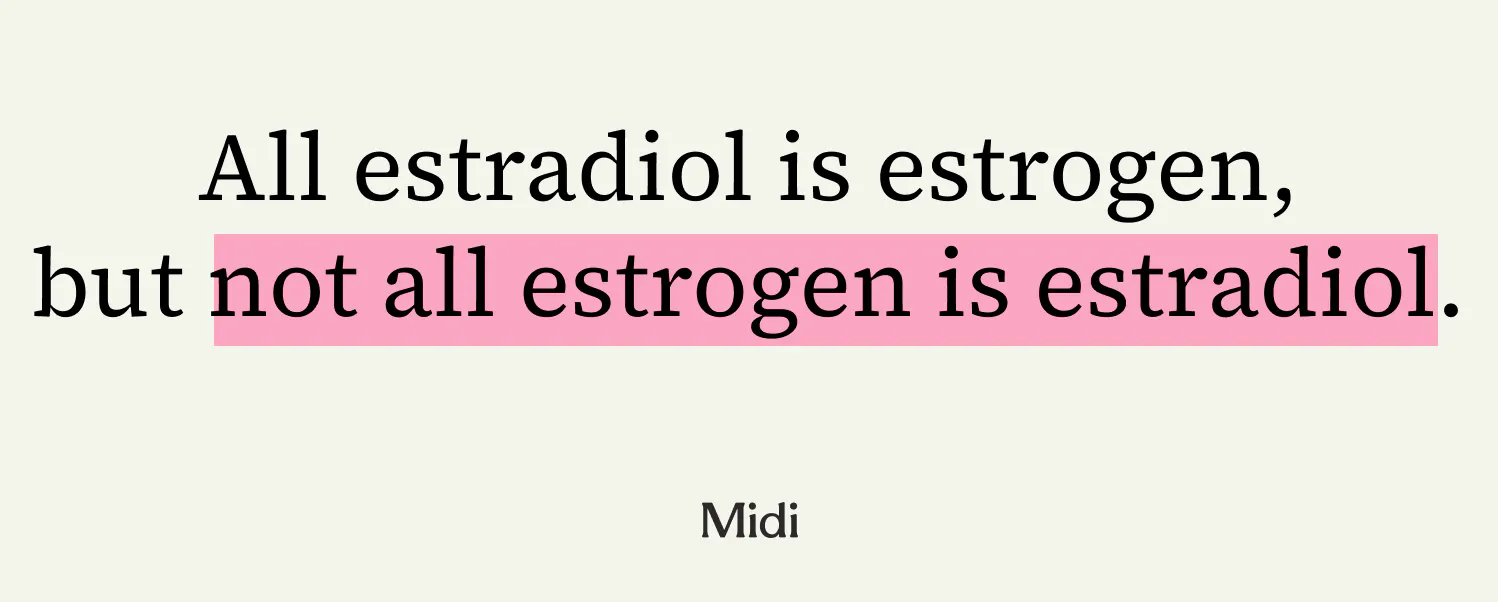
In the most basic terms, estrogen is an entire category of female sex hormones, whereas estradiol is a specific type of estrogen (along with other hormones like estrone and estriol). So all estradiol is estrogen, but not all estrogen is estradiol.
There’s a reason the two terms are so often used interchangeably: Estradiol is the main form of estrogen made by your body in the decades between puberty and menopause. It’s also the most powerful form of estrogen.
So when people talk about estrogen—like during discussions about how perimenopause impacts your hormones or about hormone therapy—they’re likely referring to estradiol.
What Is Estrogen?
Estrogen is a group of sex hormones involved in reproductive and overall health. The vast majority of estrogen is made by your ovaries, but small amounts can also be made by your adrenal glands and fat cells.
There are three main types of estrogen: estradiol, estriol/estetrol, and estrone. They’re each made at different points in your life:
- Estradiol is made during your reproductive years.
- Estriol and estetrol are made during pregnancy.
- Estrone is mostly made after menopause.
Not only do the types of estrogen in your body change over time, but so do the amounts:
- Estrogen rises during puberty.
- It can fluctuate throughout your menstrual cycle when you’re premenopausal.
- It goes up if you’re pregnant and goes down after childbirth.
- Estrogen then drops during menopause.
Estrogen function: What estrogen does in the body
Because estrogen is a sex hormone, it’s natural to assume that it mostly impacts your sexual health. And it does, but estrogen function extends far beyond that as well. Here are some of the ways estrogen affects your body:
- regulates your menstrual cycle
- supports fertility and helps babies develop during pregnancy
- keeps your vaginal tissue healthy, which improves sexual health
- supports bone density
- boosts cognitive function and helps you focus
- improves blood sugar, cholesterol, and blood flow
- helps produce collagen for healthier skin
- improves muscle mass
It’s no wonder that as estrogen levels fluctuate throughout midlife, it can feel like every part of your body is changing.
What Is Estradiol?
During your reproductive years, estradiol is the most prevalent and potent form of estrogen in your body. It’s also referred to as 17β-estradiol or E2 (especially in lab reports). Estradiol plays a major role in keeping your menstrual cycle regular and helping with fertility.
As your ovaries release eggs less regularly during perimenopause, they also produce significantly less estradiol. This drop is what brings on menopause symptoms like hot flashes and vaginal dryness. Because of this hormone decline, most types of hormone replacement therapy (HRT, now commonly referred to as menopause hormone therapy, or MHT) use a form of estradiol.
What does estradiol do?
In addition to regulating the menstrual cycle and thickening the uterine lining to support fertility, estradiol binds to estrogen receptors around the body, playing a part in countless body functions as a result. Here are some of the ways estradiol impacts your health:
- protects your heart by helping keep cholesterol levels down
- helps you manage stress by reducing how much cortisol is released
- keeps bones strong and reduces risk for fractures
- influences body composition by reducing food intake and increasing energy expenditure
- improves the health of vaginal tissue by keeping it lubricated and elastic (which can make sex less painful)
- helps you sleep better and stay asleep through the night
- keeps your body temperature regulated
Estradiol, Estrone, and Estriol: How the Estrogen Types Compare
Remember, your body produces different kinds of estrogen for different purposes:
- Estradiol: This is the primary form of estrogen in your body up until perimenopause. It is the most powerful form of estrogen and is mostly produced by your ovaries.
- Estrone: After menopause, this becomes the primary form of estrogen in your body. It is a weaker form of estrogen, created by fat tissue.
- Estriol and estetrol: These are both produced by the placenta during pregnancy and practically disappear from your body after delivery.
As you can see, it’s actually a myth that you have no estrogen in your body after menopause, unlike what you may have heard. What really happens is that estrone takes over as the primary form of estrogen, replacing estradiol.
Estradiol is the main type of estrogen used in HRT. But estrogen in HRT can come in different forms, including a bioidentical form (which has the same chemical make-up as the estradiol your body produces naturally), estrogen derived from animals (like the urine in pregnant horses), and synthetic forms. (The hormones Midi prescribes are bioidentical.)
What Success Looks and Feels Like
How Estrogen and Estradiol Change During Perimenopause and Menopause
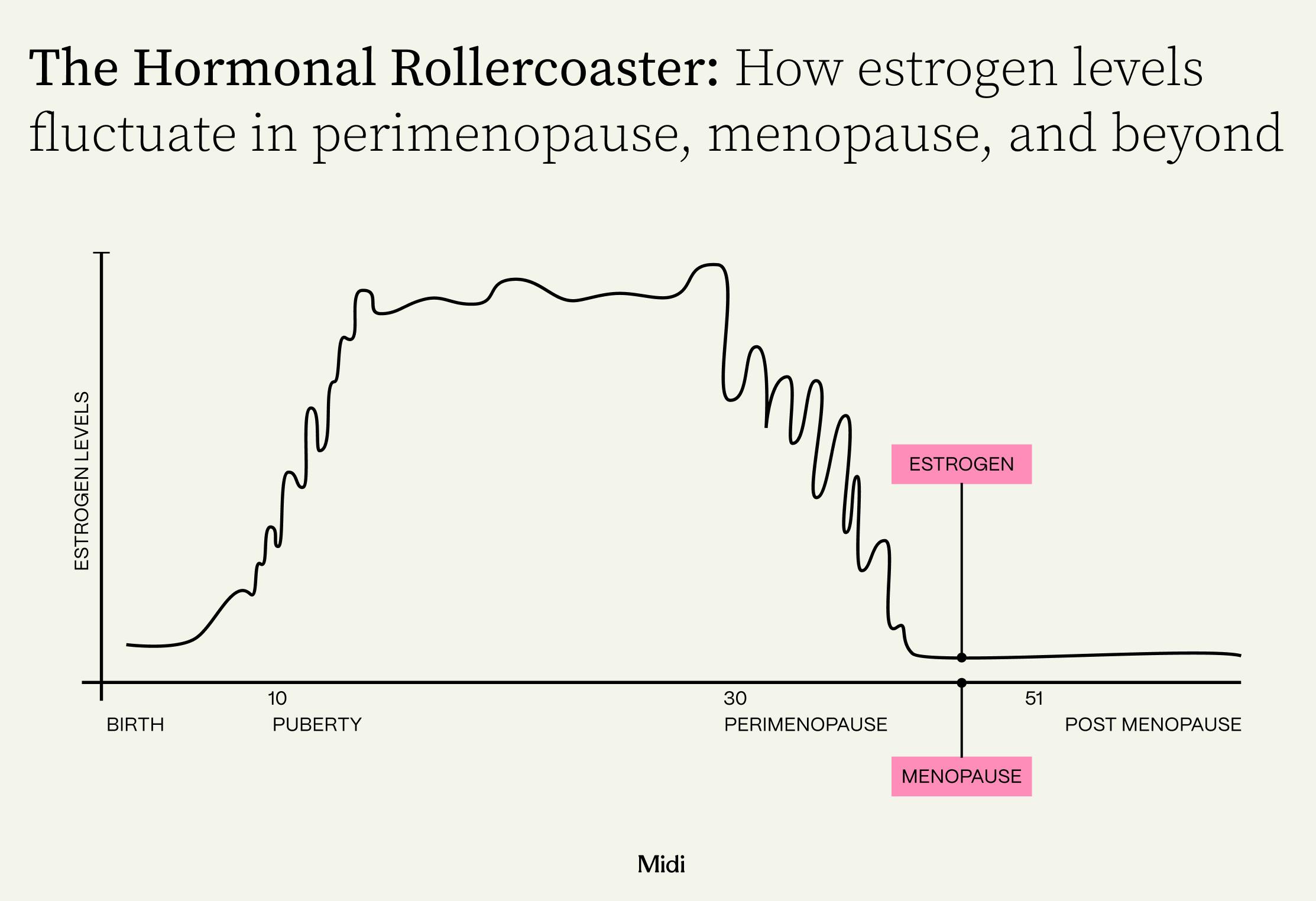
When you hear about estrogen levels going up and down during the menopause transition, what’s really being referenced are changing estradiol levels. It all starts in perimenopause, which is when estradiol starts fluctuating (sometimes pretty wildly!) as it gradually charts a downward path. This is no gentle slope—it’s an erratic “up, down, up a little, down some more” kind of thing.
This continues until menopause, which is the moment you’ve gone 12 months without a period. At that point, estradiol has “bottomed out” and levels will stay low for the rest of your life. This is also when estrone takes over as the main form of estrogen in your body.
Symptoms Linked to Changing Estrogen Levels
Because estrogen is involved in so many processes in the body, when levels of the hormone decline, you can feel it pretty much everywhere. No two women will have the exact same symptoms, but here are some of the most common ones associated with fluctuating estrogen levels:
- Hot flashes and night sweats: These sudden flushes can make you get hot and start sweating intensely.
- Sleep disruption and fatigue: You may have a hard time falling asleep or find yourself waking up often throughout the night.
- Mood changes, anxiety, or irritability: You might get annoyed at things that used to roll off your shoulders or go from feeling fine to upset almost instantly.
- Brain fog or memory issues: This could make you walk into a room and forget why, be unable to remember a word that’s on the tip of your tongue, or just feel fuzzy in the head.
- Vaginal dryness, pain with sex, or urinary symptoms: You might develop urinary tract infections or incontinence or notice a lack of lubrication during intercourse.
- Bone density loss: Weaker bones can raise your risk of osteoporosis and fractures.
While the above symptoms can all be triggered by dropping estradiol levels, other health issues may also cause them. Make sure to go over all your symptoms with a menopause-trained healthcare professional, such as a Midi clinician. They can look at your age, cycle pattern, and health history to help determine the next best steps for you.

How Estrogen and Estradiol Levels Are Tested
If you have symptoms of low estrogen, it can be natural to want to confirm it by getting your hormone levels tested. While it is possible to test for estradiol, it’s usually not needed to confirm you’re going through menopause. Instead, your clinician will typically consider your age, menstrual history, and symptoms to determine if you’re entering the menopause transition.
That said, there are certain times when clinicians may recommend you get your estradiol tested. This can include if you have symptoms of menopause but are younger than age 40, have fertility issues, or have health conditions like polyendocrine metabolic ovarian syndrome (PMOS, formally known as polycystic ovary syndrome, or PCOS). In those cases, your estradiol levels can be tested with blood, urine, or saliva.
The results of a single test may not be all that revealing, since estrogen naturally fluctuates. This is why you’d likely need to have your estrogen tested more than once. A clinician will then be able to look at trends over time to figure out whether your hormones are affecting your health.
Treatment Options When Low Estrogen Symptoms Affect Daily Life
If your clinician confirms low estrogen is contributing to your symptoms, know that there are lots of ways you can find relief.
One of the top care solutions is HRT, which supplements your waning estrogen levels. While it’s not right for everyone, HRT can help with many symptoms like hot flashes and bone loss. In fact, it’s considered the gold-standard solution for relieving hot flashes, night sweats, vaginal dryness, and the genitourinary syndrome of menopause (GSM), according to the North American Menopause Society.
The majority of estrogen found in hormone therapy is a bioidentical version of estradiol. You can take estrogen orally with pills or get it through the skin (aka transdermally) with patches, creams, gels, and sprays.
If you have a uterus and are taking systemic estrogen (meaning, you’re using a form of estrogen that circulates throughout the body via your bloodstream), you’ll likely also need to take progesterone. This keeps your uterine lining from getting too thick, which can raise your risk of uterine cancer.
If your main symptoms are vaginal dryness or urinary issues, you can use localized hormone therapy, which affects only your vaginal area. This often has fewer side effects than systemic hormone therapy, but it won’t improve other symptoms like hot flashes.
If you aren’t a good candidate for hormone therapy or don’t wish to go that route, there are non-hormonal options you could try. For example, other prescription medications are approved to treat hot flashes, or you could use lubricants or moisturizers for vaginal dryness.
Lifestyle changes are also key when dealing with low estrogen. This includes healthy habits like exercising, getting plenty of rest, aiming for balanced meals, and taking part in mental health treatments like therapy.
Finally, your clinician may also recommend evidence-informed, research-backed supplements or botanicals to further support your care. Many women in midlife also use supplements if prescription medications aren’t tolerated, necessary, or desired.
How a Midi Clinician Can Help You Find Relief
You don’t need to figure out how to handle lower estradiol levels on your own. A Midi clinician can be the perfect person to help you make informed decisions and feel supported in midlife. They’ll start by reviewing symptoms, health history, medications, and your goals, and explain whether any testing may be useful for you.
As for treatments, they can go over both hormonal and non-hormonal options, work with you to figure out the right path, and follow up with you to make sure it’s working the way you want it to.

Key Takeaways
- Estrogen and estradiol sound similar, but estrogen is a group of hormones, whereas estradiol is a single type of estrogen.
- Estradiol is the most prominent form of estrogen in your body up until menopause.
- During perimenopause, estradiol levels drop and estrone becomes the main form of estrogen. It’s a weaker form than estradiol, so this switch from estradiol to estrone is what triggers menopause symptoms.
- You can get your estradiol levels tested, but the hormone fluctuates naturally, so a single test likely won’t tell you all that much.
- There are ways you can treat uncomfortable symptoms of low estradiol levels brought on by menopause, including hormonal and non-hormonal medications and lifestyle changes. A healthcare professional, such as a Midi clinician, can map out the best option for you and your health history.
Frequently Asked Questions (FAQs)
Are estrogen and estradiol the same?
No, estrogen and estradiol are not exactly the same thing. “Estrogen” is an umbrella term that describes a group of female sex hormones, whereas “estradiol” refers to one specific hormone within that group. Other types of estrogen include estrone, which becomes the dominant form after menopause, and estriol, which is produced during pregnancy. So while all estradiol is estrogen, not all estrogen is estradiol.
What is the difference between estrogen and estradiol?
The main difference between estrogen and estradiol is that estrogen describes an entire category of hormones, whereas estradiol is a specific hormone within that category. Estradiol is the most potent and prevalent form of estrogen during your reproductive years. After menopause, estradiol levels drop significantly. Estrone, a weaker form of estrogen, takes over as the primary type in your body.
What does estradiol do during menopause?
During perimenopause, levels of estradiol start fluctuating and gradually dropping. When you reach menopause, which is the moment you’ve gone 12 months without a period, estradiol levels have gotten very low and will stay low for the rest of your life.
Is estradiol the estrogen used in HRT?
Estradiol is the main form of estrogen used in hormone replacement therapy (HRT, now commonly referred to as menopause hormone therapy, or MHT), as it’s the most potent form of estrogen available. Most types of HRT use a bioidentical form of estradiol, meaning its chemical structure is identical to the estradiol your ovaries made during your reproductive years. But some formulations use estrogen derived from the urine of pregnant horses instead.
Do I need an estrogen test to know if I’m in perimenopause?
Most people do not need to get their hormone levels tested to confirm they are in perimenopause. A clinician can usually look at your age, symptoms, and menstruation patterns to determine if you are in perimenopause or not. But for some people, including those with menopause symptoms at younger ages, an estrogen test may be useful in determining what’s going on.
Can low estrogen be treated without hormones?
The symptoms brought on by low estrogen, such as hot flashes and vaginal dryness, can be treated without hormones if needed or desired. There are non-hormonal medications approved by the FDA for vasomotor symptoms, and certain lubricants or moisturizers may be able to help with vaginal symptoms.
If you’re in perimenopause or menopause and want guidance from clinicians who specialize in women’s midlife health, book a virtual visit with Midi today.
Hormonal change is at the root of dozens of symptoms women experience in the years before and after their period stops.
Our trained menopause specialists can help you connect the dots to guide you towards safe, effective solutions.
Whether you need personalized guidance or a prescription routine to tackle symptoms—including vaginal dryness and irritation, brain fog, hot flashes, sleep trouble, mood swings, and weight gain—we’ve got you covered.
Midi’s mission is to revolutionize healthcare for women at midlife, wherever they live and whatever their health story. We believe that starts with education, to help all of us understand our always-changing bodies and health needs. Our core values guide everything we do, including standards that ensure the quality and trustworthiness of our content and editorial processes. We’re committed to providing information that is up-to-date, accurate, and relies on evidence-based research and peer-reviewed journals. For more details on our editorial process, see here.