


Folic acid is best known as a vitamin that women take during pregnancy to help prevent birth defects. Folic acid benefits for women, though, are many: It helps your body form red blood cells and make and repair DNA. So there’s reason to wonder whether you should take folic acid supplements in your 40s or 50s and beyond, too. Read on to learn more about what folic acid does for your body, whether and when midlife women may need more of it, and how healthy eating can help as well.
Folic acid, the synthetic form of vitamin B9, is certainly the queen bee of a woman’s premenopausal decades. During those years, every leading health authority recommends that women take a folic acid supplement daily “just in case” they get pregnant—as well as during pregnancy—since it helps protect against certain birth defects in the baby.
If you’re 40 and beyond, you may think that the need for folic acid benefits is in your past. (Though it’s worth remembering: If you’re in perimenopause, you can still get pregnant.) But truth is, there are reasons in midlife to make sure you’re getting sufficient folic acid. (Along with its availability as a supplement, folic acid is added to some fortified foods, like cereals and breads.)
For midlife women, folic acid remains a necessary nutrient to assist your body in red blood cell formation (critical for energy during this hectic time of life). It also helps your body make and repair DNA and supports normal cell growth. Falling short of this nutrient can cause anemia and contribute to fatigue, trouble concentrating, and low mood.
Not every woman over 40 will need a folic acid supplement—but every woman needs to make sure she’s getting enough folic acid or folate (the natural form of B9 found in certain foods) in her diet. Here’s need-to-know info about the essential nutrient, plus how to figure out if and when a supplement can help you and which issues to discuss with your clinician, like one at Midi Health.
Folic Acid Benefits for Women in Midlife
Your body needs folate throughout your life for cell growth, DNA synthesis, and amino acid metabolism. Because folate also helps red blood cells in their growth and formation, running low on the nutrient can allow red blood cells to form abnormally large, which makes it harder for them to function. For instance, red blood cells are responsible for transporting oxygen from your lungs to the rest of your body, and if they’re malformed, they can’t do that job as well. This can leave you potentially fatigued, pale, extra irritable, or with headaches you can’t explain.
If some of this sounds like it overlaps with perimenopause symptoms, you’re right. That’s one reason to make sure that you’re eating a nutritionally adequate diet or correcting gaps by taking a supplement when needed.
If a folate deficiency is responsible for these symptoms or is making you feel worse, hormone therapy or other menopause-related treatment can’t fully address the problem. Even committing yourself to getting a solid 8 hours of sleep per night might not make you feel peppier if you have a folate deficiency.
A well-rounded approach to wellness in menopause and talking with a Midi clinician can help you take steps to feel your best.

What Is Folic Acid, and What Does It Do?
Folic acid is a synthetic form of folate, otherwise known as vitamin B9. It’s found in supplements and is added to fortified foods, most commonly enriched grain products like bread, pasta, cereals, crackers, and flour.
Since your body uses folate to make red blood cells, you can develop a condition called megaloblastic anemia if you don’t get enough of the nutrient. Low levels of folate are also linked to neural tube defects in pregnancy, mood problems, and oral sores.
Folic Acid vs. Folate: Why the Distinction Matters
The good news is that a healthy balanced diet is full of foods that have folate. It’s found in veggies (especially leafy greens, asparagus, and citrus fruits), beans and legumes, fortified grains, and some nuts and fruits—all foods that fit nicely into a healthy menopause diet.
For some women, especially those looking to get pregnant, a folic acid supplement can help boost your intake or act as backup in case you fall short—say, for medical or dietary reasons.
Some folic acid supplements contain methylfolate (or L-methylfolate), a type of folate supplement that contains the biologically active form of the vitamin. This is recommended for people who have a genetic trait that hinders their body’s metabolizing of folate into the active form that can do good.
What Success Looks and Feels Like
Why Folic Acid Still Matters After 40
Until you reach menopause, it’s still possible to become pregnant—and some signs of pregnancy and perimenopause are very similar.
If you’re planning to start or expand your family at age 40-plus, your body will need more folic acid to create cells needed in fetal development. The American College of Obstetricians & Gynecologists recommends taking 400 micrograms (mcg) of this powerhouse vitamin if you may become pregnant (discuss exact dosage with your clinician, especially once you’re pregnant).
Even if pregnancy is off the table for you, folate is an essential vitamin to get from food, and you may still benefit from a folic acid supplement in certain situations. For instance, you should consider folic acid supplements if you have:
- anemia caused by folate deficiency that leaves you weak and fatigued, in which case folic acid supplements are a core treatment
- a limited diet and may not be getting enough folate-rich foods
- celiac disease or inflammatory bowel disease, conditions where your gastrointestinal (GI) system struggles to absorb nutrients

The Biggest Misconception: It Is Not Just a Pregnancy Vitamin
Yes, folic acid is incredibly important to take before and during pregnancy, backed up by a mountain of evidence.
But outside of pregnancy, you may be at risk for low folate levels, depending on your diet, the medications you’re taking (methotrexate, sulfonamides, and antiepileptic drugs, to name a few), or digestive conditions. Although not every woman over 40 needs to take a folic acid supplement, for some it’s important.
When your folate levels are low, fatigue and lack of energy are common symptoms. In a busy, stressful life stage, fatigue and sapped energy also can show up due to hormonal changes in menopause or because of underlying medical problems, like a nutrient deficiency. Blood tests can measure the levels of nutrients in your blood, including folate, B12, and iron; low levels of any of these can be the cause of anemia.
Bottom line: Folic acid is about your overall health—not just for when you’re pregnant.
How to Get Folate From Food Sources in Your Diet
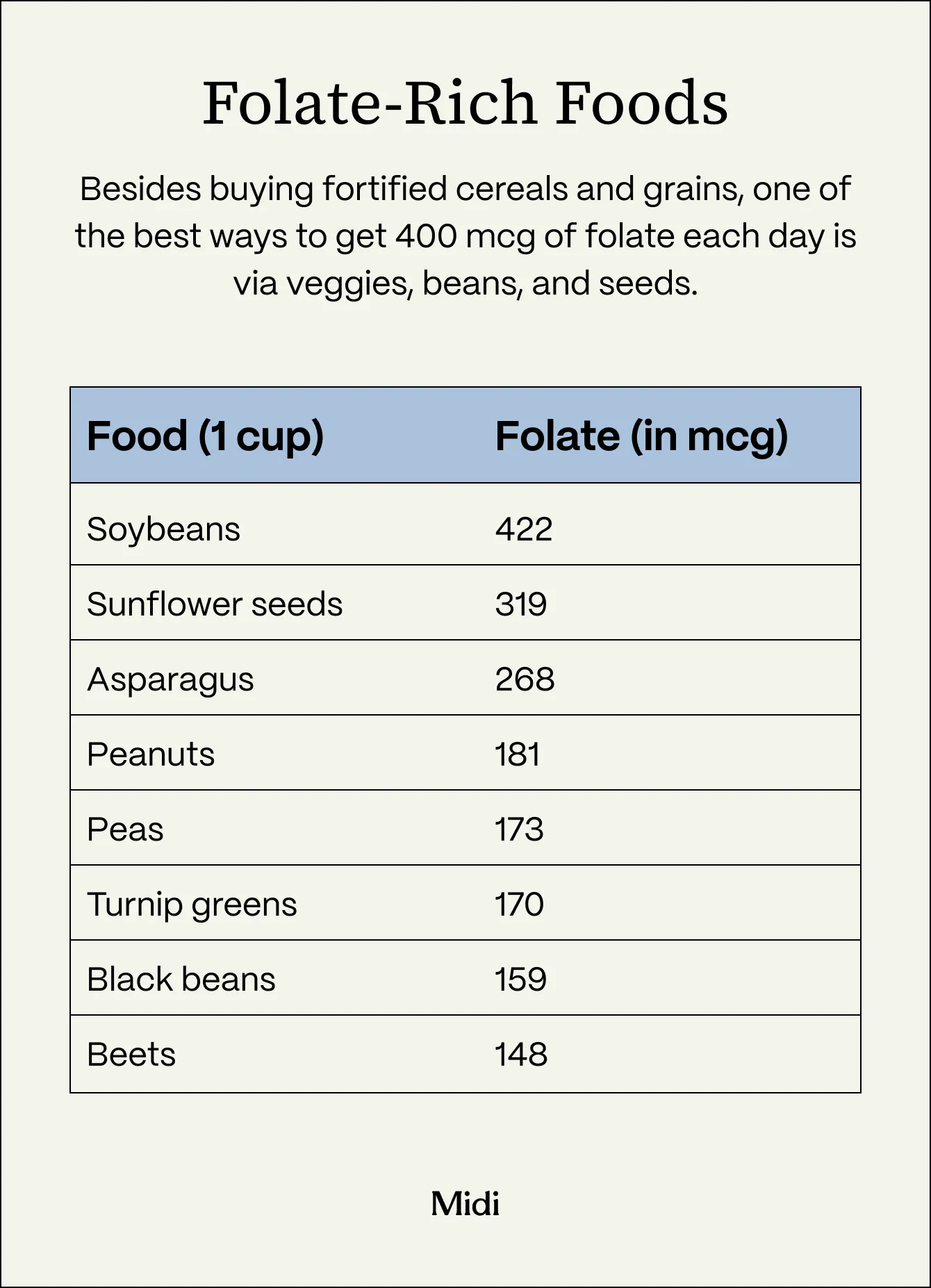
Folate is naturally found in a variety of foods, many of which you’re probably already eating on a daily basis:
- vegetables like asparagus, peas, broccoli, beets, and dark leafy greens like turnip greens
- oranges and avocados
- beef liver
- nuts, including almonds and hazelnuts
- sunflower seeds, flaxseeds, and sesame seeds
- beans, including soybeans, black-eyed peas, and green peas
- fortified breakfast cereals
- enriched grains
The biggest folate superstar is beef liver, but if that’s not in your diet, you’ll still get enough of the nutrient by following a generally healthy diet that contains the plant foods mentioned above. It’s all about the daily pattern, not focusing on one superfood.
Since folic acid is added to fortified foods (like grains) and folate is present in beans, if you focus on a low-carb or grain-free diet, it may affect how much folate you’re getting per day. If you don't typically eat folate-rich foods, it’s worth talking with your clinician about supplementing.
How Much Do Women Over 40 Need, and Can You Get Too Much?
No matter your age bracket, adult women should get 400 mcg of folate daily. Your need is higher if you’re pregnant (600 mcg) or breastfeeding (500 mcg).
Most women hit the 400 mcg mark every day from food, though some still fall short. If you’re taking a basic multivitamin or B-complex supplement, it’ll likely have 400 mcg of folic acid in it. (Check your brand because this can vary by product.) That amount is safe for most people.
Planning to take a higher-dose or high-potency folic acid supplement? Get the go-ahead from your clinician first. In certain situations, excessive amounts can be harmful.
For example, taking too much can mask a vitamin B12 deficiency, which is another cause of anemia. Taking especially high doses of folic acid supplements long term (more than the tolerable upper limit of 1,000 mcg per day) may harm the nervous system.
If you’re taking multiple supplements, check the Supplement Facts label on the back to make sure you’re not overlapping nutrients unintentionally. Multivitamins, B complex, and supplements for hair growth or energy support might all contain folic acid.
Safety, Side Effects, and When to Talk With a Clinician
Folic acid supplements are safe for most people, but talk with your clinician before taking it if you have:
- anemia
- digestive issues
- nerve symptoms (like balance issues or numbness)
In terms of dosage: Folate is a water-soluble vitamin, so you’ll usually just pee out extra you don’t need. Still, stick to your clinician’s advice when you’re taking a folic acid supplement, because it’s safest when taken at recommended doses.
You don’t have to worry about folate in food, though—you’d have to eat the equivalent of 11 cups of kidney beans, 45 spears of boiled asparagus, or 10 cups of fortified breakfast cereal in a day to reach that upper intake limit. Even with cravings during hormonal changes, we’ve never heard of anyone loving asparagus or beans that much.
Key Takeaways
- Folic acid is the synthetic version of folate, or vitamin B9. It is available in supplements and used in fortified foods.
- Your body uses folate in DNA synthesis, cell division, and to make red blood cells.
- Commonly nicknamed the pregnancy vitamin, folic acid is perhaps best known because leading health authorities recommend that women who could become pregnant or are pregnant take a 400 mcg folic acid supplement per day to reduce the risk of birth defects.
- Women who are age 40+ may need a folic acid supplement as part of family planning or to correct a deficiency caused by diet, medications, or medical conditions.
- Folic acid is also important for general health and wellness for women in perimenopause and menopause, as insufficient levels of folate can lead to conditions like anemia.
- Connect with your clinician to get personalized recommendations for supplementing with folic acid.
Frequently Asked Questions (FAQs)
Is it good for a woman to take folic acid every day?
If you’re of reproductive age and planning to or could become pregnant, leading authorities recommend taking 400 mcg of folic acid every day to reduce the risk of neural tube defects. Women may also need to take folic acid if they have a medical condition due to folic acid deficiency, such as anemia, or if they don’t eat enough foods that contain folate.
What are the signs that you need folic acid?
If you have symptoms of a folate deficiency, you may need folic acid supplements. (Folic acid is the synthetic version of folate, or B9.) You may need folic acid if you have symptoms of anemia (dizziness, paleness, shortness of breath), mouth sores, and cognitive or mood problems. Blood testing can reveal if you are deficient in the vitamin.
What are the benefits of folic acid for women?
Folic acid is important to take before and during pregnancy to reduce the risk of birth defects. In addition, folic acid supplements can be used to treat folate deficiency, the symptoms of which include fatigue, weakness, mood problems, and memory and concentration deficits.
Is folic acid good for hormonal imbalance?
Folic acid does not address a hormone imbalance. However, some of the symptoms of folate deficiency—such as fatigue, memory problems, depression, and irritability—are also common symptoms of menopause. Taking a folic acid supplement can help correct the symptoms associated with a nutrient deficiency.
What happens to your body when you start taking folic acid?
If you take a folic acid supplement you’ll raise your blood levels of folate. If symptoms like fatigue and weakness were caused by a folate deficiency, those symptoms may start to ease up. Otherwise, if you already have sufficient folate levels, it’s unlikely you'll benefit from taking extra folic acid.
If you’re in perimenopause or menopause and want guidance from clinicians who specialize in women’s midlife health, book a virtual visit with Midi today.
Hormonal change is at the root of dozens of symptoms women experience in the years before and after their period stops.
Our trained menopause specialists can help you connect the dots to guide you towards safe, effective solutions.
Whether you need personalized guidance or a prescription routine to tackle symptoms—including vaginal dryness and irritation, brain fog, hot flashes, sleep trouble, mood swings, and weight gain—we’ve got you covered.
Midi’s mission is to revolutionize healthcare for women at midlife, wherever they live and whatever their health story. We believe that starts with education, to help all of us understand our always-changing bodies and health needs. Our core values guide everything we do, including standards that ensure the quality and trustworthiness of our content and editorial processes. We’re committed to providing information that is up-to-date, accurate, and relies on evidence-based research and peer-reviewed journals. For more details on our editorial process, see here.