



A restful sleep is the holy grail these days, but will taking glycine for sleep give you a fast track to the land of Nod? So far, evidence is mixed. It may help some people, especially those who experience sluggishness or poor-quality sleep. We’ll unpack exactly what glycine is, how it is expected to work, and whether there are any side effects to look out for. You can reach out to a healthcare professional, such as a Midi Health clinician, for individual guidance on ways to improve your sleep.
If you’re a perimenopausal woman, chances are conversations at your coffee dates with friends often make their way to the topic of sleep. Who is actually sleeping, what are they taking, and most importantly, what’s working! It’s possible that taking glycine as a supplement for sleep, sometimes paired with magnesium and sometimes as a stand-alone, has come up during these conversations, too.
Glycine may support sleep quality and next-day alertness without the hangover feeling of so many other sleep solutions. Studies are small and limited at this point, but they do show promise for people who have trouble falling asleep or who struggle with feeling foggy in the morning.
Read on to better understand glycine, including the benefits, dosage for sleep, timing, side effects, and whether you should take it with or without magnesium.
Glycine for Sleep: What It May Actually Help With
All sleep issues aren’t created equally. Some people have trouble falling asleep while others have difficulty staying asleep.
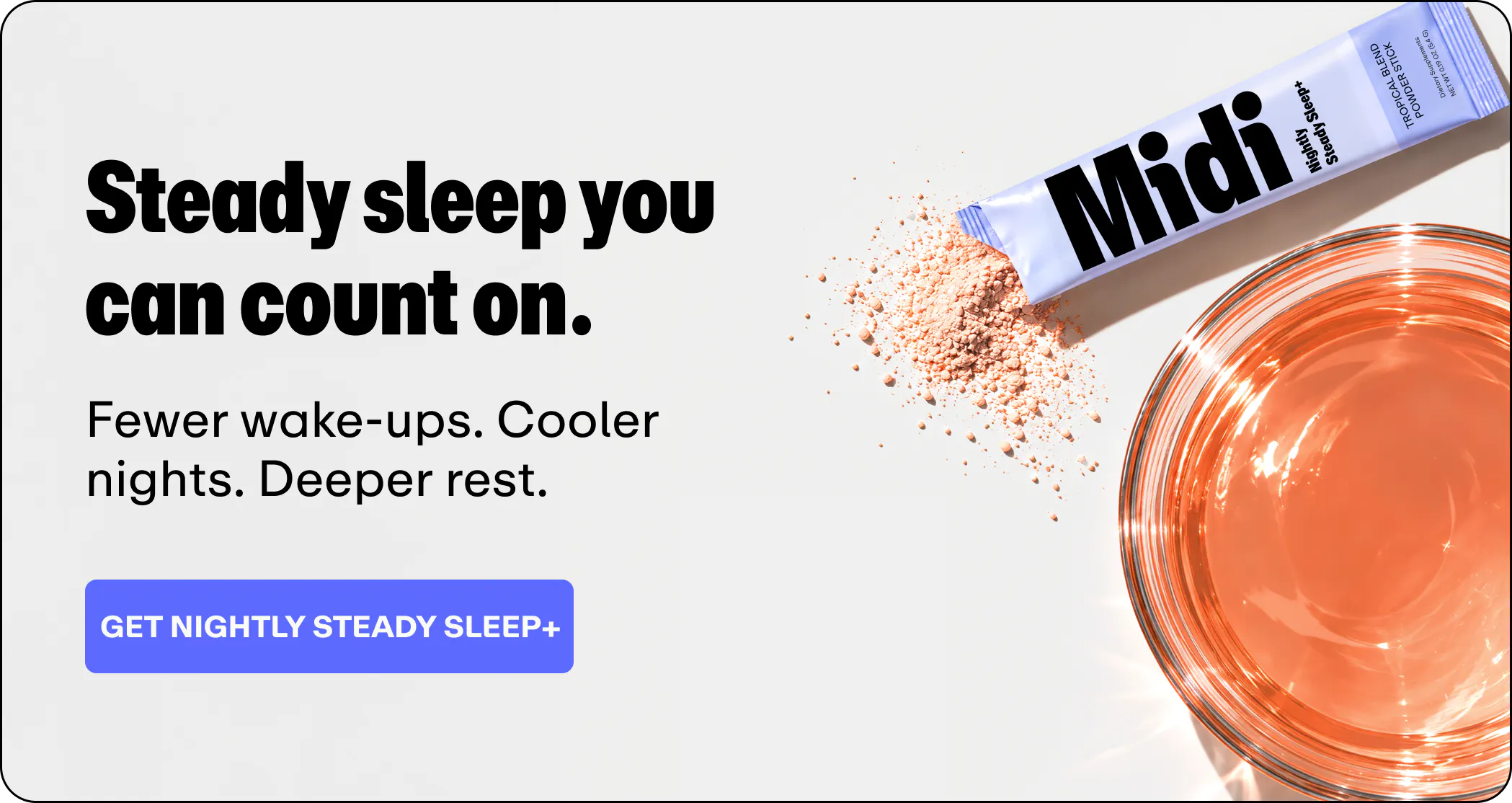
Glycine is best for improving sleep quality (i.e., staying asleep). This amino acid works by calming and relaxing the nervous system, leading to a deeper sleep. It may also help if you find yourself hot at night, as it lowers core temperature. And since glycine doesn’t act like a classic sedative, people often wake up feeling refreshed, not groggy. (Midi's Nightly Steady Sleep+ combines glycine with ingredients like magnesium glycinate, myo-inositol, and zinc citrate to help support you in promoting deeper, more continuous rest.)
Although the data is limited, some small, subjective studies suggest that 3 grams (g) of glycine before bed may improve sleep quality, fatigue, and daytime sleepiness in people who have difficulty sleeping. It seems to be effective in those who get short stints of sleep.
Still, don’t expect glycine to act like a magic bullet. Sleep concerns are often nuanced. Some women may notice some subtle benefits that make glycine worth taking, but if your sleep problems run deeper, it’s time to consult a healthcare professional, like a Midi Health clinician.

What Does Glycine Do in the Body and Brain?
As small as glycine may be in size, it’s actually quite powerful. It has a role in many of the body’s functions. Glycine is both an amino acid and a neurotransmitter, meaning that it works as the brain’s messenger to other parts of the body (in this case the central nervous system) to do different things.
For the brain and spinal cord, glycine is an inhibitory neurotransmitter during REM sleep, telling the muscles to relax. It helps lower your core body temperature, which indicates to your body that it’s time to fall asleep. Glycine also plays a role in something called NMDA-related signaling—a process that works to regulate sleep-wake cycles.
Glycine Benefits for Sleep and Next-Day Function
Many of the studies around glycine for sleep are self-reported, making them subjective, but the results seem promising. Participants reported:
- better subjective sleep quality
- less daytime sleepiness and fatigue after a rough night
- potentially quicker transition into deeper non-REM sleep
- more refreshed awakening and better morning function
This could be a good option for women who want sleep support without feeling overly sedated. Glycine may also be beneficial for those that tend to feel next-day sluggishness.
True Stories Of Transformation
Glycine Dosage for Sleep and When to Take It
Finding the proper dose and timing to use glycine for sleep is key. As with any new supplements, start lower and adjust the dosage based on how you tolerate it. Aim for a dose of 3 grams a half hour before bedtime. Although it’s tempting to try just about anything after a terrible night's sleep, glycine is meant to be used on a consistent schedule. Taking it each night at the same time will give you a better indication of whether it works for you.
Best Glycine Supplement for Sleep: What to Look For
When choosing which glycine supplement, it helps to check the serving size to see if you're hitting the 3-g dose (so long as your healthcare professional says it's right for you). This should be clearly labeled on the powder or capsule container. Many of the available pills are 1,000 milligrams (mg), or 1 g. So if taking multiple pills isn’t your thing, go the powder route.
You'll also want to look for supplements that are evidence-informed and third-party tested.
The best way to use glycine is to take it regularly. You’ll want to take into account:
- taste (especially when it comes to powders)
- capsule count, if taking the supplement in pill form
- cost
- ease of use
Glycine vs. Magnesium Glycinate for Sleep
Various forms of magnesium have garnered recent attention for sleep, cognitive function, muscle relaxation, and other beneficial effects. For sleep, experts generally recommend magnesium glycinate, as it’s one of the least harsh on your stomach (many forms of magnesium can have laxative effects).
Many people recommend magnesium glycinate for sleep because it helps ease muscle tension, calms the nervous system, and regulates stress, which are often the cause of sleep issues. However, glycine has better direct sleep-specific evidence in terms of affecting the sleep cycle itself.
Magnesium glycinate may make more sense with low magnesium intake—many times, people with gastrointestinal (GI) issues or diabetes, as well as older adults. This is also true for people who experience muscle tension or cramping, muscle twitching, or extreme soreness. Glycine, on the other hand, is the better choice when the goal is sleep quality and morning alertness.
If you are looking to combine supplements (these two or any supplements), contact a healthcare professional, such as a Midi clinician, who can guide you toward what may work best for your body and sleep needs.

Safety, Side Effects, and Who Should Be Careful
In recommended doses, glycine is shown to be generally well tolerated in sleep studies. However, as with many supplements, it can have possible side effects, including:
- nausea
- mild GI symptoms
- daytime grogginess
Always consult a healthcare professional if you are pregnant or breastfeeding, have kidney or liver concerns, are managing complex medical conditions, or are taking multiple medications. And make sure to check for any interactions or overlapping ingredients if you are taking any sleep blends. Although glycine is considered a natural supplement, this doesn’t automatically mean risk-free.
Don’t think of glycine as a supplement or drug that will instantly put you to sleep. Rather, it’s a supplement that helps your body more easily perform the functions that regularly induce sleep.
When Sleep Problems in Midlife Need More Than a Supplement
Sometimes, sleep issues in midlife run deeper than just sleep. A number of factors can cause persistent insomnia, including:
- perimenopause, when hormonal changes can severely disrupt your sleep-wake cycle
- anxiety or depression
- sleep apnea
- restless leg syndrome
- pain
- alcohol
- medication effects
Seek clinical guidance immediately for any red flags, including:
- loud snoring
- gasping
- severe daytime sleepiness
- dependence on multiple sleep aids
How to Decide Whether Glycine Is Worth Trying
Is glycine worth trying? If you have mild sleep concerns, poor sleep quality, or next-day sluggishness, then it might be worth a whirl.
No supplement is a magic solution to all sleep issues, though. It’s less ideal for major concerns, like:
- severe insomnia
- major anxiety
- untreated sleep apnea
- a sleep issue tied to clear hormonal or medical symptoms
If you are experiencing any of those issues, consult a healthcare professional.
If you’re going to try glycine for sleep, stay consistent with it nightly for a structured trial. Try the supplement for a few weeks, independent of other supplements, to see whether it’s making a difference for your sleep. Track both your sleep and how you feel the next morning. If it works, great! Add it into your routine. If it doesn’t, perhaps a different solution would work better for you.
Key Takeaways
- Glycine may be a helpful option for sleep if you experience daytime grogginess after a poor night sleep, struggle winding down from your day, or have temperature thermoregulation issues at night (you get hot).
- Gradually increase to 3 g a half hour or hour before bed and take it on a consistent schedule.
- Data looks promising, but many of the studies are self-reported, and human data is limited. More research is needed to come to any firm conclusions.
- If you are experiencing any major sleep issues, consult a healthcare professional, like one at Midi.
Frequently Asked Questions (FAQs)
Is it safe to take glycine every night?
Yes, it’s generally fine to take glycine nightly at the recommended 3-g dose, unless your clinician says otherwise. Glycine works best when it’s taken consistently.
What are the risks of taking glycine?
Glycine is generally low risk if you are taking the recommended dose. Pregnant or breastfeeding women or those with kidney or liver concerns should consult their healthcare professional before starting glycine.
Is magnesium or glycine better for sleep?
Although there are many benefits to taking magnesium, like relaxing muscles to sleep easier, there is currently better evidence for glycine as a tool that affects the actual sleep cycle.
Can glycine help with insomnia?
Studies have not shown that glycine can help with insomnia. We recommend consulting a healthcare professional if you have this issue and have not had any success with the remedies you’ve tried.
What not to mix with glycine
If you are taking clozapine or other antipsychotic drugs, it’s not recommended that you take glycine.
If you’re in perimenopause or menopause and want guidance from clinicians who specialize in women’s midlife health, book a virtual visit with Midi today.
Hormonal change is at the root of dozens of symptoms women experience in the years before and after their period stops.
Our trained menopause specialists can help you connect the dots to guide you towards safe, effective solutions.
Whether you need personalized guidance or a prescription routine to tackle symptoms—including brain fog, hot flashes, sleep trouble, mood swings, and weight gain—we’ve got you covered. Learn more here.
Midi’s mission is to revolutionize healthcare for women at midlife, wherever they live and whatever their health story. We believe that starts with education, to help all of us understand our always-changing bodies and health needs. Our core values guide everything we do, including standards that ensure the quality and trustworthiness of our content and editorial processes. We’re committed to providing information that is up-to-date, accurate, and relies on evidence-based research and peer-reviewed journals. For more details on our editorial process, see here.