


Deep sleep is an essential part of your nightly sleep cycle, giving your body time to recover and repair for the next day. But as we age, deep sleep naturally declines, leaving you wondering: “How much deep sleep do you need?” Add in perimenopause sleep issues and hormonal fluctuations, and you’ve probably got lots more questions. Fortunately, we have answers. Keep reading to learn what deep sleep is, why it’s important, and how to get more of it. A Midi Health clinician can also help you decode sleep changes in midlife and find solutions that work for you.
Getting enough sleep is important, but the type of sleep you get matters, too. So, how much deep sleep do you need? Unfortunately, the answer isn’t as straightforward as you’d hope. For most adults, deep sleep makes up roughly 10% to 25% of their total sleep time, or about 1 to 2 hours per night, depending on how long you sleep.
But how do you know whether you’re getting that? Maybe you wake up feeling groggy and tired even after a full night’s rest, or your sleep tracker keeps telling you your deep sleep is “low.”
You’re not alone: Deep sleep naturally declines with age, and perimenopause and menopause can add more disruptions. Fluctuating and declining hormone levels may contribute to middle-of-the-night wake-ups and restlessness that leave you feeling the opposite of refreshed.
The good news? You don’t need to be stuck in this cycle forever. Read on to learn more about what deep sleep is, how much you need by age, how midlife affects your sleep cycle, what your sleep tracker can (and can’t) tell you, and how to get more deep sleep at night. Plus, learn when you should reach out to a Midi clinician about your sleep and how they can help you feel more rested.v
How Much Deep Sleep Do You Need? The Short Answer
There’s no single recommendation about exactly how much deep sleep you need. But for most adults, deep sleep typically makes up about 10% to 25% of total sleep, or roughly 1 to 2 hours per night if you sleep for 7 to 9 hours. Research generally points to similar numbers. In a review of more than 5,000 healthy adults, deep sleep accounted for about 20% of total sleep on average.
But estimates vary somewhat across sources, so think of this as a general range rather than a number you need to hit every night. How much deep sleep is normal for you can also vary based on your total sleep time, age, overall health, and sleep quality.
It helps to start with how much sleep you’re getting each night. Adults ages 18 to 60 should get at least 7 hours of sleep each night, according to the CDC, while adults ages 61 to 64 should get 7 to 9 hours and adults age 65 and older should get 7 to 8 hours.
In other words, focusing on what percentage of sleep should be deep tells you only part of the story. If you’re not getting enough sleep overall, you’re also giving your body less time to cycle through deep sleep and the other stages that you need each night.
What Is Deep Sleep, and What Happens During It?
Deep sleep, also called slow-wave sleep or N3 sleep, is the deepest stage of sleep, when your brain activity slows, your muscles relax, and you’re harder to wake. It’s an important part of your sleep cycle that gives your brain and body time to carry out restorative processes that support memory, metabolism, and overall health.
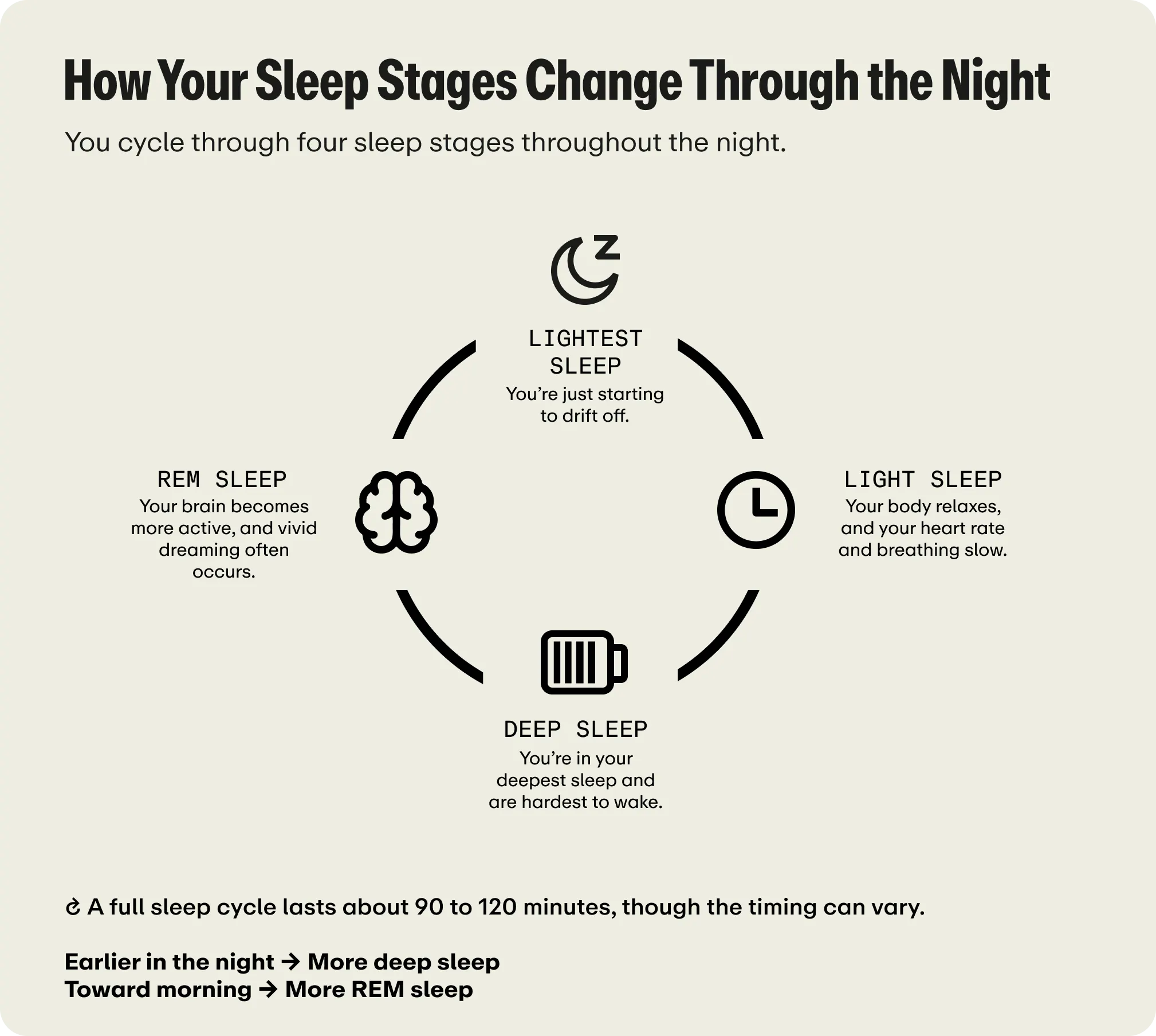
Deep sleep is one of four stages you cycle through several times each night. A full sleep cycle lasts roughly 90 to 120 minutes, though the timing can vary.
You start with two lighter stages of sleep (N1 and N2), move into deep sleep (N3), and eventually reach rapid eye movement (REM) sleep. REM sleep is when your brain becomes more active, and vivid dreaming may occur. Then the cycle starts again.
Most deep sleep happens earlier in the night, and periods of deep sleep generally get shorter as the night goes on. There’s a lot going on behind the scenes during this time. Deep sleep helps:
- Promote physical recovery: Your body may release human growth hormone during deep sleep, which helps repair tissues and keep your muscles and bones strong.
- Support learning and memory: Your brain consolidates memories, helping you retain what you’ve learned and experienced.
- Clear waste from the brain: This sleep stage also gives your brain a chance to clear out metabolic waste, including beta-amyloid, a protein that can build up in the brains of people with Alzheimer’s disease.
- Regulate stress: Deep sleep helps regulate stress hormones, so your body can dial down its stress response and focus on recovery.
- Support immune function: During deep sleep, your immune system helps your body fight infection and keep inflammation in check.
REM vs. Deep Sleep vs. Core Sleep: What’s the Difference?
Deep sleep and REM sleep are distinct stages of your sleep cycle, while “core sleep” is a term commonly used by sleep and fitness trackers to describe lighter sleep. Each plays a different role. You typically get more deep sleep earlier in the night and more REM sleep toward morning.
Here’s a breakdown:
- REM sleep: During this stage, your brain is highly active, your eyes move rapidly behind your eyelids, and most of your muscles temporarily relax. This is when vivid dreams often happen. REM sleep plays an important role in memory, learning, and emotional processing.
- Deep sleep (N3): This is the deepest stage of sleep and the hardest to wake from. As we covered above, it’s an important time for physical recovery, brain cleanup, and metabolic health.
- Core sleep: Unlike deep and REM sleep, “core sleep” isn’t a formally recognized sleep stage. Sleep trackers may use the term to describe lighter stages of sleep, typically N1 and N2. N1 is the stage when you’re first drifting off, while N2 is a deeper stage that makes up a large portion of your night.
Deep sleep and REM sleep do different jobs, but one isn’t “better” than the other. A healthy night of sleep includes time spent in each stage.
How Much Deep Sleep Do You Need by Age?
There isn’t a specific recommendation for how much deep sleep you need at each age. What’s considered “normal” changes over your lifetime, though, because deep sleep is generally highest in childhood and gradually declines as you get older. So, the amount of deep sleep you get in your 40s or 50s may naturally be lower than what you got in your 20s.
Deep sleep tends to decline with age as sleep becomes lighter and more fragmented, with more frequent awakenings. Other factors can affect your sleep as you get older, too, including:
- Hormonal changes: Shifting estrogen and progesterone levels during perimenopause and menopause can contribute to sleep disruptions.
- Changes in growth hormone: Growth hormone production declines with age, which may contribute to changes in deep sleep.
- Circadian rhythm shifts: Your internal body clock can shift with age, changing when your body naturally wants to sleep and wake. Melatonin levels also tend to decline with age, which may contribute to sleep changes.
- Age-related health conditions: Conditions that interfere with sleep, including sleep apnea and restless legs syndrome, become more common with age and can lead to fragmented sleep.
Rather than aiming for a specific amount of deep sleep for your age, it’s more useful to focus on getting enough quality sleep overall. Constantly getting too little sleep can affect your mood, memory, metabolism, and cardiovascular health. One study found that consistently getting 6 hours or fewer of sleep per night during midlife was linked to a 30% higher risk of dementia later in life.
Sleep apnea also becomes more common in midlife women, and it often goes undiagnosed, making persistent sleep problems worth discussing with a clinician. While research shows that women get objectively better sleep than men and may get more slow-wave sleep, they also report more sleep problems during midlife.
Why Perimenopause and Menopause Cut Into Deep Sleep
It’s probably no surprise to hear that perimenopause and menopause can affect how well you sleep, including how much deep sleep you get each night. Several hormonal changes and common midlife symptoms can disrupt your sleep, including:
- Progesterone decline: Progesterone has natural sedative effects that can promote sleep. As it declines during the menopause transition, those effects fade, so you may lose some of the sleep benefits.
- Declining estrogen: Sleep disturbances and brain fog have both been linked to declining estrogen levels. Estrogen also helps regulate serotonin, a brain chemical that plays an important role in your sleep-wake cycle. As estrogen fluctuates and declines during menopause, changes in serotonin may contribute to insomnia or other sleep problems.
- Vasomotor symptoms: Declining and fluctuating estrogen levels can make it harder for your body to regulate temperature, triggering vasomotor symptoms like hot flashes and night sweats. These symptoms, which affect roughly 75% of menopausal women, can be major sleep disruptors, causing nighttime awakenings and fragmented sleep.
- Mood and anxiety changes: Hormonal fluctuations during perimenopause can also contribute to anxiety, irritability, and other mood changes. Racing thoughts or feeling on edge can make it harder to relax and fall asleep.
- Elevated cortisol levels: Cortisol, your body's main stress hormone, may also play a role in sleep disturbances during menopause. Research has linked higher cortisol levels to more time awake at night and less deep sleep in perimenopausal and postmenopausal women.
- Urogenital changes: As estrogen levels decline during perimenopause and menopause, changes to the urinary tract can contribute to nocturia, or waking during the night to urinate, further interrupting sleep.
Signs You’re Not Getting Enough Deep Sleep
Even if you’re using a sleep tracker, it can be tough to know exactly how much deep sleep you’re getting each night. How you feel when you wake up and throughout the day can offer some clues, though.
While these signs don’t necessarily mean you’re low on deep sleep specifically, they may suggest that your sleep overall isn’t as restorative as it could be:
- waking up tired even after getting 7 to 8 hours of sleep
- having persistent daytime fatigue or low energy
- experiencing cognitive issues, like brain fog, forgetfulness, or trouble concentrating
- experiencing mood changes, such as feeling more irritable, anxious, or emotionally sensitive
- feeling like it takes longer to recover from exercise
- getting sick more often than usual
- having increased cravings or appetite changes
The tricky part is that many of these issues can also be menopause symptoms. Sleep apnea, which is more common in midlife, can also cause similar symptoms, including waking up unrefreshed, daytime fatigue, and brain fog. That’s why it’s helpful to look at your sleep, symptoms, and hormonal changes together, rather than assuming low deep sleep is the culprit.
If these symptoms are persistent or affecting your daily life, a trained clinician, like the ones at Midi, can help you figure out what may be disrupting your sleep and what might help.

What Your Sleep Tracker Can (and Can’t) Tell You About Deep Sleep
Sleep trackers can give you a useful big-picture view of your sleep, including your bedtime consistency, total sleep time, and nighttime awakenings. But their estimates of how much time you spend in each sleep stage aren’t as reliable.
Most sleep trackers estimate sleep stages using signals like movement, body temperature, and heart rate. A sleep study, on the other hand, measures brain waves and other body signals to determine when you’re in light, deep, and REM sleep. That means your tracker may be pretty good at estimating how long you slept overall, but it can confuse deep sleep with light sleep and vice versa.
That doesn’t mean the data isn’t useful. Instead of focusing on a single night or worrying about whether you hit a certain amount of deep sleep, look for trends over a few weeks. For example, you might notice that you sleep differently after drinking alcohol, exercising late, or having night sweats.
And try not to let the numbers become another source of stress. Obsessing over getting “perfect” sleep scores is sometimes called orthosomnia, and that anxiety can make it even harder to sleep well.
Remember that a sleep tracker also can’t diagnose conditions like sleep apnea or tell you whether hormonal changes are disrupting your sleep. If your tracker consistently shows poor sleep and you’re regularly waking up tired or having other sleep problems, it’s worth talking with a clinician rather than relying on the numbers alone.
How to Get More Deep Sleep in Midlife
Deep sleep may take a hit with age, but there are still things you can do to support better, more restorative sleep in midlife, even if it feels like your body is working against you. Rather than trying to hit a specific deep-sleep number, focus on habits and treatments that help you get enough restful sleep.
Address hormonal symptoms
If hot flashes, night sweats, or other menopause symptoms are waking you up, treating those symptoms may help you sleep more soundly. Hormone therapy, which restores hormones that naturally decline during the menopause transition, may be an option for some women. Estrogen patches, for example, can help reduce hot flashes and night sweats, while oral micronized progesterone may also have sleep-promoting effects. A clinician can walk you through the best treatment options for hormonal symptoms.
Focus on sleep hygiene
Good sleep hygiene is key for getting enough rest each night. Keep the following in mind:
- Stick to a consistent sleep and wake schedule to help keep your internal body clock on track.
- Limit caffeine after noon and try to avoid alcohol 3 to 4 hours before bedtime.
- Keep your bedroom cool (around 65° to 68°), dark, and quiet.
- Exercise regularly, ideally earlier in the day if late workouts interfere with your sleep.
- Dim the lights and limit screens before bed to help your body relax.
- Create a relaxing wind-down routine before bed, like reading, gentle stretching, or taking a warm bath or shower.
Try CBT-I
Cognitive behavioral therapy for insomnia (CBT-I) is the first-line treatment for chronic insomnia. It involves practical strategies to retrain your sleep patterns, and it’s been shown to help menopausal women fall asleep faster, stay asleep longer, and get better sleep overall. You can work with a trained professional or use a digital CBT-I program.
Consider targeted sleep supplements
Some supplements may help with sleep, depending on what’s keeping you up at night. Midi’s Daily Cortisol Support combines several ingredients, like magnesium and L-theanine, used to help lower stress and support sleep. Meanwhile, Midi’s Nightly Steady Sleep+ is formulated to help you stay asleep by supporting you in staying cool, calming your mind, and getting a more continuous, restorative sleep.

Other sleep supplements to know include:
- Magnesium can promote relaxation and support sleep, particularly if you’re not getting enough magnesium.
- Melatonin helps regulate your sleep-wake cycle and may be especially useful for sleep-timing issues like jet lag.
- Glycine may help lower body temperature and improve sleep quality.
- L-theanine can help quiet racing thoughts and promote relaxation.
Supplements can cause side effects or interact with medications, so talk with a clinician before adding a new sleep supplement to your routine, especially if you take other medications.
When to Talk With a Clinician About Your Deep Sleep
There isn’t one trick for getting more deep or restful sleep. If you’re consistently waking up exhausted despite giving yourself enough time to sleep, a clinician can help you figure out what’s getting in the way.
It’s especially important to check in with a healthcare professional if you have loud snoring, gasping or pauses in breathing during sleep, severe daytime sleepiness, or sleep problems that last more than a few weeks. These can be signs that something beyond everyday sleep disruption is going on. But keep in mind that sleep apnea can also cause less obvious symptoms in women, like disrupted sleep and persistent fatigue.
A menopause-trained clinician, like the experts at Midi, can look at how hormonal changes, night sweats, and other factors may be affecting your sleep. An evaluation may include reviewing your symptoms and sleep history, screening for sleep apnea and other conditions that can affect sleep, and referring you for a sleep study when appropriate.
Treatment options may include hormone therapy, non-hormonal treatments for night sweats, CBT-I, or targeted supplement guidance. You can book a visit with Midi to get a personalized treatment plan for better sleep in midlife.
Key Takeaways
- There’s no single recommendation for exactly how much deep sleep you need. Adults should aim for 7 to 9 hours of sleep per night, and deep sleep usually accounts for 10% to 25%, or about 1 to 2 hours, of that time.
- Deep sleep, also called slow-wave or N3 sleep, is the deepest stage of sleep. It supports important processes like physical recovery, stress regulation, and immune function.
- As you get older, the amount of deep sleep you get naturally declines, so there’s no specific number you need to hit based on your age.
- Perimenopause and menopause can make restful sleep harder to come by. Fluctuating estrogen and progesterone levels, along with symptoms like hot flashes, night sweats, and nocturia, can keep you up at night.
- Sleep trackers can help you spot patterns, but their estimates of deep, light, and REM sleep aren’t always reliable. Pay attention to how you feel, especially if you regularly wake up tired or struggle with daytime fatigue, brain fog, or mood changes.
- Rather than chasing a specific deep-sleep number, focus on getting enough quality sleep overall. If sleep problems persist, a clinician can help identify what’s getting in the way and recommend treatment.
Frequently Asked Questions (FAQs)
Is 1 hour of deep sleep per night enough?
It can be. There’s no exact amount of deep sleep you need each night, but for most adults, deep sleep makes up about 10% to 25% of total sleep. That works out to roughly 1 to 2 hours if you sleep for 7 to 9 hours.
Is it better to have REM or deep sleep?
Both deep sleep and REM are important parts of the sleep cycle; neither one is better than the other. Deep sleep supports physical recovery, memory, and immune function, while REM sleep plays an important role in learning, memory, and emotional processing.
Why am I getting so little deep sleep?
During midlife, hormonal changes and symptoms like hot flashes and night sweats can disrupt sleep. Deep sleep also naturally declines with age. Other factors, including stress, poor sleep habits, and sleep disorders, can affect how much restful sleep you get.
How can I increase my deep sleep hours?
To get more deep sleep, focus on what may be disrupting your sleep in the first place. That could mean treating menopause symptoms, improving your sleep habits, or trying CBT-I for chronic insomnia. A clinician can help identify causes and recommend treatment when needed.
How much REM and deep sleep do you need?
There isn’t a standard recommendation for how much REM or deep sleep you need each night. In adults, deep sleep typically makes up about 10% to 25% of total sleep, while REM accounts for roughly 20% to 25%. If you sleep 7 to 9 hours, that’s roughly 1 to 2 hours of each per night.
If you’re in perimenopause or menopause and want guidance from clinicians who specialize in women’s midlife health, book a virtual visit with Midi today.
Hormonal change is at the root of dozens of symptoms women experience in the years before and after their period stops.
Our trained menopause specialists can help you connect the dots to guide you towards safe, effective solutions.
Whether you need personalized guidance or a prescription routine to tackle symptoms—including brain fog, hot flashes, sleep trouble, mood swings, and weight gain—we’ve got you covered. Learn more here.
Midi’s mission is to revolutionize healthcare for women at midlife, wherever they live and whatever their health story. We believe that starts with education, to help all of us understand our always-changing bodies and health needs. Our core values guide everything we do, including standards that ensure the quality and trustworthiness of our content and editorial processes. We’re committed to providing information that is up-to-date, accurate, and relies on evidence-based research and peer-reviewed journals. For more details on our editorial process, see here.