


The world of weight loss drugs is moving at rapid speed. It's hard to keep track of what’s already available and what’s coming down the pipeline. Two meds that are often compared (and sometimes confused!) are tirzepatide and retatrutide.
If you’re comparing tirzepatide vs. retatrutide, the biggest difference is that tirzepatide is already FDA-approved while retatrutide is still in clinical trials, though there’s a lot of buzz about its potential benefits.
Tirzepatide for weight loss has shown great promise so far. But which med is best? A clinician trained in midlife health can help you figure out if one of these meds would be a good fit for you.
Just when we seem to have a grasp on one weight loss drug, another enters the chat. As GLP-1s have become widely known and discussed, two other meds are coming into focus: tirzepatide and retatrutide. There are a lot of questions about these meds: how they compare, which might work better, and which is the safest.
Tirzepatide has been around for a few years. You may have heard of it by its brand names, Zepbound or Mounjaro. Retatrutide is the new kid on the block. It targets three hormones (consider it a GLP-3), while tirzepatide targets two (and semaglutide targets one).
But retatrutide is not yet FDA approved. Phase 3 clinical trials are underway, with promising results beyond even weight loss. That said, it won’t have full approval until late 2026, possibly even 2027.
You may have seen retatrutide already being sold online—but right now, the only safe and legal way to get retatrutide is through a clinical trial.
Read on to learn more about these two weight loss meds, the results so far, and what potential side effects to expect. Not every drug is right for every person, so it’s essential to consider your options with a clinician.
Here’s what you need to know about tirzepatide vs. retatrutide if you are considering medication for weight loss.
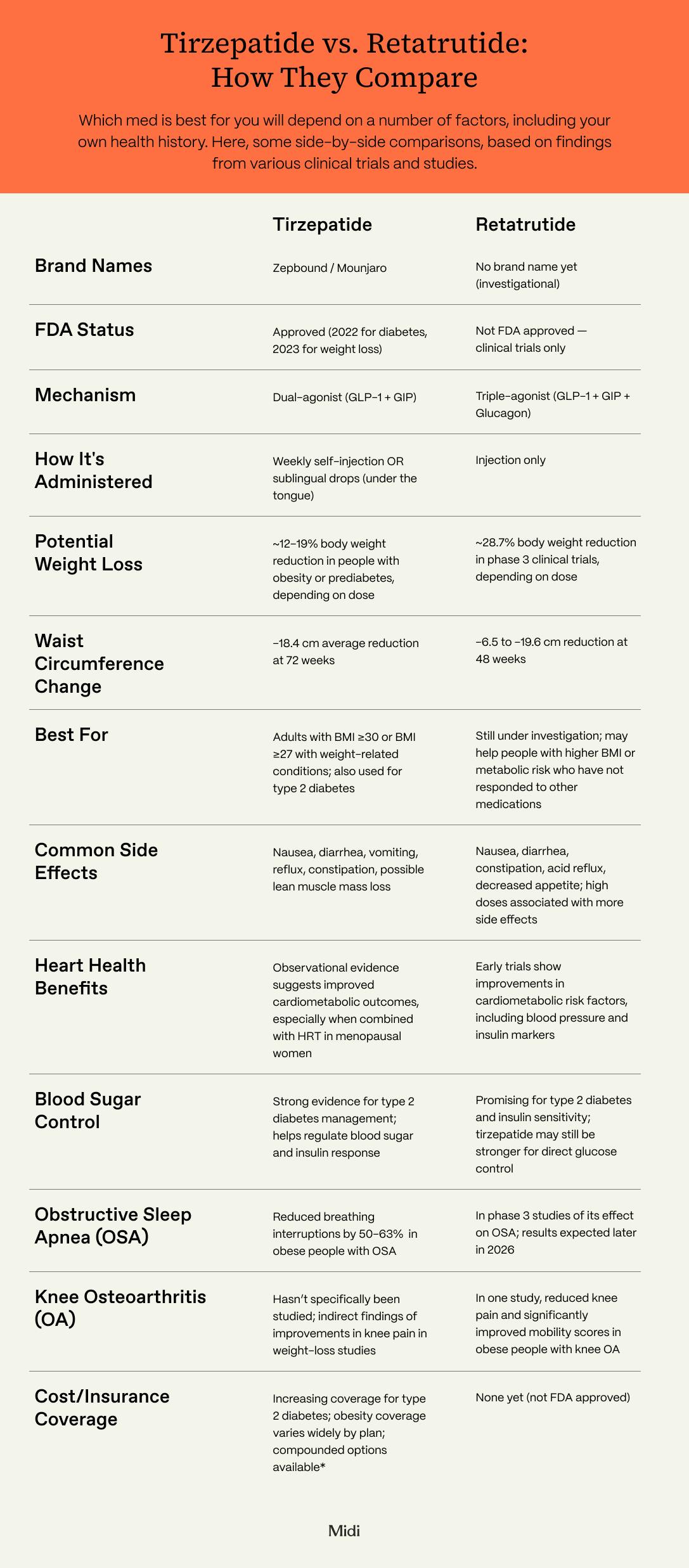
Tirzepatide vs Retatrutide: The Big Differences at a Glance
A big difference between these two meds is that tirzepatide is currently available (under the brand names Mounjaro and Zepbound) while retatrutide is still considered an investigational drug, undergoing clinical trials. Let’s break down how they work.
Tirzepatide is a dual-agonist, meaning it works by targeting two hormones:
- GLP-1: helps regulate appetite, blood sugar, and digestion
- GIP: supports insulin response and reduces nausea
Retatrutide is a triple-agonist, meaning it targets three hormones:
- GLP-1: helps regulate appetite, blood sugar, and digestion
- GIP: supports insulin response and reduces nausea
- Glucagon: affects energy use and fat metabolism
Early studies show that retatrutide may be more successful than tirzepatide at managing diabetic kidney disease, as well as for weight control, while tirzepatide may be better at managing blood glucose.
The current clinical trials should give us more information: They’re comparing which works better and which is safer, and results are expected in December 2026.
Regardless of the outcome of these trials, it’s important to know that not everyone will have the same personal results. Working with a clinician (such as a clinician at Midi Health) is key, so you can talk about your specific needs, health goals, and other health concerns.
Tirzepatide for Weight Loss: What It Is and Who It’s For
Tirzepatide was approved by the FDA in 2022 for type 2 diabetes, and in 2023 for weight control for people with obesity or overweight and at least one weight-related condition (like high blood pressure or cholesterol).
Research has shown positive results, with participants who had obesity and prediabetes losing 12% to 19% of their body weight, depending on dosage. Those taking tirzepatide (as opposed to a placebo) were far less likely to develop type 2 diabetes.
Some research shows there’s added potential for tirzepatide when it’s used in conjunction with hormone replacement therapy (HRT). For example, in a recent study, menopausal women with obesity or overweight lost more weight when tirzepatide was used along with HRT, and they had better cardiometabolic outcomes. The study was observational and relatively small, but the findings were promising.
Tirzepatide is generally prescribed as a once-per-week self-injection. The dosages should be discussed with a clinician, who’ll consider your weight loss goals, medical history, and drug tolerance. Generally, the dosages start small and gradually increase.
Tirzepatide is also available as an oral solution, administered under the tongue, for those who prefer to go needle-free. Generally, this option is best for people who have more modest weight loss goals. Those who are hoping to lose significant weight may see more results with the injectable version.

Even if studies show a real potential for weight loss, people’s results vary based on their daily habits and the dosage. A clinician can help you set appropriate expectations.
Like with any med, tirzepatide has potential side effects. The most common are gastrointestinal, such as:
- nausea
- diarrhea
- vomiting
- reflux
- constipation
Many of these symptoms resolve in time. In the meantime, anti-nausea medication, natural solutions like ginger or peppermint, and eating smaller meals can often help.
There’s also a possibility of losing some lean muscle mass as a side effect. Your clinician can talk with you about how to address that—for instance, an increase in protein along with strength training.
Tirzepatide isn’t for everyone. Your clinician can help you decide whether it’s right for you, but here are some general parameters.
It can be a good fit for…
- adults with obesity (BMI 30 and over)
- overweight adults (BMI over 27) with a weight-related issue like high blood pressure or cholesterol
- those with type 2 diabetes
It’s probably not a good fit for…
- women who are pregnant, trying to get pregnant, or breastfeeding, since there’s not enough safety data
- people with type 1 diabetes
- people with pancreatitis or a history of medullary thyroid cancer
True Stories Of Transformation
What Is Retatrutide? Where It Stands Today
Retatrutide is an investigational weight loss medication (meaning it’s still being studied) that targets three hunger-regulating hormones.
The research from the clinical trials is promising. The biggest phase 3 clinical trial showed a 28.7% reduction in weight in participants with obesity or overweight. The weight loss is the highest seen to date among available weight loss drugs.
Yet, though this is promising, active trials are still ongoing. They are expected to report their findings later this year, with possible FDA approval in late 2026 or 2027.
Keep in mind that anything you see available now, outside of the clinical trials, has not been FDA approved. If you see retatrutide on the market now, it’s unregulated and potentially dangerous.
How Does Retatrutide Work, Compared With Tirzepatide?
Retatrutide targets three hormones: GLP-1, GIP, and glucagon. It works to suppress appetite and slow digestion, increase fat metabolism, and increase insulin sensitivity. It’s given as an injection.
So is this a case where three hormones targeted is better than two? It might be, but we don’t know yet. Some experts feel that this extra hormonal pathway could be the missing link for people who’ve had limited or no success with tirzepatide.
No medication is one-size-fits-all. Promising data doesn’t always equal better outcomes IRL. If there’s another option in the arsenal of weight loss drugs, that’s great—but a full-on comparison to tirzepatide will need to be determined.
Retatrutide Benefits (and the Fine Print)
What do we know at this point about the potential benefits of retatrutide? So far, the trials seem to show:
- high reduction in weight, hovering around 28% for those on a 12-milligram dose
- self-reported improvements in cardiometabolic risk factors like high blood pressure, insulin, and fasting glucose
- promising results for type 2 diabetes and fatty liver disease
- a reduction in pain from knee osteoarthritis
Retatrutide may be valuable for those who have had limited success with other weight loss drugs, have a higher BMI, or are at significant metabolic risk. However, the phase 3 clinical trials studying the safety and efficacy are yet to be complete. Although side effects seem to be in line with other weight loss drugs, long-term safety and real-world data will take time to build.
Some of the studies involved high doses that came with a hefty dose of side effects. If you are considering retatrutide—or really, any weight loss med— you need to take into account what is personally tolerable and safe for you. That’s why working with a clinician is extremely beneficial.
Side Effects and Safety: What’s Similar and What Might Differ
Weight loss medications can have major benefits, but they can come with side effects, too. Tirzepatide and retatrutide have many similar potential side effects, including:
- nausea
- diarrhea
- constipation
- acid reflux
- decreased appetite
Anyone on a weight loss med should be monitored by a clinician, who can keep an eye on your progress and help you navigate common side effects. They can also watch for rarer, more dangerous risks, such as gallbladder inflammation, gallstones, and pancreatitis.
You should also make sure your clinician knows if you:
- are on diabetes medication
- have a GI condition or a history of kidney problems
- are on any other medications or have preexisting conditions you’re unsure about
Your clinician has the expertise to know what may interfere or put you at increased risk.
If and when retatrutide does get FDA approval, it’ll be especially important to monitor the drug while long-term safety and real patient side effects are still being established.
Diagnosis and Testing: What a Clinician Will Review Before Medication
Weight loss medications aren’t designed for everyone. Even if the results for others seem appealing, there’s a lot to take into consideration. Seeing a clinician is the best way to figure out what’s right for you.
A clinician will review:
- Medical history: This includes your weight over the years, stage of menopause, sleep habits, stress levels, and other medications.
- Basic measurements: This involves key info such as your current weight and BMI, waist size, blood pressure, and any symptoms that may suggest insulin resistance.
- Labs: Clinicians may consider running a panel that includes blood sugar markers, lipids, and liver/kidney basics (as appropriate).
- Contraindications and higher-risk situations: This should include higher-risk situations like pregnancy, prior severe reactions, and certain endocrine history.
- Goals: You can discuss the health outcomes you’re hoping for, whether that’s more energy, better function, and improved labs, as well as weight loss.
Treatment Options: Medication Is One Tool in a Full Plan
Although weight loss meds offer a lot of promise, they don’t operate in a vacuum—lifestyle changes are encouraged as part of a sustainable process. (This is especially true for women in midlife who are dealing with disruptions in their sleep, stress levels, and metabolism that affect their health!) Behavior issues to consider include:
- Nutrition basics like protein, fiber, and hydration, which can give you better results and ease side effects
- Strength training to build and maintain lean muscle mass—key in midlife, and especially when on a weight loss med
- Sleep and stress strategies that can ease cravings (and if you aren’t sleeping, a Midi clinician can help with that, too)
- Potential other medication options based on your goals
Working With a Healthcare Professional: How to Make Results Safer and More Sustainable
Working with a clinician, like those at Midi, is key to taking any weight loss medication safely and more comfortably, for sustainable results. Some things a clinician can help with:
- Dose titration: They’ll start with a lower dose and build it steadily as your body adjusts.
- Side effect management: Side effects like nausea are more tolerable when you have someone armed with the tools to help.
- Trend monitoring: They’ll monitor your weight, symptoms, and labs and make adjustments real time as needed.
- Maintenance planning: You can discuss ways to maintain weight loss.
- Medication management: If your med isn’t a fit, a clinician can help you pause, switch, or try a different route.
When to Seek Care: Red Flags
It’s important to seek immediate care if you experience any of the following issues:
- Severe or persistent vomiting/diarrhea: including an inability to keep fluids down or signs of dehydration
- Severe belly pain: especially with fever or vomiting
- Yellowing skin/eyes, severe right-sided abdominal pain: possible signs of a gallbladder issue
- Signs of low blood sugar: shakiness, confusion, sweating—especially for those on diabetes medication
- Allergic reaction symptoms: swelling, hives, trouble breathing
- New or worsening mental health symptoms: any emotional changes that feel urgent or unsafe
Key Takeaways
- Tirzepatide for weight loss targets two hormones. It was FDA approved in 2023 and has shown impressive results so far.
- Retatrutide is a med undergoing clinical trials that targets three hormones. It has not yet been FDA approved, but is showing great promise for weight loss.
- Weight loss meds work differently for different people, depending on their goals, lifestyle habits, and other factors.
- Working with a skilled clinician can help you decide which weight loss drug is right for you and what lifestyle changes you should focus on to support it.
Frequently Asked Questions (FAQs)
What is the difference between retatrutide and tirzepatide?
Tirzepatide is a dual-agonist weight loss drug that’s currently on the market. Retatrutide is a triple-agonist weight loss drug that’s currently undergoing clinical trials and is not yet FDA approved.
Is retatrutide peptide the same as Mounjaro?
No, Mounjaro is one of the brand names for tirzepatide.
Does retatrutide make you hungry?
Although retatrutide is currently in the clinical study phase, the indications so far is that it does not appear to make you hungry.
What is the best alternative to tirzepatide?
Choosing a weight loss drug can be nuanced based on your goals, medical history, and lifestyle. Many who are looking for a weight loss drug that’s not tirzepatide may choose semaglutide or a GLP-1 or look into the possibility of enrolling in a clinical trial for retatrutide.
Can my doctor prescribe retatrutide?
Retatrutide is currently only in clinical trials and can’t be prescribed by a provider at this point. FDA approval may happen in late 2026 or early 2027; if and when it’s approved, providers will then be able to prescribe it.
Why is retatrutide the best?
Although retatrutide is showing promising results in clinical trials, it has not yet been FDA approved, so conclusions can’t be made around it being the best weight loss solution. There are several weight loss meds already available—a clinician can help you decide whether one of them is right for you.
If you’re in perimenopause or menopause and want guidance from clinicians who specialize in women’s midlife health, book a virtual visit with Midi today.
Hormonal change is at the root of dozens of symptoms women experience in the years before and after their period stops.
Our trained menopause specialists can help you connect the dots to guide you towards safe, effective solutions.
Whether you need personalized guidance or a prescription routine to tackle symptoms—including brain fog, hot flashes, sleep trouble, mood swings, and weight gain—we’ve got you covered. Learn more here.
Midi’s mission is to revolutionize healthcare for women at midlife, wherever they live and whatever their health story. We believe that starts with education, to help all of us understand our always-changing bodies and health needs. Our core values guide everything we do, including standards that ensure the quality and trustworthiness of our content and editorial processes. We’re committed to providing information that is up-to-date, accurate, and relies on evidence-based research and peer-reviewed journals. For more details on our editorial process, see here.