


If you’ve started noticing subtle shifts—like sleep trouble, cycle changes, or brain fog—you might wonder: “When does perimenopause start, and am I even old enough for this?” While many women start seeing changes in their 40s, perimenopause timing and symptoms can look different for everyone. Plus, it’s easy to second-guess whether your symptoms are related to stress, normal aging, or hormones. Below, learn what age perimenopause typically starts, how long it can last, and common signs of perimenopause to watch for. You don’t have to figure it out on your own or wait for symptoms to interfere with your daily life. Clinician-guided support, such as from a Midi Health clinician, can help you manage the transition with more confidence.
“When does perimenopause start?” If you’ve ever gone down a rabbit hole trying to decode your symptoms, you know the answer can be pretty confusing. A quick scroll on social media, and suddenly, everything from bloating to itchy skin is linked to perimenopause. That can leave you with more questions than answers, like “What age does perimenopause start?” and “How long does it last?”
The truth is that perimenopause symptoms often begin subtly and rarely follow a clear timeline. You might have trouble sleeping, mood shifts, or minor menstrual cycle changes and wonder whether it’s stress, normal aging, or perimenopause. If this sounds familiar, know you’re not alone.
Keep reading to learn what age perimenopause typically starts, how long it lasts, common perimenopause symptoms, and expert-approved treatment options. Perimenopause is called a transition for a reason—and you don’t have to navigate it alone. You can work with a menopause-trained healthcare professional, like a Midi clinician, to manage any symptoms that get in the way of your everyday life.
When Does Perimenopause Start? The Quick Definition
Perimenopause doesn’t have a clear start date. It’s a gradual transition that unfolds differently for everyone, which is part of what makes the timing so confusing. That said, most women start noticing perimenopause-related changes in their 40s, though symptoms can begin earlier or later for some people.
Perimenopause is the natural phase leading up to menopause, when hormones—especially estrogen—fluctuate more unpredictably as the ovaries produce them less consistently. These hormonal shifts can affect your menstrual cycle, mood, or energy levels well before menopause officially occurs.
You reach menopause when you’ve gone 12 consecutive months without a period. The average age of menopause in the United States is 52, but the road to that milestone can start years earlier. That’s where things get a little tricky because perimenopause doesn’t just flip on like a switch.
Perimenopause timing, symptoms, and intensity can vary widely from person to person. In other words, the destination (menopause) is the same, but everyone’s journey through perimenopause looks different.
Key Data Points: When Perimenopause Begins and Symptoms Real Women Noticed, According to a 2026 Midi Survey
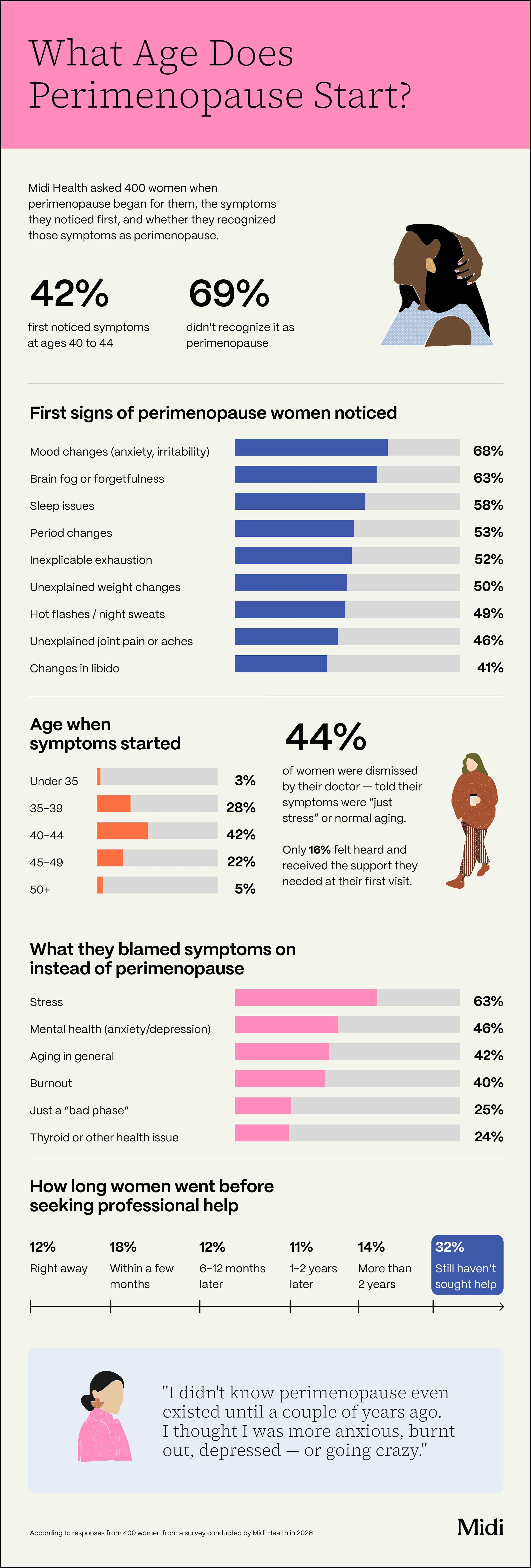
In early 2026, Midi conducted a survey asking women when perimenopause began for them, whether they recognized it as perimenopause at the time, and the early symptoms they noticed—and 400 women responded.
As you move through your own menopause journey, you may find it helpful to hear about their experiences. Here are a few insights to consider.
When perimenopause started for them:
- 3.12% were under 35
- 27.62% were 35 to 39
- 41.65% were 40 to 44
- 22.49% were 45 to 49
- 5.12% were 50+
First signs of perimenopause they noticed:
- 67.61% experienced changes in mood (anxiety, irritability, low mood)
- 62.68% experienced brain fog or forgetfulness
- 57.51% experienced sleep issues
- 52.82% experienced period changes (longer, shorter, heavier/lighter, more/less frequent)
- 49.53% experienced unexplained weight changes
- 43.19% experienced low libido
Whether they realized it was perimenopause at the time:
- 35.78% had no idea what was happening
- 32.70% thought it was something else
- 27.73% suspected it
- 3.79% realized it immediately
What they thought initially caused their symptoms:
- 62.68% thought it was stress
- 45.77% thought it was mental health (anxiety/depression)
- 41.55% thought it was aging in general
- 35.56% thought it was burnout
- 22.89% thought it was thyroid or other hormonal issues (non-menopause)
- 4.58% thought it was postpartum
- 4.23% didn’t question it
If or when they sought help from a healthcare professional
- 32.43% haven’t sought help yet
- 17.94% sought help within a few months
- 14.25% sought help after more than 2 years
- 12.04% sought help right away
- 12.04% sought help within 6 to 12 months
- 11.30% sought help within 1 to 2 years
How they felt their first conversation with a healthcare professional went
- 44.24% were dismissed—told it was just stress or normal aging
- 17.10% had to seek out multiple doctors/clinicians until someone connected the dots
- 16.36% felt heard and got the support/treatment they needed
- 14.13% were given a different diagnosis first
- 8.18% had to push hard to be taken seriously
What Age Does Perimenopause Start? Typical Ranges (and a Perimenopause Quiz)
There isn’t a universal “perimenopause age” that marks the start of the transition. Just like your first period didn’t arrive at the exact same time as everyone else’s, the timing of perimenopause varies, too. Typically, perimenopause begins in your mid- to late-40s, but it can start as early as your 30s or as late as your 50s.
According to a Midi’s survey, 42% of respondents were ages 40 to 44 when perimenopause began. On the other hand, 28% were 35 to 39 and 22% were 45 to 49. Some noticed changes even earlier or later, with 5% first noticing symptoms at age 50 or older and 3% noticing changes before age 35.
It makes sense that everyone’s experience is unique when you consider that several factors can affect when perimenopause starts:
- Genetics play a role, so your family history—including when your mother reached menopause—might offer some helpful clues about your own timeline.
- Your reproductive and medical history, such as prior ovarian surgery, and overall health can also influence the transition.
- Lifestyle factors matter, too. Smoking, for example, is linked to roughly double the risk of early menopause (before 45).
- Broader social, cultural, and environmental factors, such as chronic stress, and healthcare disparities, may also play a part.
Early perimenopause symptoms, like sleep or mood changes, might happen before obvious menstrual cycle changes. They often overlap with everyday stress, which can make it harder to pinpoint the start. If you notice changes earlier than expected—especially in your 30s—or disruptive symptoms, it’s worth checking in with a healthcare professional.
If you’re in perimenopause now, you can take Midi’s survey to share your experience, from what age it began to the symptoms you noticed.
Signs of Perimenopause: The Earliest Clues People Miss
It’s easy to miss the early perimenopause signs, especially if you’re waiting for clearer symptoms like irregular periods or hot flashes. For many women, the first changes are subtle. You might feel like something is a little off, even if you can’t pinpoint what’s different.
In one survey, 63% of perimenopausal women reported not feeling like themselves, which includes symptoms like anxiety and fatigue. This stat closely mirrors Midi’s 2026 survey results: 68% of respondents reported mood changes such as anxiety and irritability among their early signs of perimenopause.
Because estrogen helps regulate everything from your menstrual cycle to cognition and sleep, even early hormone fluctuations can show up as a wide range of symptoms. Cycle changes are often one of the earliest clues. Periods may start arriving a few days early, cycles may shorten, or PMS may feel more intense. These shifts are also common, with more than 1 in 2 (53%) Midi survey respondents noticing changes to their period when they began perimenopause.
Fatigue and sleep disruptions could also be early signs. You might have trouble falling or staying asleep, and night sweats that come and go, thanks to stress and hormonal shifts. You’re far from alone if this is the case: 58% of Midi survey respondents reported sleep issues among their first perimenopause symptoms.
Brain fog––including trouble remembering details or concentrating––can also creep in. Headaches or migraine episodes can shift as well. If you’re already prone to them, migraine episodes may worsen or become more frequent.
These changes might not happen one at a time, either. It’s not always obvious whether symptoms are related to perimenopause, everyday stress, or a combination of both. In fact, nearly 7 in 10 Midi survey respondents were caught off guard when they began perimenopause: 36% had no idea what was happening, while 33% blamed their symptoms on other causes, such as stress, burnout, or aging.
If this sounds like a lot, it’s because, well, it is. But remember, everyone’s experience with perimenopause is different. You might notice some of these shifts or none at all, and no single symptom confirms the transition. But when several changes start happening at once—especially alongside subtle menstrual cycle shifts—it may signal the start of perimenopause.
Perimenopause Symptoms: The Most Common Symptom Clusters
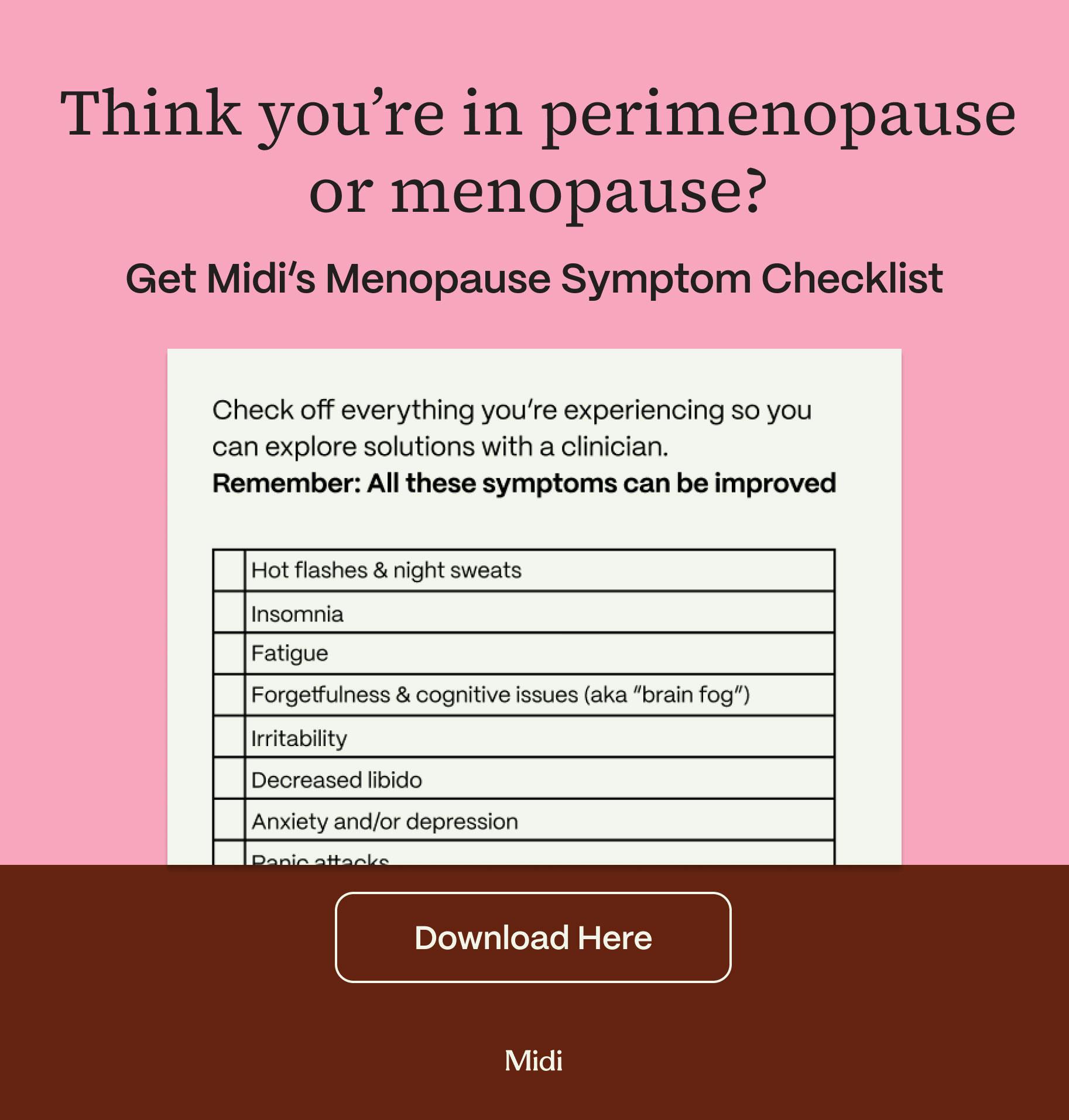
As you move through the transition, perimenopause symptoms might show up as more recognizable patterns. Understanding common symptom clusters can help you connect the dots if you’re experiencing several changes at once.
Vasomotor symptoms
When you think of perimenopause, hot flashes and night sweats probably come to mind first. And with good reason: Research suggests that roughly 3 out of 4 women experience these vasomotor symptoms at some point during perimenopause.
You might feel a sudden wave of heat, skin flushing, or a fast heartbeat. For some women, these episodes are quick and occasional. For others, they can be longer and more frequent, interfering with sleep and daily routines.
Sleep disruptions
Sleep problems—whether it’s trouble falling asleep, frequent middle-of-the-night or early-morning waking, or less restful sleep—are common during perimenopause. Hormonal highs and lows, stress, and night sweats may be behind these disruptions.
Mood and cognitive symptoms
With so many hormonal ups and downs across the menstrual cycle, mood shifts might already feel familiar. But you might find that these mood changes—such as irritability, anxiety, or sadness—are harder to ignore during perimenopause.
Some women also report brain fog, including trouble with memory and focus. These symptoms are often linked to shifting estrogen levels that can affect mood, cognitive function, and sleep quality.
General body changes
Perimenopause can bring whole-body changes, such as bloating, weight gain, and joint aches. As estrogen rises and falls, the body may store fat differently, and inflammation may increase, making aches and pains more noticeable. Many women notice more weight settling around the midsection (sometimes called meno belly), even if their diet or exercise routine hasn’t changed much.
Vaginal and urinary symptoms
Unpredictable estrogen levels may also affect tissues in the vulva, vagina, and urinary tract. This can lead to vaginal dryness, discomfort or pain during sex, and increased urinary tract infections. Many women don’t seek care because they feel uncomfortable talking about it, but genitourinary symptoms are common and treatable.
You don’t have to experience all of these changes to be in perimenopause. If any patterns sound familiar, or you have other new, disruptive, or surprising symptoms, it may be worth checking in with a healthcare professional, like a Midi clinician.
True Stories Of Transformation
Timeline: What Perimenopause Can Look Like Over Time
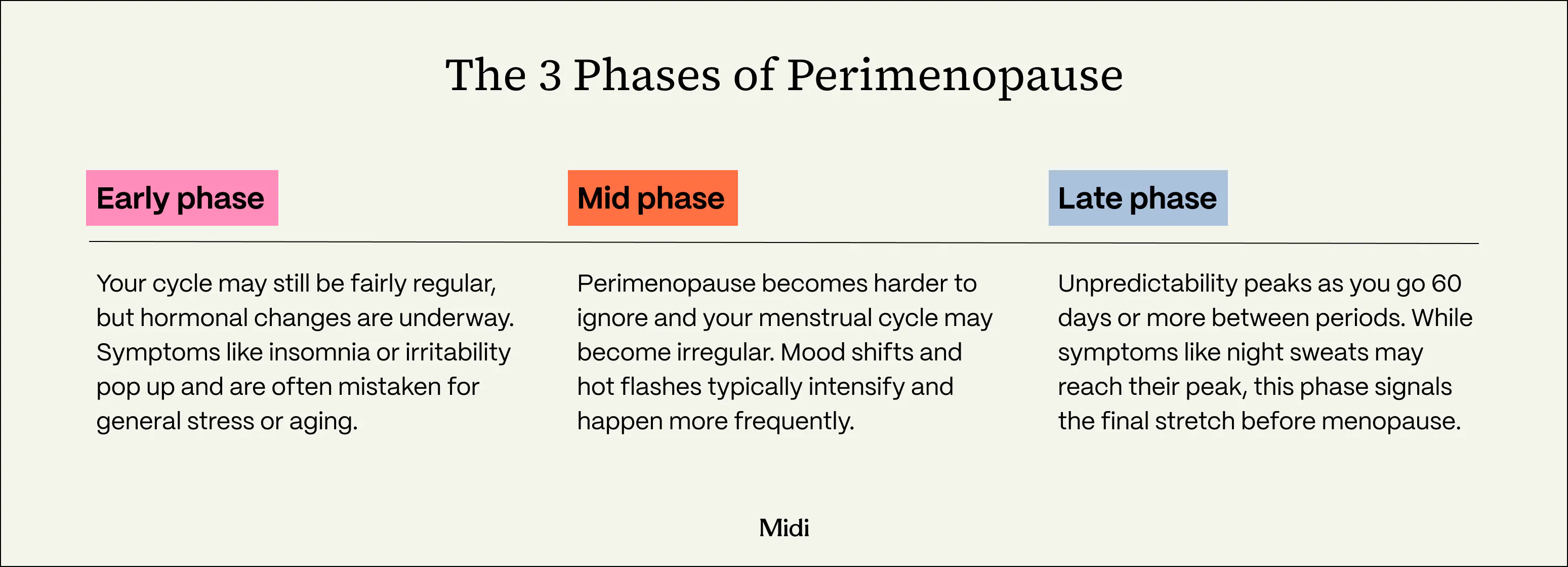
Your journey through perimenopause probably won’t follow a straight, predictable path. But you might start noticing patterns over time. Clinicians typically describe perimenopause as early or late-stage, but real-life symptoms can feel more like three unofficial phases: early phase, mid phase, and late phase.
1. Early phase
Your menstrual cycle might still be fairly regular, even if something feels a little different. Symptoms––such as insomnia, night sweats, or irritability––may pop up out of nowhere. Many women brush off this stage as stress, burnout, or just getting older. But hormone changes can absolutely be underway even if symptoms are mild or inconsistent.
2. Mid phase
If it seems like perimenopause is in the neighborhood during the early phase, the mid phase might feel like it’s banging on your door. Your cycle lengths may be noticeably irregular; periods may be early, late, or occasionally skipped; and your flow may be heavier or lighter. Mood shifts and hot flashes or night sweats might feel more intense or harder to rein in.
3. Late phase
Unpredictability is the name of the game as hormone levels continue to fluctuate. Cycles often get longer, and periods grow farther apart. In fact, going 60 days or more between periods is a common sign of late-stage perimenopause.
Some people also begin to notice signs that perimenopause is nearing its end. Hot flashes and night sweats may peak as you get closer to menopause.
Remember, perimenopause is rarely a straightforward process. As disruptive or annoying as it can be, symptoms may come in waves, easing for months before flaring again without warning.
How Long Does Perimenopause Last? What Affects Duration
Perimenopause often lasts about 4 to 8 years, but it can be much shorter for some people and stretch closer to a decade for others.
Unfortunately, there’s no way to know how long perimenopause will last for you because it depends on so many factors. Everything from your genetics to your medical history and current health can influence the timing. For example, some research suggests that women who start perimenopause earlier may have a longer menopausal transition.
Remember: You don’t have to wait it out if symptoms start affecting your work, straining your relationships, or making daily life harder than it needs to be. Exploring treatment options sooner rather than later can make it easier to manage the transition. A healthcare professional, such as a Midi clinician, can help you find relief and feel like yourself again.

Diagnosis and Testing: What Can Confirm Perimenopause (and What Can’t)
Perimenopause is usually a clinical diagnosis based on your symptoms, cycle patterns, and age. That might surprise anyone hoping that a quick blood test will give them a clear answer once and for all.
As ovarian function winds down, estrogen, follicle-stimulating hormone (FSH), and other hormones can fluctuate day to day and week to week. A clinician could test your estrogen and find low levels that suggest perimenopause. But taking the same blood test a week later might show typical estrogen levels. In other words, a single test rarely captures the full picture.
That said, clinicians often use labs to rule out conditions that can mimic perimenopause symptoms, such as:
- thyroid issues that can trigger cycle changes, mood shifts, and fatigue
- anemia or iron deficiency, which may cause fatigue and brain fog
- blood sugar changes or diabetes
- vitamin D deficiency
Testing becomes more important if your symptoms are severe, begin unusually early (before age 40), or include abnormal bleeding patterns that warrant further evaluation. That’s why it’s so important to work with a healthcare professional who can review your symptoms and any relevant lab results to give you a complete assessment and help guide your next steps, such as a Midi clinician.
Treatment Options: What Helps (Based on Your Top Symptoms)
Perimenopause treatment isn’t one-size-fits-all. There are a few different perimenopausal treatment options you can discuss with your clinician: hormonal treatments, non-hormonal treatments, and lifestyle changes.
Hormone therapy
According to The Menopause Society, hormone replacement therapy (HRT) is the most effective treatment for vasomotor and genitourinary symptoms, including hot flashes and vaginal dryness. Hormonal treatments may also help with energy levels, mood symptoms, and even your hair and skin.
But HRT is not right for everyone. Your health history, symptoms, and preferences all play a role in your treatment plan. A clinician can help you decide which approach makes the most sense for your needs.
Non-hormonal treatments
If you prefer to avoid HRT––or it isn’t a good fit for you––a healthcare professional can walk you through non-hormonal treatment options to help manage your symptoms. For example, evidence suggests that certain antidepressants, other prescription medications, and cognitive behavior therapy (CBT) can ease vasomotor symptoms such as hot flashes.
Evidence-informed, research-backed supplements may also be a fit for certain symptoms, whether as an alternative or an addition to prescription medications. Talk with your healthcare professional to figure out the best choices for you.
Lifestyle changes
Lifestyle changes won’t necessarily erase perimenopause symptoms, but they can make them easier to manage day to day. These steady habits are often a good place to start:
- Prioritizing sleep: Going to bed and waking up at consistent times, along with cutting back on caffeine and alcohol later in the day, can support more restful sleep. A cool bedroom and breathable bedding may also help ease night sweats.
- Strength training: Regular strength training has been shown to help women build strength, reduce body fat, and improve quality of life during the menopausal transition. Experts recommend aiming for at least two muscle-strengthening workouts per week, such as lifting weights or doing bodyweight exercises.
- Eating balanced meals: Prioritizing protein- and fiber-rich foods can keep your blood sugar steady, which may help you feel fuller between meals and more energized throughout the day. Try pairing protein with high-fiber carbs at meals, like Greek yogurt with berries or chicken with quinoa and vegetables.
- Managing stress: Mindfulness practices like yoga, meditation, or simple breathing exercises may help lower stress and support better mood and sleep quality as you navigate perimenopause.
Working With a Healthcare Professional: How to Get Answers Faster
You definitely don’t have to wait until perimenopause symptoms feel severe to get care from a healthcare professional. A mere 12% of Midi survey respondents say they sought professional help right away after noticing perimenopause symptoms, but there’s no need to delay. A menopause-trained clinician, like those at Midi, can help you understand what’s going on, rule out look-alike conditions, and explore treatment options that fit your needs. With the right support, this transition doesn’t have to throw you off course.

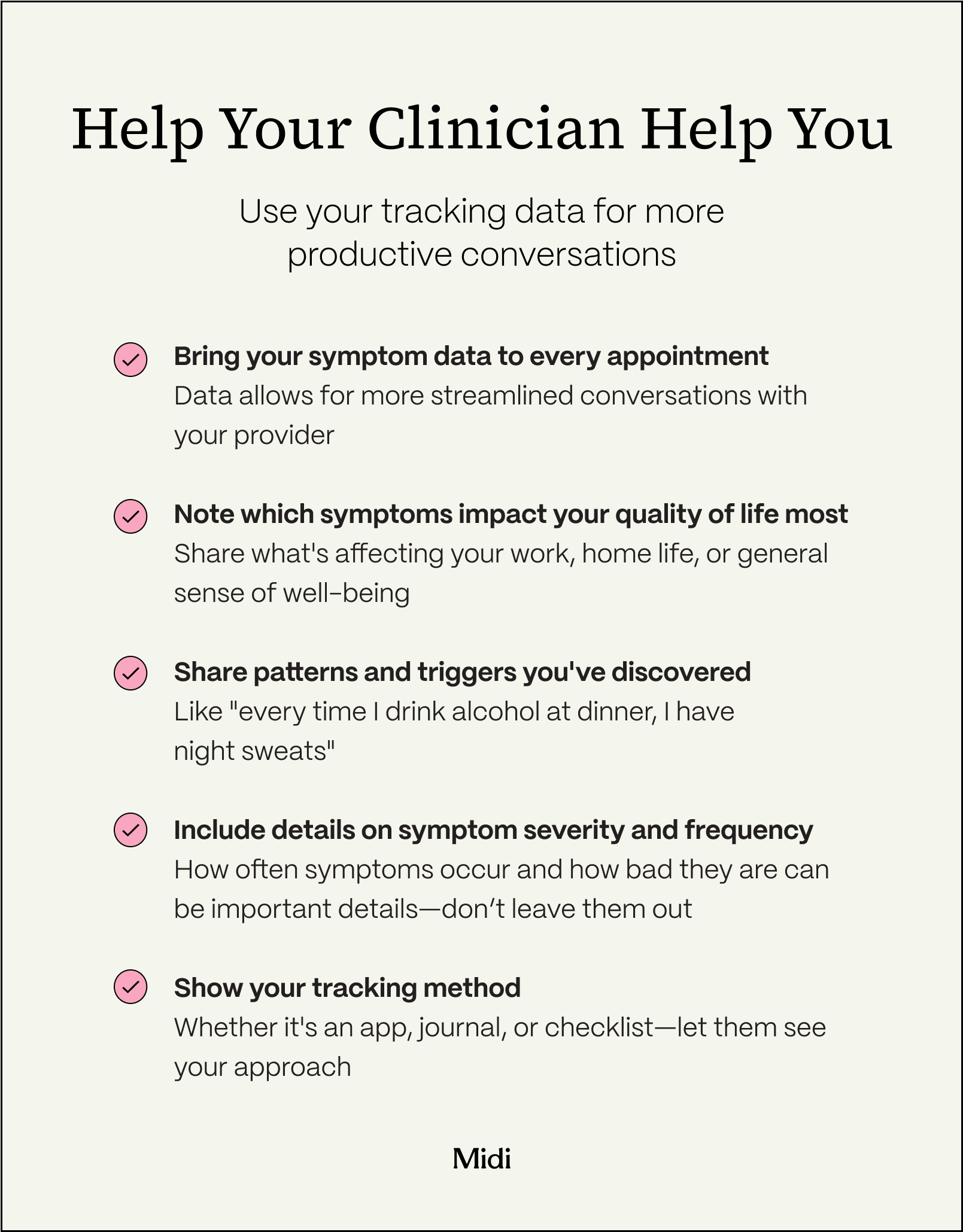
To make the most out of your visit, try to come prepared with a list of your symptoms, menstrual cycle patterns, and lifestyle factors that could be at play. It can also help to jot down any questions ahead of time. Your clinician can talk you through the pros and cons of various treatments, clarify next steps, and let you know when to follow up. You’ll work together to create a plan based on your health, medical history, and preferences.
When to Seek Care Sooner
If your perimenopause symptoms significantly interfere with your work, sleep, or daily life, it’s important to check in with a clinician sooner rather than later. Most symptoms are common and treatable, but a few changes call for more urgent care.
Seek prompt medical attention if you have:
- very heavy bleeding (soaking through a pad or tampon in an hour or less)
- new or worsening bleeding between periods or after sex
- new or severe headaches, chest pain, fainting, or strong heart palpitations
- unexplained weight loss or persistent, extreme fatigue
- concerns about very early perimenopause (before age 40) or periods that stop suddenly
These symptoms don’t always mean something serious is going on, but they do warrant prompt evaluation and care.
Key Takeaways
- Perimenopause usually begins in your mid-40s, but it can start earlier or later than that. Everyone’s experience leading up to menopause is unique.
- The earliest signs of perimenopause are often subtle: shorter or longer cycles, intense PMS, disrupted sleep, and mood changes are all potential symptoms.
- Symptom clusters can help signal the transition, including vasomotor symptoms like hot flashes and night sweats, sleep symptoms like insomnia or restless sleep, and mood and memory symptoms like irritability or brain fog.
- Your age doesn’t tell the whole story. Clinicians often use your symptom patterns and cycle changes to identify perimenopause rather than a single lab test.
- Perimenopause typically lasts about 4 to 8 years, but timelines vary widely from person to person. Your symptoms and menstrual cycle patterns can help shed light on where you are in the menopause transition.
- You don’t have to wait until perimenopause symptoms are severe to seek care. A menopause-trained clinician, such as a Midi Health clinician, can help you build a Care Plan—including hormonal and non-hormonal options—that fits your health history and goals.
Frequently Asked Questions (FAQs)
What are the first signs of perimenopause starting?
The earliest signs of perimenopause usually include subtle menstrual cycle changes, such as shorter or longer cycles, early periods, or less predictable flow. Stronger PMS symptoms, increased irritability or anxiety, and sleep disruptions or occasional night sweats may also show up.
What are the four stages of perimenopause?
Clinical guidelines usually describe perimenopause in two stages: early and late. But many experts break the menopause transition into early perimenopause, late perimenopause, menopause (12 months without a period), and postmenopause.
What is the average age for perimenopause?
Perimenopause usually starts in your mid-40s, though some women notice changes earlier or later than that. There’s a wide range of normal, and factors like genetics and health history can play a role.
How do you know if a woman is in perimenopause?
There isn’t a single test that can confirm perimenopause because hormone levels fluctuate widely during this time. Instead, clinicians look at the bigger picture—including your age, symptom patterns, and menstrual cycle changes—to make the call.
Can you still get pregnant during perimenopause?
Yes. Ovulation can still happen, even with irregular cycles, which means pregnancy is possible during perimenopause. Until you reach menopause (12 consecutive months without a period), contraception is still recommended if you want to prevent pregnancy.
If you’re in perimenopause or menopause and want guidance from clinicians who specialize in women’s midlife health, book a virtual visit with Midi today.
Hormonal change is at the root of dozens of symptoms women experience in the years before and after their period stops.
Our trained menopause specialists can help you connect the dots to guide you towards safe, effective solutions.
Whether you need personalized guidance or a prescription routine to tackle symptoms—including brain fog, hot flashes, sleep trouble, mood swings, and weight gain—we’ve got you covered. Learn more here.
Midi’s mission is to revolutionize healthcare for women at midlife, wherever they live and whatever their health story. We believe that starts with education, to help all of us understand our always-changing bodies and health needs. Our core values guide everything we do, including standards that ensure the quality and trustworthiness of our content and editorial processes. We’re committed to providing information that is up-to-date, accurate, and relies on evidence-based research and peer-reviewed journals. For more details on our editorial process, see here.