

Creatine and weight loss get talked about together a lot online, but creatine isn’t some fat-burning supplement or a shortcut to a lower number on the scale. Instead, creatine helps support lean muscle, strength, and workout performance—benefits that become especially important for women in midlife, when hormonal changes can make it harder to maintain muscle and easier to gain fat. When paired with strength training, adequate protein, and consistent movement, creatine can improve body composition over time, helping you lose fat, feel stronger, and get more out of your workouts. Read on for more about this powerhouse supplement and how it can be a game-changer for women in perimenopause and menopause.
Who could have predicted that the supplement all the boys were obsessed with in high school would become the supplement du jour for women in midlife? Well, that’s exactly what has happened with creatine, which has enjoyed a surge in popularity among women experiencing the weight and body composition changes (and brain fog) that often accompany the menopausal transition.
You can barely open social media without hearing that “women our age need to be taking creatine,” so you might be curious about whether it’s right for you. Here’s what you need to know about whether creatine is good for weight loss, how to use it safely, and how to pair it with nutrition and training for the best results.
Quick Answer: Does Creatine Help You Lose Weight?
Creatine is not a fat burner, as some online fans have claimed. What it can do is help you gain or maintain lean muscle because it improves the supply of energy to your muscles. This means that you may be able to push yourself more during exercise and, as a result, have more effective workouts. That, in turn, could support fat loss, especially when paired with strength work, nutrition boosts (like upping your protein intake), and a sensible calorie deficit.
One thing to know is that when you first start taking creatine, the scale might tick up a bit. That can feel tricky if you have body composition or weight loss goals, or if you (like me) have an uncomfortable relationship with the scale. This is a temporary response, however—creatine won’t cause you to retain water or gain weight in the long run. Research suggests that water retention is common in the first few days because creatine causes the body to retain fluid in the short term.
So, does creatine help with weight loss? It can, indirectly. It's not a weight-loss pill, but it can help build muscle mass to improve body composition.
How Creatine Works
The reason why gym jocks were so obsessed with creatine decades ago is because it’s considered an ergogenic aid. Translation: It can improve physical performance. But today we understand more about what it does and who it can benefit (hello, us!).
Creatine is an amino acid found in skeletal muscles (such as the muscles in the legs, butt, arms, and back). The supplement increases phosphocreatine (PCr) stores, an energy-producing system in your body. This system takes PCr and uses it to create adenosine triphosphate (ATP), also known as the “energy currency” of our cells. It’s best for short bouts of intense activity, such as sprinting or lifting weights.
Evidence suggests that men and women may respond differently to creatine supplementation, with men more likely to increase their lean muscle mass when taking it. That said, if creatine helps boost your performance in the gym so that you churn out more reps or lift heavier, then you may see better results from your workout. Heavier weight or increased reps creates the gradual, progressive overload on muscles that improves their growth and strength. So in terms of creatine for weight loss: Working harder or longer in your workouts could have an impact.
Meaningful Midlife Factors
Hormonal changes throughout life affect creatine levels in your body. There’s evidence that supplementing with creatine during periods of large hormonal changes in a woman’s life, including during and after menopause, is important.
The estrogen decline during menopause contributes to our loss of muscle and bone mass, as well as strength, as we age. Taking creatine, research suggests, may reduce inflammation and cell-damaging oxidative stress, while slowing bone loss and helping build new bone. Creatine also may spur positive changes in muscle growth and strength. All of these results are particularly noted when the supplements are combined with strength training.
Sleep loss during the menopausal transition is a heavy hitter when it comes to how you feel and function—and sometimes you don’t even want to do the bare minimum of exercise the day after a lousy night’s rest. Fortunately, creatine can help maximize your workout even when your energy is up and down. Creatine is also found in the brain, and early evidence suggests that taking a high dose of creatine may improve cognitive performance and the speed of thought processing in people who are stressed or sleep deprived.
Body Composition vs. Scale Weight
When it comes to creatine for weight loss, it’s best to measure progress by body composition—not your weight on the scale.
For so long, we’ve been told to gauge progress by the scale. But when you’re starting to take creatine, it’s best to let that go for a bit. There’s data to show that creatine supplements may increase weight by about 2 to 6 pounds after using it for the first week. Muscles may soak up more water, and some evidence also shows we pee less when first start taking creatine. This weight bump is temporary—it usually goes away within 4 to 6 weeks. A side perk to all this: Because creatine helps pull water into your muscles, they may look like they’ve got a nice “pop” to them, appearing more well-defined.
As you’re taking creatine, you can measure success in ways that go beyond the scale. Track your waist circumference, assess how your clothes are fitting, and celebrate when you’re able to lift progressively heavier weights at the gym. Reducing fat and gaining muscle—called body recomposition—takes time. Look at progress in regular intervals, such as 4 weeks, 8 weeks, 12 weeks, and beyond.
What to Know About Dosing and Timing
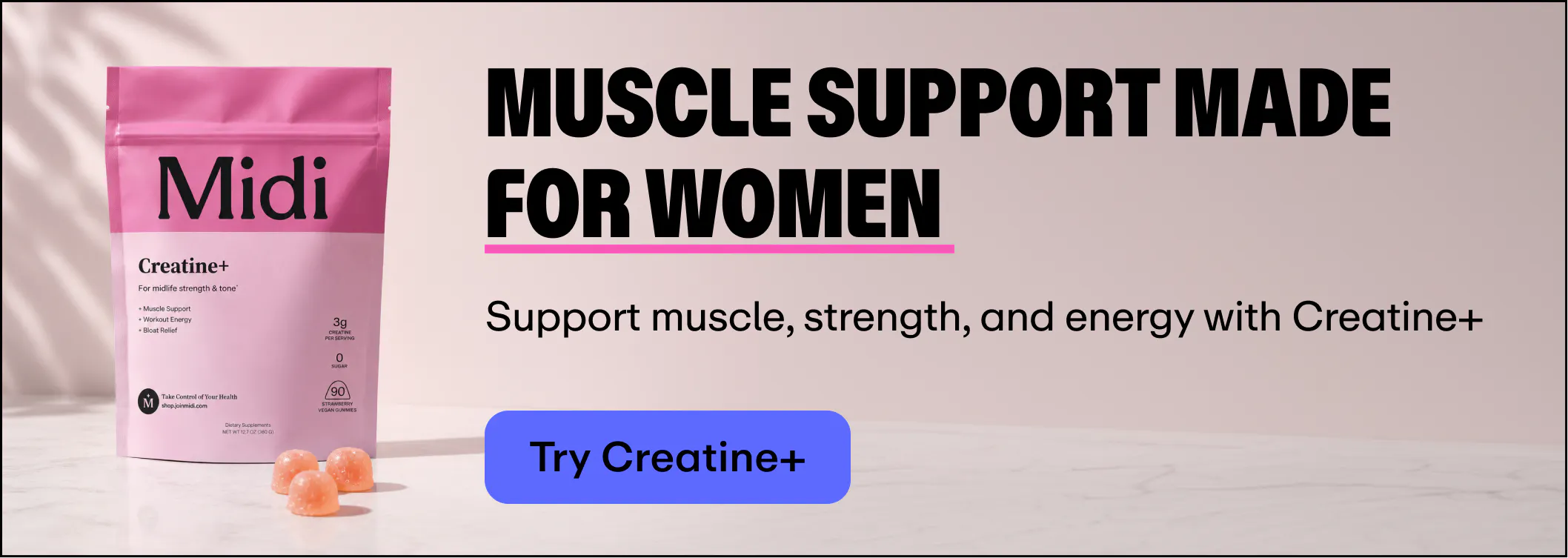
Creatine monohydrate is the type of creatine used in supplements. Midi Health’s Creatine+ comes in gummy form and has an added bonus: It contains fennel seed extract to help ease bloating and gas. Designed specifically for women in midlife, it’s made with organic ingredients, is third-party tested, and is gluten- and soy-free.
Powdered creatine supplements are also available; you can mix these into a water or a smoothie. You’ll want to look for a micronized formula, which mixes better in liquids, so you can avoid the chalky, chunky sip of the past.
When it comes to dosing, there are different theories about the benefits of doing a “loading phase.” This refers to taking a larger 20-gram (g) dose of creatine in the first 5 to 7 days in order to supersaturate your muscles. But when you do a loading phase, you’re more likely to go through an initial water retention weight gain, and experts say it’s not necessary to get creatine’s benefits. You’re in this health journey for the long haul, rather than to challenge a gym buddy to a lifting competition.
Talk with your clinician about the best dosing schedule for you. With Midi’s Creatine+ supplement, it’s recommended that you start with one 3 g gummy per day, for 3 to 5 days, if you’re new to creatine. And then increase it to a max of three gummies per day.
It doesn’t matter what time of day you take creatine, and you don’t have to take your dose right before or after a workout. The most important part is that you take it every day. So incorporate it into your routine at a time that’s easy to remember, such as at breakfast. And make sure to hydrate well during the day.
Combine Creatine with Exercise and Healthy Eating
Creatine doesn’t work on its own—you’ll need a solid strength training plan and nutrition goals to make the most of it. This is what we recommend:
- Strength: Do 2 to 4 strength training sessions per week. Experts advise gradually increasing the amount of weight you use and/or the number of repetitions of each move—this is called progressive overload, and it’s an effective way to build muscle. For a how-to on basic moves you can build on, it’s helpful to do a session or two with a certified personal trainer.
- Protein: Focus on eating 1.2 to 1.8 g per kilogram of body weight per day, spread out across meals and snacks. (That translates into about 25 to 30 g of protein per meal.)
- General activity: Move your body beyond exercise sessions, which keeps your metabolism up, supports digestion, and manages blood sugar. Aim for 7,000 to 10,000 steps per day. Taking a 10 to 15 minute walk after meals is an especially good strategy for blood sugar management.
- Sleep and stress: Creatine may promote muscle recovery and better sleep, but you can help it along—and see more changes in your body composition—by prioritizing R+R. Set time aside during the day for chill-out breaks, and practice good sleep habits by keeping to a regular sleep-wake schedule and giving yourself time to wind down before lights out.
Safety and Side Effects
For most people, creatine is safe. The most common side effect is mild, temporary weight gain, but you can reduce that risk by skipping the high-dose loading period and sticking to a 3 to 5 g daily dose instead. Some people also like to split their dose in half and take it twice per day with food if they experience GI issues like bloating or discomfort.
And remember that despite the benefits of creatine, if you don’t feel great taking it and the above hacks don’t help, it’s OK not to take it. Getting enough protein and doing strength training are the most important components of improving muscle mass and strength.
If you’re interested in taking creatine, talk with your clinician—you two can discuss whether it fits in with your care plan. It may not be recommended for people who have kidney or liver disease, live with diabetes, or are pregnant or breastfeeding.
For some people taking the supplement, a lab test may show increased blood levels of creatine, but it doesn't harm the kidneys. When you’re at an appointment with a healthcare professional who’s ordering lab work, let them know that you take creatine.
Creatine Rumors vs. Facts
There’s some interesting info floating around about creatine—here’s the skinny:
Rumor: Creatine causes hair loss
Fact: Doesn’t seem so (but we need more info on women)
The theory is that creatine would increase levels of the androgen DHT, which could cause hair loss. That idea is based on old research, and recent studies—on men—suggests that this isn’t the case. There’s no reason to think women would be more affected, but researchers need to look at a larger population (and one that includes women, thank you) to know for sure.
Rumor: Caffeine “cancels” creatine
Fact: Moderate intake is fine; just don’t stimulant stack
The idea here was that caffeine could interfere with the performance boost from creatine. This came from early studies involving superhigh intake of caffeine combined with creatine loading, but the more recent thinking is that moderate caffeine is fine when combined with creatine. Both of these substances improve performance in different ways. In studies that looked at the two taken together, the results were mixed, but there are issues with the way these studies were done and how they were analyzed.
Rumor: Creatine is only for bodybuilders
Fact: Not even close
Thanks to expanded research, we know that women in perimenopause may benefit specifically, since creatine can help support muscle mass and bone strength, as well as brain health.
Special Considerations for Midlife Women
- If you are in perimenopause and menopause: For women in perimenopause, creatine supplementation may help preserve muscle mass and strength when combined with strength workouts (countering the natural declines during this time). It also may boost bone health, reduce fatigue, sharpen cognitive function, and support better moods.
- If you are taking a GLP-1 or losing weight through dieting: Weight loss, especially rapid weight loss, can cause muscle loss—and that’s something you want to work to counteract. Although there aren’t studies in people on GLP-1s taking creatine, a creatine supplement may help you hold onto lean body mass and strength when combined with resistance training and getting sufficient protein.
- If you are vegetarian or vegan: Creatine is naturally found in animal foods, not plant foods, so if you’re vegetarian or vegan (or limit animal foods in your diet), you may have lower levels of creatine in your body. There’s some evidence that your muscles may especially benefit from supplementation, though more research is needed.
How to Measure Progress
Since the scale might not be the best measure of progress, consider trying this strategy instead:
- Weekly: Measure your waist at your navel to check for changes in abdominal fat. Consider how you feel: How is your energy? How is your sleep?
- Monthly: Assess your strength—when you go up in the number of reps or the amount of weight you’re lifting, that’s a big win. Celebrate! If you have access to body-composition scans (such as at your local fitness or health center), you can use these to check for differences that you can’t otherwise see.
Troubleshooting
Having some issues? There are a few things you can do:
- Feel bloated? Try Midi’s Creatine+ supplements—the added fennel seed extract can help with bloating. If you’re taking a powder supplement, make sure it’s micronized creatine to reduce GI issues. No matter which type, consider splitting your dose into two, and take each with food. And if you’re in a loading phase and feel uncomfortably bloated, you may want to scale down your dose now.
- Not seeing performance benefits? Creatine has a supporting role. Are you also strength training regularly, eating adequate protein, and getting enough sleep? If one of those is off, reevaluate what you can do to get closer to those goals.
- Are you constipated? Drink more water and eat more fiber-rich foods (like fruits and vegetables); if that doesn’t do the trick, ask your clinician about adding a magnesium oxide supplement or a stool softener to help get things going again.
Key Takeaways
- Creatine doesn’t cause weight loss, but it helps improve body composition by supporting lean muscle. More muscle increases calorie burn at rest and supports fat loss when paired with strength training.
- Temporary weight gain on creatine is normal and not fat gain. The scale may increase for a few weeks due to short-term water retention in muscles, which typically resolves on its own.
- Creatine works best for midlife women when combined with strength training and adequate protein. A consistent daily dose (3–5 g) supports muscle, bone, and workout performance without needing a loading phase.
Frequently Asked Questions (FAQs)
Can I lose weight on creatine?
Creatine is not a weight loss supplement, but it can help improve exercise performance, support muscle mass, and help you recover from workouts. The supplement is best used as a tool for body recomposition (increased muscle) versus weight loss.
Does creatine help reduce belly fat?
Some research has found that creatine, when combined with regular resistance exercise, has the potential to help reduce body fat, compared with a placebo.
What are the negatives of creatine?
When first taking creatine, some people will retain water, and this can make it look like they’ve gained weight. (This is temporary.) In addition, bloating and gastrointestinal discomfort are other common side effects.
Does creatine speed up metabolism?
Creatine does not directly speed up metabolic rate. However, creatine may help you increase your muscle mass, and muscle is more metabolically active than fat, meaning it burns more calories at rest.
What should I avoid while taking creatine?
In general, creatine is a safe supplement. Share your goals with your clinician and ask whether creatine fits in your care plan and is right for you.
If you’re in perimenopause or menopause and want guidance from clinicians who specialize in women’s midlife health, book a virtual visit with Midi today.
Hormonal change is at the root of dozens of symptoms women experience in the years before and after their period stops.
Our trained menopause specialists can help you connect the dots to guide you towards safe, effective solutions.
Whether you need personalized guidance or a prescription routine to tackle symptoms—including brain fog, hot flashes, sleep trouble, mood swings, and weight gain—we’ve got you covered. Learn more here.
Midi’s mission is to revolutionize healthcare for women at midlife, wherever they live and whatever their health story. We believe that starts with education, to help all of us understand our always-changing bodies and health needs. Our core values guide everything we do, including standards that ensure the quality and trustworthiness of our content and editorial processes. We’re committed to providing information that is up-to-date, accurate, and relies on evidence-based research and peer-reviewed journals. For more details on our editorial process, see here.