

Looking for supplements for stress during midlife? You’re in good company: Mood changes that make you feel anxious, irritable, and stressed out can become more common during perimenopause and menopause, when everyday stressors collide with fluctuating hormones. The good news is that you don’t have to “ride out” midlife stress: A clinician, like the women’s health experts at Midi Health, can help you navigate these changes and find solutions, potentially including natural supplements for stress that may help you cope more easily.
If you’ve been feeling seriously depleted lately, and your usual self-care strategies aren’t working, you may be wondering whether supplements for stress can help. Midlife stress is real—not only because this stage of life can bring heavy workloads and responsibilities, but also because hormonal changes during perimenopause and menopause can leave you anxious, irritable, and straight-up exhausted.
As a result, many women turn to supplements for stress relief during this time, including options marketed to help reduce cortisol, the body's main stress hormone.
While supplements have their limits—they can’t replace healthy habits like getting enough sleep and exercising regularly, for example—some may offer benefits. Your clinician might recommend them alongside other treatments, such as hormone therapy for menopause symptoms.
The best supplements for stress and anxiety come down to your individual needs. Below, we’ll take a look at some of the most popular stress supplements for women, including what the research says about their benefits, potential side effects, and medication interactions. Plus, learn how to recognize when stress warrants a closer look from your clinician.
Why Does Stress Feel Worse in Perimenopause and Menopause?
For many women, midlife comes with a long list of stressors—think heavy workloads, caring for children or aging parents, and limited time for self-care. Add changing hormones to the mix, and it's no wonder you might feel physically and mentally exhausted.
Mood changes are common during midlife. In one 2024 study of nearly 1,000 women seeking menopause care, 90% or more reported symptoms like low energy, trouble concentrating, irritability, and feeling tense or nervous.
It's probably no surprise that shifting hormones can make stress feel more intense in midlife. During perimenopause, estrogen and progesterone can fluctuate wildly before eventually declining as you approach menopause. Both hormones help regulate how your brain and nervous system respond to stress. Changes in these hormones may also affect how your body regulates cortisol, a key stress hormone.
Then there are hot flashes and night sweats, which can happen when changing estrogen levels affect your body's internal thermostat. These symptoms can interrupt your sleep, leaving you tired, anxious, and less equipped to handle everyday stress. Hot flashes can also come with a racing heart, which may feel like a sudden wave of anxiety.
As if that wasn’t enough, ongoing stress can, ironically, make things worse. Over time, chronic stress can disrupt your body's normal stress response, potentially contributing to inflammation and making anxiety, irritability, and other mood changes harder to manage.

Can Supplements for Stress Really Help?
The short answer is that some may help, though the benefits of many calming supplements for anxiety and stress are often gradual and modest. Some adaptogenic herbs and amino acids may help support your body's response to stress or promote relaxation. Vitamins and minerals, on the other hand, may be especially helpful if you're not getting enough of certain nutrients.
But it’s important to have reasonable expectations about what supplements can do—and what they can’t. They aren't a substitute for prescription treatments, such as hormone therapy for menopause symptoms like hot flashes and night sweats. Depending on your symptoms and health needs, your clinician may recommend supplements in addition to other treatments.
Supplements shouldn’t exist in a vacuum. They can be one part of a comprehensive approach to managing stress that also includes regular physical activity, a balanced diet, adequate sleep, mindfulness practices, and cognitive behavioral therapy, when appropriate.
Before trying any new supplements, it’s smart to check with your clinician and introduce only one supplement at a time. That way, it's easier to tell whether it's helping or causing side effects.
Keep in mind, too, that the FDA doesn't review supplements the same way as prescription medications. So, you'll want to choose a supplement that's backed by research and third-party tested to help ensure it contains what the label says.
Ashwagandha: The Most-Studied Adaptogen for Stress
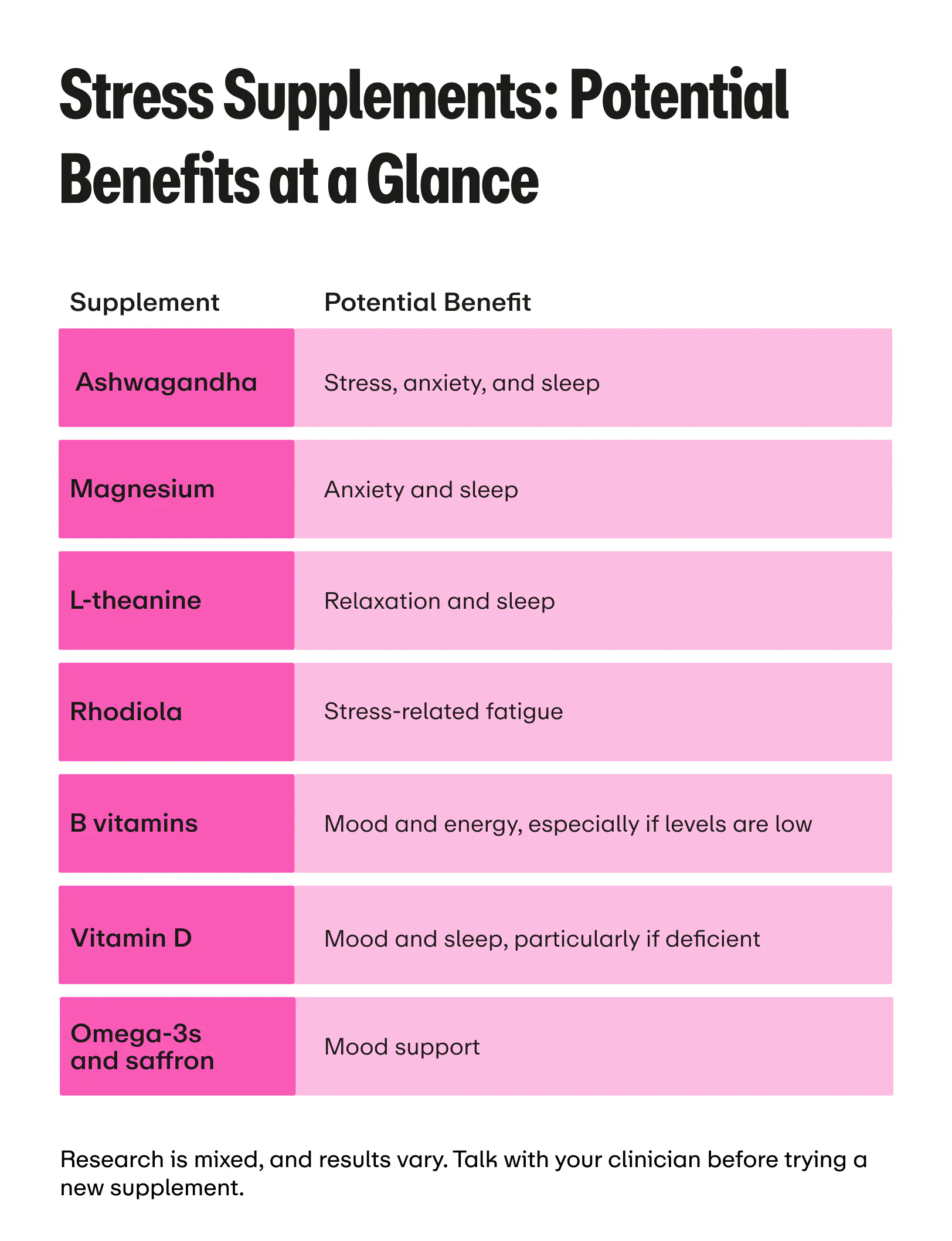
Ashwagandha is an herb that's been used for centuries in Ayurvedic medicine to help manage stress. The adaptogen may help your body cope with stress, potentially by lowering cortisol levels.
But there's a catch: Lower cortisol doesn't always mean you'll feel less stressed. A 2025 review of 13 studies found that ashwagandha lowered cortisol levels but didn’t significantly improve perceived stress. However, a 2024 review found that it may help ease stress and anxiety.
There's also some evidence that ashwagandha may improve sleep quality, which could make it appealing if stress leaves you feeling wired or struggling to wind down before bed. Studies have used doses of around 250 to 600 milligrams (mg) daily, with some benefits reported after several weeks. But there's no standard recommended dose, and the amount may vary depending on the product. The amount of herb may not be the only factor affecting efficacy, either—how much of the active compounds, especially withanolides, the herbal extract contains is also relevant. That’s why the quality or standardization of the product is particularly important here.
Ashwagandha isn't right for everyone, though. Check with your clinician if you have a thyroid condition or take medication for it. And skip it if you're pregnant or breastfeeding.
Magnesium for Stress, Tension, and Sleep
There’s a reason magnesium gets so much attention when it comes to supplements for stress. This essential mineral helps regulate your nervous system, including how your body responds to stressors. But many people don't get enough of it through food alone.
That’s where supplements come in. And the research is promising: Studies show that magnesium supplements may help ease anxiety, especially in people with low magnesium levels. And a review found potential benefits for both anxiety and sleep, although larger studies are needed to know how well supplements actually work.
Magnesium glycinate, in particular, is a popular option for sleep, stress, and anxiety because it's well absorbed and may be gentler on your stomach than forms like magnesium citrate or magnesium oxide.
There's no standard dose, but 250 mg of magnesium daily may be a good starting point, with your clinician's OK. If you're using it to unwind and get some sleep, try taking it 30 to 60 minutes before bed.
L-Theanine for Calm Focus Without Drowsiness
Want to feel more relaxed without feeling sleepy? L-theanine, an amino acid found in green tea, might get the job done.
Researchers think it may help calm your nervous system by lowering cortisol levels and boosting brain activity linked to relaxation, so you can feel more at ease without being groggy. But most studies on L-theanine have been small, with mixed results, and few have focused specifically on menopausal women.
That said, a 2020 review found that L-theanine may help lower stress and anxiety during stressful situations, though more long-term research is needed. A more recent review found that it may also help people fall asleep faster and sleep better overall.
Studies often look at doses around 200 to 400 mg of L-theanine daily. You might take it during the day to help manage stress without feeling drowsy or at bedtime to help quiet racing thoughts.
Midi’s Daily Cortisol Support contains 200 mg of L-theanine, along with other research-backed ingredients like ashwagandha and magnesium glycinate that may help you get a handle on everyday stress.
Rhodiola for Stress-Related Fatigue and Burnout
If stress leaves you feeling mentally and physically exhausted, rhodiola could offer some relief. Unlike ashwagandha, which is often used to promote relaxation, rhodiola is typically taken for its more energizing effects. This adaptogen has traditionally been used to fight fatigue and improve mental and physical performance.
More research on rhodiola is needed, but early findings on certain types, particularly Rhodiola rosea, are encouraging. Evidence suggests that it may help your body cope with physical and mental stress. Some clinical trials have found that people taking rhodiola reported less fatigue and tension, along with improvements in mood and concentration.
Studies have commonly used 200 to 400 mg of rhodiola extract daily, often taken in the morning to avoid interfering with sleep. Before trying it, check with your clinician, especially if you take other medications. Rhodiola can cause side effects like dizziness and may interact with certain medications, including antidepressants and blood pressure drugs.
B Vitamins and Vitamin D: Filling the Gaps That Mimic Stress
Wondering about the best vitamin for stress? The answer may depend on whether you're getting enough of certain nutrients. B vitamins and vitamin D play important roles in your overall health, and factors like your diet, age, and certain health conditions can affect your risk of deficiencies.
B vitamins, particularly B6, B12, and folate (B9), help support your nervous system and produce brain chemicals that regulate your mood. When you're running low on these nutrients, you may experience fatigue, brain fog, and mood changes that resemble chronic stress.
Vitamin D can affect your mood and energy, too. Low levels have been linked to poor sleep and depressive symptoms, although research on whether supplements help is mixed. Some studies suggest that vitamin D may improve depressive symptoms, but the benefits for anxiety are less clear.
If you're experiencing persistent symptoms, your clinician can help determine whether testing for deficiencies makes sense and recommend supplements if needed. But more isn't necessarily better, especially if your levels are already adequate.
Omega-3s and Saffron for Mood and Anxiety Support
You’ve probably heard that omega-3s, a type of healthy fat found in foods like fish and chia seeds, are good for your heart. But certain omega-3s, including EPA and DHA, may also support your mood.
The research is mixed but promising. Studies suggest that omega-3 supplements with higher amounts of EPA may help relieve depressive symptoms, though the benefits for anxiety are less clear.
Saffron, the spice that gives some dishes a golden color and distinct flavor, might have mood benefits, too. Researchers think it contains compounds that influence serotonin and other brain chemicals that help regulate how you feel. Clinical trials suggest that saffron supplements may help ease depression and anxiety symptoms, including in perimenopausal women, but results have been mixed.
Researchers haven't pinned down the best dose of either supplement for stress or anxiety. Saffron studies have typically used around 30 mg daily for several weeks, while omega-3 doses vary, depending on how much EPA and DHA a supplement contains.
Which Stress Supplements Should You Be Cautious With?
Not all supplements for stress and anxiety are backed by strong evidence, and some come with more risks than others. Here are a few to consider more carefully:
- Kava: The kava plant is often marketed as a supplement for anxiety. While it may help, kava has been linked to rare cases of serious liver injury, so it’s generally best to avoid it.
- St. John’s wort: This flowering plant may help with mild to moderate depression. But St. John’s wort can also interfere with many medications, including antidepressants, birth control pills, and some heart medications.
- Melatonin and valerian: Many people use melatonin and valerian as natural sleep aids. Both are generally considered safe for short-term use, but taking high doses or combining them with sedatives can leave you feeling groggy the next day. Valerian has also been linked to liver injury in rare cases.
- “Adrenal support” supplements: These products promise to help with “adrenal fatigue,” which isn't a recognized condition. Some blends may even contain hidden hormones or other ingredients that could be unsafe.
Are Stress Supplements Safe With HRT, Thyroid Medication, or SSRIs?
Even the most research-backed natural supplements for stress can interact with certain medications, making them less effective or increasing the risk of side effects. That's why it's important to check with your clinician before trying something new, especially if you take prescription medications or other supplements.
- Hormone therapy: Many stress supplements may be fine to use with hormone therapy, but research on specific combinations is limited. We do know that St. John's wort, for example, can make certain hormone medications less effective.
- Thyroid medications: Magnesium can interfere with how well your body absorbs levothyroxine, so you may need to take them at least 4 hours apart. Ashwagandha may also raise thyroid hormone levels.
- Antidepressants (SSRIs and SNRIs): Combining St. John's wort with antidepressants can increase the risk of a serious side effect called serotonin syndrome. Rhodiola may also interact with these medications, but less is known about the risks.
- Other medications: High-dose omega-3 supplements may affect blood clotting, so they could interact with blood thinners. It’s advisable to stop them 7 days prior to undergoing a surgical procedure. Meanwhile, rhodiola may interact with blood pressure medications, while melatonin and valerian can increase drowsiness when combined with sedatives.
The bottom line? Review your full medication and supplement list with your clinician or pharmacist before adding anything new, even if it's available over the counter.
What Success Looks and Feels Like
When Stress Is Really a Hormone or Mood Issue
If you've tried lifestyle strategies to manage stress but aren't feeling better, or you're dealing with persistent anxiety, panic, low mood, sleep problems, or heart palpitations, it's worth checking in with a clinician. Seek emergency medical care for red flag symptoms such as chest pain, shortness of breath, and pain in your arm or shoulder.
Midlife stress is real and can interfere with your life, making you feel burned out, irritable, and fatigued. But perimenopause isn’t the only possible culprit. Thyroid conditions, iron deficiency, and anxiety or depression can cause similar symptoms.
Fortunately, you don’t have to suffer through it. A clinician can help identify the cause and recommend appropriate treatment, whether that's hormone therapy, other medications, healthy lifestyle habits, or a combination of approaches.
At Midi, menopause-trained clinicians look at how your hormones, sleep, mood, and overall health are connected to help you find a personalized path forward. Supplements for stress may have a place in a broader care plan to help you feel more like yourself again.

Key Takeaways
- Stress supplements for women may help ease anxiety, support relaxation, and improve sleep, but results vary. That can be especially appealing in midlife, when shifting hormones, work demands, and other responsibilities can make stress harder to manage.
- The best supplements for stress and anxiety depend on your symptoms. Ashwagandha, magnesium, and L-theanine are among the more well-studied options, while certain vitamins and nutrients may also help. Taken at bedtime, these natural products may also support sleep.
- Always check with your clinician before starting a new supplement. Some can interact with medications, including hormone therapy, thyroid medications, and antidepressants.
- Managing stress usually requires more than a supplement. Healthy lifestyle habits, therapy, and sometimes medication can all help.
- Sometimes what feels like stress has another cause. Perimenopause, thyroid conditions, and nutrient deficiencies can cause overlapping symptoms, so it's worth checking with your clinician if you're not feeling better.
Frequently Asked Questions (FAQs)
What is the best supplement for stress?
The best supplement for stress depends on your specific symptoms and whether you have any nutritional deficiencies. Ashwagandha, magnesium, and L-theanine may help with stress or anxiety, but the research is still mixed.
How do you reduce chronic stress?
Healthy lifestyle habits can go a long way toward managing chronic stress. Start by making sure you are getting regular exercise; prioritizing sleep; eating a balanced diet; and practicing relaxation techniques like deep breathing, meditation, or yoga. Supplements for stress, such as ashwagandha and magnesium, may also help alongside these habits.
How do you eliminate stress and anxiety?
Your body's stress response is, of course, highly adaptive and important in navigating daily challenges. However when stress is persistent and chronic, it can cause physical and emotional strain. You may not be able to eliminate stress and anxiety completely, but there are ways to manage both. Your best bet is to start with healthy lifestyle habits like regular exercise and getting enough sleep. You can also work with a clinician to explore other options, including therapy, medication, mindfulness-based stress reduction (MBSR), or supplements for additional support.
How do you combine stress supplements safely?
Talk with your clinician before starting any new supplement, especially if you want to combine more than one. It's best to introduce one at a time so you can see how your body responds. Some supplements can interact with each other or with prescription medications, so make sure your clinician knows everything you're taking.
How long do stress supplements take to work?
Stress supplements typically take time to work, and results depend on the supplement and the person. For example, ashwagandha may help ease stress after about 4 to 6 weeks of consistent use, but results vary.
If you’re in perimenopause or menopause and want guidance from clinicians who specialize in women’s midlife health, book a virtual visit with Midi today.
Hormonal change is at the root of dozens of symptoms women experience in the years before and after their period stops.
Our trained menopause specialists can help you connect the dots to guide you towards safe, effective solutions.
Whether you need personalized guidance or a prescription routine to tackle symptoms—including vaginal dryness and irritation, brain fog, hot flashes, sleep trouble, mood swings, and weight gain—we’ve got you covered.
Midi’s mission is to revolutionize healthcare for women at midlife, wherever they live and whatever their health story. We believe that starts with education, to help all of us understand our always-changing bodies and health needs. Our core values guide everything we do, including standards that ensure the quality and trustworthiness of our content and editorial processes. We’re committed to providing information that is up-to-date, accurate, and relies on evidence-based research and peer-reviewed journals. For more details on our editorial process, see here.