
 Amanda Alvelo-Malina, MD
Bleeding after menopause—the point at which you thought your period had ended and those days were behind you—can be confusing or even alarming. Truth is, most reasons for vaginal bleeding after menopause are benign and treatable. But because postmenopausal bleeding can indicate a more serious condition, it’s important to get even a small amount of bleeding checked out. Read on to learn why postmenopausal bleeding happens and how a menopause specialist, like the ones at Midi Health, can diagnose and treat the underlying condition.
Spotting is the kind of surprise no one wants, especially when your last period is way back in your rearview mirror. After your initial WTF?, you may feel some alarm. After all, you officially reach menopause when you haven't had a period for 12 months—is this type of bleeding after menopause normal?
Truth is, once you pass that one-year milestone, postmenopausal bleeding might be unexpected (and even worrisome), but it’s not uncommon. Up to 10% of postmenopausal women experience bleeding, and bleeding accounts for about two-thirds of office visits to the gyno for perimenopausal and postmenopausal women.
Luckily, the most common causes of postmenopausal bleeding are benign and treatable. You might notice spotting after sex due to vaginal dryness, for example, and there are topical treatment options for that. But any postmenopausal bleeding should be considered abnormal until evaluated.
The reason you should see your clinician if you have any postmenopausal bleeding is that it can be a symptom of a more serious condition, most notably endometrial cancer, the most common type of gynecological cancer. (The endometrium is the inner lining of the uterus.)
A clinical workup can rule out serious issues, identify what’s causing the bleeding, and lead to an appropriate treatment plan—all of which is good for both your physical health and your peace of mind.
To learn more about postmenopausal bleeding, let’s take a look at:
- what causes bleeding after menopause
- why it’s important to have any postmenopausal bleeding checked out
- what’s involved in a clinical workup for postmenopausal bleeding
- when bleeding after menopause is serious
- how conditions that cause postmenopausal bleeding are treated
Bleeding After Menopause: What’s “Normal” vs. What Needs a Check
Any vaginal bleeding after menopause, even a small amount, is considered abnormal and should be evaluated to rule out more serious causes. That’s because about 5 percent of women in North America with postmenopausal bleeding are diagnosed with endometrial cancer. When you get evaluated promptly, cancer can be ruled out. And if cancer is detected, that early diagnosis is key because it may improve longer-term outcomes.
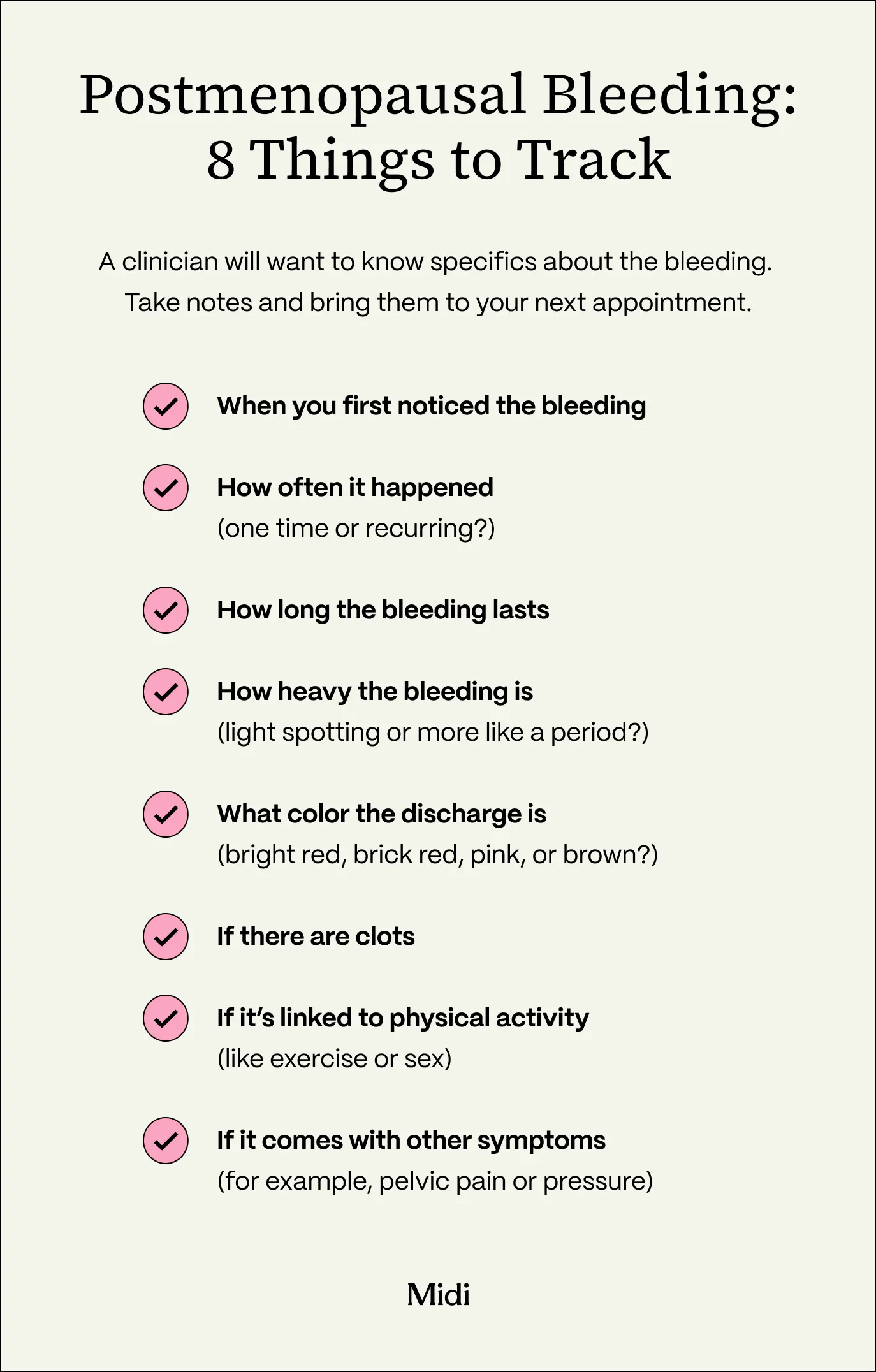
Postmenopausal bleeding shows up in different ways, so tracking your symptoms and bringing that info to your appointment can help your clinician start figuring out the cause. Note details such as:
- When the bleeding started: Was it a one-time episode, or is it recurring? If it recurs, how long does the bleeding last?
- How heavy the bleeding is: Does it seem like light spotting, or more like a period? Did you notice blood when you wiped after using the bathroom?
- The color of the discharge: Is it bright or brick red, pink, or brown? Dark red or brown blood is more oxidized, indicating that the fluid is older, which can provide clues about its origin.
- Blood clots: Are you seeing lots of clots or only a few? Are they bigger or smaller than a quarter?
- If the bleeding is linked to physical activity: For instance, does it appear after sex or exercise?
- Whether other symptoms come along with it: For example, is the bleeding accompanied by pelvic pain or pressure?
Postmenopausal Bleeding: The Most Common Benign Causes
Bleeding after menopause is typically caused by conditions far less serious than cancer, including:
Vaginal or uterine lining thinning
About 60% of postmenopausal bleeding is connected to atrophy (thinning) of the vaginal and/or uterine lining. The thinner tissue is dryer, weaker, and more likely to get irritated—and that can lead to bleeding. For instance, if you have vaginal dryness, getting busy with your partner can cause micro-tears that bleed. Same as the friction from a (far less fun) pelvic exam.
Cervical or uterine polyps
Polyps are growths that attach to the cervix or uterus and are typically noncancerous. You may have no symptoms and not even be aware that you have them. But about 68% of postmenopausal women with polyps will experience vaginal bleeding (commonly after intercourse, or with hormone fluctuations—say, from HRT adjustments).
Medication side effect
Vaginal bleeding after menopause can be a side effect of a med, particularly hormone-based drugs, such as tamoxifen for breast cancer or hormone replacement therapy (HRT). And if you’re on a blood thinner, that may worsen bleeding caused by another condition.
Infection of uterus or cervix
Vaginal bleeding can be a symptom of an infection of the uterus or cervix. These infections are often caused by bacteria and are treated with antibiotics.
Uterine fibroids
Fibroids are benign tumors that grow in the wall of the uterus. They often shrink after menopause but can still cause bleeding and other symptoms.
Rectocele
Vaginal bleeding, especially if it happens after you’ve strained to have a bowel movement, can be a symptom of a rectocele. A rectocele occurs when the front wall of the rectum bulges into the back wall of the vagina. It’s caused by weakened pelvic muscles, which can happen with age.
Causes of Light Spotting After Menopause: Patterns That Provide Clues
If you’re experiencing light spotting, track when it happens, especially if it happens consistently in certain situations. This information can help your clinician determine the cause.
For example, If you tend to spot after having sex, vaginal dryness, cervical changes, or polyps may likely be at play. If the spotting happens on and off, it may require more investigation to figure out the cause.
If you experience any bleeding when you start or change HRT after menopause, tell your clinician. Light spotting is common, especially during the early months and even up to 6 months after. As your body adjusts to the med, spotting usually goes away—if it doesn’t, your clinician may make adjustments, like changing the dosage.
What Is the Most Common Reason for Bleeding After Menopause?
The things that most commonly cause postmenopausal bleeding—atrophy of the vaginal and uterine lining as well as polyps—are benign. But symptoms alone can’t reliably determine whether the underlying condition is serious. That’s why any bleeding after menopause needs to be evaluated. The goals of a clinical workup are to rule out more serious causes, get a clear diagnosis (which often requires follow-up tests), and come up with a treatment plan that’s right for your situation.
You’re more at risk for postmenopausal bleeding and the conditions that cause it if you:
- have a history of uterine or cervical polyps
- have fibroids
- are on hormone therapy
- take tamoxifen
- have vaginal dryness
- have experienced sexual trauma
- are obese
- have diabetes
- have a personal or family history of breast, endometrial, or colon cancer
Bottom line: If you have any vaginal bleeding after menopause, don’t try to self-diagnose based on what you see online. Contact your clinician for an evaluation.
When Spotting After Menopause Can Signal Something More Serious
While most causes of bleeding after menopause are benign, it can also be a symptom of something more serious. This includes:
- Endometrial cancer: This is the main concern with bleeding after menopause, so it needs to be ruled out. Vaginal bleeding is the most common symptom, and 90% of postmenopausal women with endometrial cancer experience it.
- Cervical cancer: While bleeding after menopause is more commonly associated with endometrial cancer, it can be a symptom of cervical cancer, especially if bleeding occurs after sex.
- Thick uterine lining: Post menopausal bleeding can also be a symptom of endometrial hyperplasia, a condition in which the uterine lining overthickens. Endometrial hyperplasia is categorized based on the type of cells in the endometrium: benign or precancerous.
Diagnosis and Testing: What Clinicians Typically Do First
If you experience bleeding after menopause, see your clinician, who’ll do a workup. Your individual situation—including health history, symptoms, and risk factors—will help determine what tests your clinician recommends. That said, here’s what a typical workup may include:
- History and symptom pattern review: To kick off the workup, your clinician will take a complete history, including your past medical history, family medical history, and medications. Tracking and sharing details about the timing, duration, heaviness, color, and triggers of the postmenopausal bleeding can help your clinician uncover patterns that might point to a diagnosis.
- Pelvic exam: Your clinician will perform a physical exam, including a pelvic exam to assess your vaginal tissues and cervix and look for visible sources of bleeding.
- Ultrasound: This is used to measure endometrial thickness and locate polyps or fibroids. The transducer, the part of the equipment that sends out sound waves in order to create images of your pelvic organs, can be moved across your abdomen (pelvic ultrasound) and/or inserted into your vagina (transvaginal ultrasound).
- Endometrial biopsy: Based on factors such as the thickness of your uterine lining or persistent bleeding, your clinician may order or perform an endometrial biopsy. This involves threading a thin tube through the cervix into the uterus to obtain a sample of uterine tissue for the lab to analyze.
- Hysteroscopy: This instrument lets your clinician view the inside of your uterus. A thin, lighted tube with a camera at the end is inserted through your cervix into the uterus.
- Sonohysterography: In this procedure, a type of transvaginal ultrasound is used, and your uterus is filled with fluid to enhance image details.
- Dilation and curettage (D&C): With a dilation and curettage, your cervix is dilated and a healthcare professional inserts a tool called a curette into your uterus. They use the tool to scrape tissue from your uterine wall. A D&C may be done for diagnosis (for example, if a uterine biopsy didn’t collect enough tissue for analysis) or treatment (such as to remove polyps).
Treatment Options: What Helps Once You Know the Cause
Once you know what’s causing your postmenopausal bleeding, your clinician can recommend next steps. Here are treatment options for common causes of bleeding after menopause.
Treatment for vaginal dryness
Bleeding caused by vaginal or uterine lining atrophy usually doesn’t require treatment. However, topical moisturizers can help ease discomfort, and lubricants can make sex more comfortable and prevent post-sex bleeding. Topical estrogen to relieve vulvar and vaginal dryness is also an option that you can discuss with your clinician.
Cervical or uterine polyps removal
The vast majority of polyps are benign; less than 1% are malignant. The risk is higher if you have bleeding after menopause, and it goes up as you get older. So the typical treatment in postmenopausal women is removal of the polyps. The surgery can be done during a hysteroscopy, which allows your clinician to diagnose and treat at the same time.
Medication adjustment
If medication, such as HRT, is causing postmenopausal bleeding, your clinician can suggest adjusting the type, dosage, or timing. Because it can take time for your body to adjust to a med change, your clinician will likely ask you to try the adjustment for a period of time, then reevaluate if you’re still experiencing bleeding.
Treatment for other benign causes
Your clinician will recommend a treatment plan for other benign conditions that cause postmenopausal bleeding, such as antibiotics for a bacterial infection. If you have a condition like fibroids or a rectocele, your treatment will be personalized based on how severe your symptoms are.
Treating More Serious Conditions
If the underlying cause of your postmenopausal bleeding is more serious, your clinician and likely other specialists will work with you on a treatment plan, which may include medication and procedures. For example:
- Endometrial hyperplasia: The treatment depends on whether it’s benign or precancerous. Benign endometrial hyperplasia may be treated hormonally with progesterone. Hysterectomy is considered the definitive treatment for atypical endometrial hyperplasia because of the significant risk of it progressing to endometrial cancer.
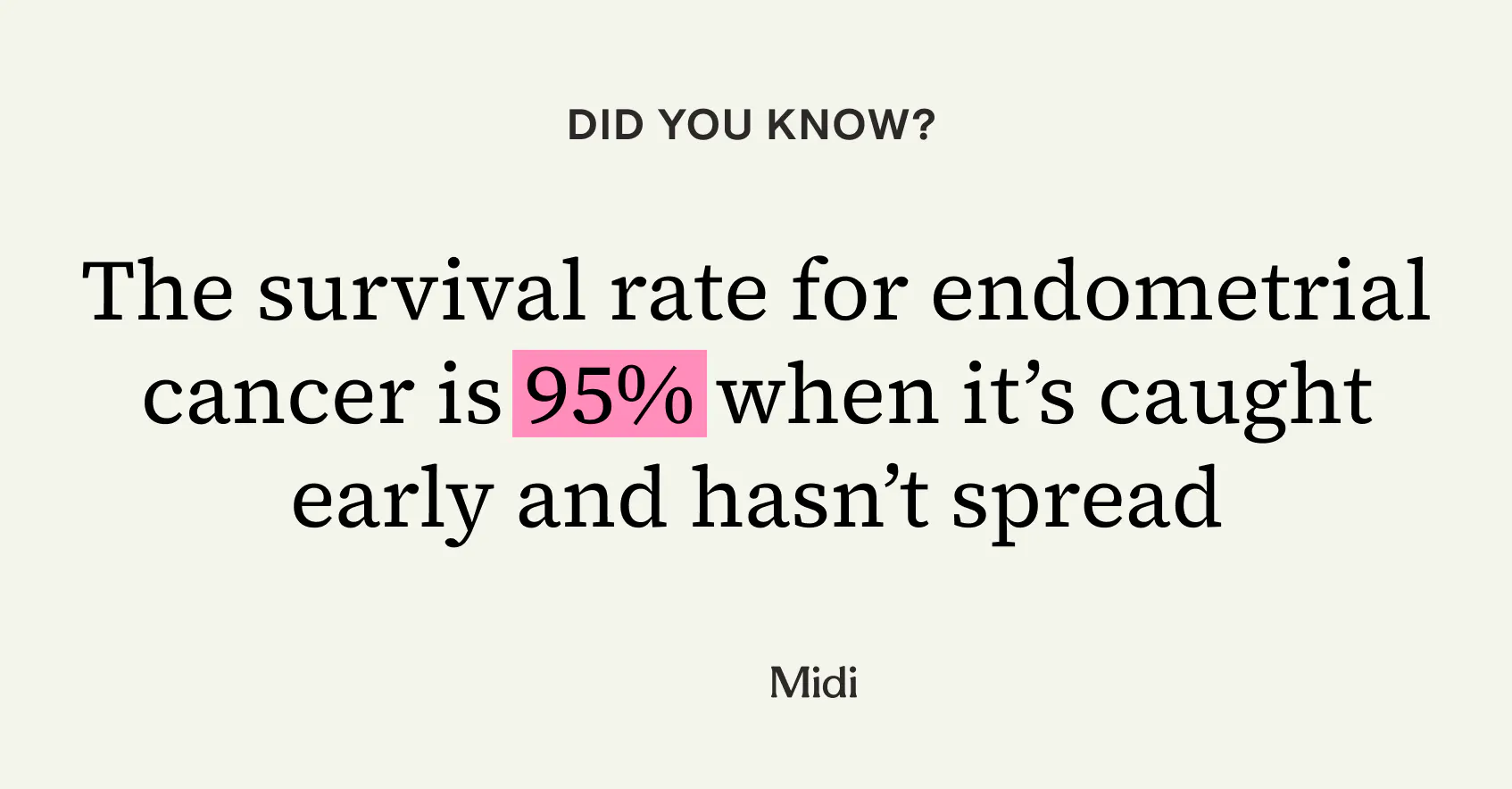
- Endometrial cancer: In postmenopausal women, this is usually treated with surgery, typically a full hysterectomy and removal of the ovaries and fallopian tubes. Most endometrial cancers are diagnosed at an early stage and often curable with surgery, with a 5-year survival rate of 95%. How advanced the cancer is (its stage) and whether it has spread to other parts of the body will influence whether radiation or chemotherapy is also recommended.
Working With a Healthcare Professional: What to Ask and How to Prepare
Here are some tips on how to prepare for and make the most of the visit with your clinician to evaluate postmenopausal bleeding:
- Come prepared: Bring a symptom log and medication list that includes supplements.
- Be ready to share: You’ll want to discuss your prior gynecological history, including HRT details.
- Ask questions: Inquire about likely causes for your pattern of bleeding, as well as what tests are recommended and why.
- Ask about timing: Discuss estimated timelines—for example, when results will come back and what to do while waiting, and what symptoms warrant a visit to urgent care.
- Clarify steps if you’re using telehealth: Discuss what can be handled virtually versus what requires in-person evaluation or testing, such as imaging, lab work, and procedures.
- Confirm the information: Make sure that you’re comfortable with the plan and understand next steps.

When to Seek Care (Red Flags)
If you have postmenopausal bleeding and any of the following happen, contact your clinician and seek care immediately (if it’s after hours, go to urgent care or the ER):
- very heavy bleeding that won’t stop, soaking through a pad or tampon every hour—if this happens, go to the ER instead of urgent care or your clinician’s office
- heavy bleeding, large clots, or dizziness/lightheadedness
- bleeding with severe pelvic or abdominal pain, fever, or fainting
- any situation where symptoms feel rapidly worsening or hard to manage at home
Other red flags for contacting your clinician and seeking prompt care include:
- bleeding that is persistent or recurrent, even if light spotting
- new bleeding after menopause with unintended weight loss or worsening fatigue
Key Takeaways
- About 10% of women experience bleeding after menopause.
- Any postmenopausal bleeding, even one-time spotting, is considered abnormal and should be promptly evaluated by a clinician.
- Postmenopausal bleeding is usually caused by benign conditions, including thinning of the uterine and vaginal lining, cervical or uterine polyps, or medication side effects.
- Bleeding after menopause can be a symptom of a more serious condition, most notably endometrial cancer, which a clinical workup can rule out.
Frequently Asked Questions (FAQs)
What causes postmenopausal bleeding?
Typically, postmenopausal bleeding is caused by benign conditions, most commonly thinning of uterine and vaginal lining, cervical or uterine polyps, or medication side effects. More serious causes include endometrial cancer, cervical cancer, and endometrial hyperplasia.
Is it normal to bleed after 2 years of menopause?
Postmenopausal bleeding at any time is considered abnormal until evaluated.
What is the most common malignant cause of postmenopausal bleeding?
Cervical cancer is the most common malignant cause of bleeding after menopause.
When to go to the ER for postmenopausal bleeding?
Contact your clinician and go to the ER or urgent care if you experience:
- very heavy bleeding—if you’re soaking through a pad or tampon every hour—that won’t stop
- heavy bleeding, large clots, or dizziness/lightheadedness
- bleeding with severe pelvic or abdominal pain, fever, or fainting
- any situation where symptoms feel rapidly worsening or hard to manage at home
Can stress cause postmenopausal bleeding?
While emotional stress can have an effect on your hormonal levels, evidence points to postmenopausal bleeding having physical causes.
If you’re in perimenopause or menopause and want guidance from clinicians who specialize in women’s midlife health, book a virtual visit with Midi today.
Hormonal change is at the root of dozens of symptoms women experience in the years before and after their period stops.
Our trained menopause specialists can help you connect the dots to guide you towards safe, effective solutions.
Whether you need personalized guidance or a prescription routine to tackle symptoms—including brain fog, hot flashes, sleep trouble, mood swings, and weight gain—we’ve got you covered. Learn more here.
Midi’s mission is to revolutionize healthcare for women at midlife, wherever they live and whatever their health story. We believe that starts with education, to help all of us understand our always-changing bodies and health needs. Our core values guide everything we do, including standards that ensure the quality and trustworthiness of our content and editorial processes. We’re committed to providing information that is up-to-date, accurate, and relies on evidence-based research and peer-reviewed journals. For more details on our editorial process, see here.