

If you’re sexually active in your late 30s and beyond, you might start to wonder: Can you get pregnant during perimenopause? For many women, the answer is yes. Fertility declines with age, but pregnancy during perimenopause is still possible. That’s important to know, whether you want to get pregnant or definitely want to avoid it. Here’s all the info you need about perimenopause and pregnancy, why it still can happen during this life stage, and what to do next if you want to conceive—or if you don’t. (And remember, a healthcare professional, such as a Midi clinician, can provide unique guidance and answer your questions.)
If you’ve wondered “Can you get pregnant during perimenopause?” you’re certainly not the only woman with that question during this life stage of start-and-stop periods.
By your late 30s and beyond, you’ve probably had years of experience trying to avoid pregnancy, trying to conceive, or a mix of both. You might feel like you have everything—from cycles to contraceptives—pretty much figured out. But then perimenopause hits and makes fertility confusing all over again. Irregular periods and new symptoms can make you question whether pregnancy is even possible at this point.
Below, you’ll learn how fertility changes through perimenopause, which perimenopause symptoms are similar to those of pregnancy, and what you need to know if you’re not trying to conceive. You’ll also learn when pregnancy may carry higher risks and what kind of care to seek early.
If you want to get pregnant during perimenopause—or think you might be pregnant already—we’ll go over that, too. It may ease your mind to know that many women have healthy pregnancies during perimenopause. Whatever your situation, here’s how to get the care you need.
Can You Get Pregnant During Perimenopause? The Quick Answer
Yes, pregnancy can happen during perimenopause. Ovulation—the process of releasing an egg for fertilization during menstrual cycles—still occurs during perimenopause. It’s just not as frequent or reliable as before.
“During this period, even if you are older, even if you have a low egg supply, it is possible for you to get pregnant,” says Shilpi Agrawala, MD, a fertility specialist at Dallas IVF.
As you go further into perimenopause, your egg count declines, but fertility doesn’t drop to zero until menopause. That means if you don’t want to conceive, contraception is important until you confirm you’ve reached menopause. If you do want to get pregnant during perimenopause, it’s a good idea to talk with a clinician about the best ways to maximize your chances. And if you think you might be pregnant, take a pregnancy test, then contact a clinician right away if it’s positive.
Perimenopause Pregnancy 101: What Perimenopause Is (and Isn’t)
Perimenopause is the transition phase before menopause. As your ovaries prepare to stop releasing eggs, shifting hormones can cause irregular periods and symptoms such as hot flashes, vaginal dryness, and painful sex. While it’s different for everyone, a study of over a thousand women found that perimenopause started between ages 42 and 54 and lasted for 4 to 8 years on average.
You officially enter menopause once you’ve gone 1 year without a period: “Menopause is when you have no more ovulation because you don't have a sufficient number of oocytes, or immature egg cells, left,” says Dr. Agrawala.
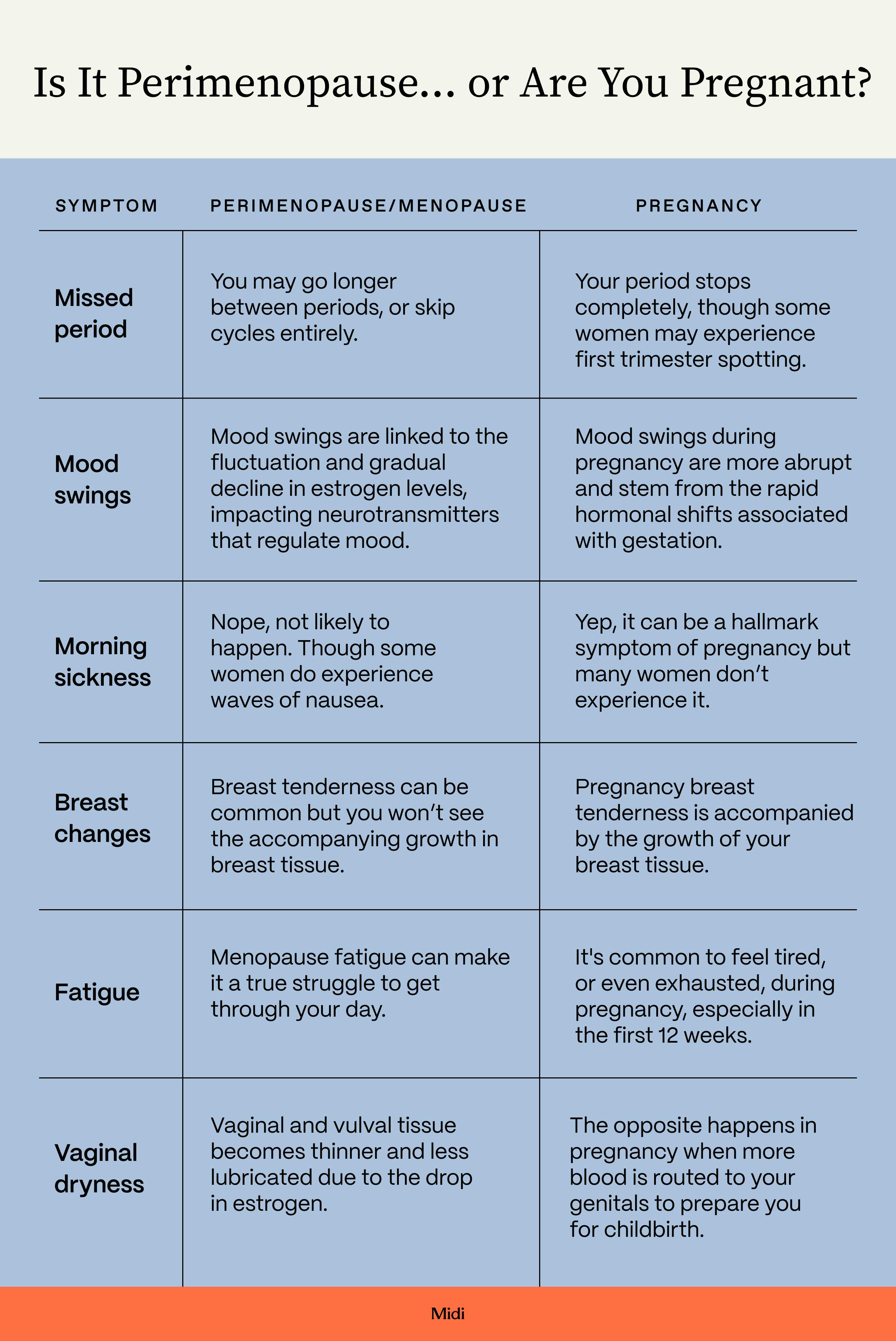
During perimenopause, irregular periods can make ovulation hard to predict, even when it’s still happening. Adding to the confusion: Some common perimenopause symptoms overlap with signs of pregnancy. In other words, you can’t rely on your cycle alone to predict your fertility.
How Fertility Changes in Perimenopause (and Why Pregnancy Is Still Possible)
For many women, the first major shift in fertility starts before perimenopause. “On average, most women will start more dramatically losing their egg supply around the age of 35 to 37,” says Dr. Agrawala. But she notes that everyone is different. Plus, most estimates come from studies in America and Europe, so some ethnicities might be underrepresented in the data.
As perimenopause progresses:
- Egg counts continue to decline.
- Anovulatory cycles, or menstrual cycles in which no eggs are released, become more common.
- Cycles vary in length (so standard assumptions—like the idea that ovulation happens 14 days before the next period—are less likely to hold, research suggests).
- Egg quality declines as well. More eggs have chromosomal abnormalities that reduce their chances of developing into a viable embryo after fertilization.
“On average, at age 37, about 50% of your oocytes are genetically abnormal when you ovulate them, and that exponentially increases,” says Dr. Agrawala. “By around age 45, about 90% to 95% of your oocytes are genetically abnormal.”
While it’s harder to get pregnant during this phase, it’s certainly not impossible. For example, in 2024, the United States had around 13 births per 1,000 women ages 40 to 44, according to the Centers for Disease Control and Prevention (CDC).
Can You Get Pregnant in Perimenopause If Your Period Is Irregular?
Irregular bleeding and missed periods can sometimes signal that you’re not ovulating, but not always—so yes, pregnancy can still happen.
Even if your cycles are widely spaced or inconsistent, you can still release eggs during many of them. A landmark study in Menopause found that about a quarter of menstrual cycles that lasted longer than 60 days still included ovulation among women in late perimenopause.
Adding to the confusing, shifting cycles: Abnormal bleeding in perimenopause can happen from factors like thyroid issues, low iron levels, uterine fibroids or polyps, or sexually transmitted infections. Spotting is also common during this time.
When in doubt, a pregnancy test is a simple first step to help you figure out what’s going on. The American College of Obstetricians & Gynecologists also recommends seeking care for the following symptoms:
- new bleeding or spotting between periods or after sex
- heavy bleeding during your period that soaks through one or more tampons or pads per hour or lasts more than 7 days
- menstrual cycles longer than 35 days or shorter than 21 days
- irregular periods in which the cycle length varies by more than 7 to 9 days
- not having a period for 3 to 6 months
- bleeding after menopause
Pregnancy During Perimenopause: Signs, Symptoms, and When to Take a Test
Is it perimenopause or pregnancy? The answer isn’t always obvious. Some symptoms that you might chalk up to perimenopause can also signal pregnancy, such as mood shifts, fatigue, and breast tenderness. And though nausea is much more common in pregnancy, it also affects about 19% of women transitioning into menopause.
There’s no single symptom that can tell you for sure whether you’re pregnant or approaching menopause. However, if you’ve been pregnant before, pay special attention to any breast tenderness or nausea that reminds you of a previous pregnancy, says Dr. Agrawala. And if you suspect that you may be pregnant, take a test—even if you’re using contraception.
If the test is positive, contact a clinician. They’ll do a second test to confirm the pregnancy and an ultrasound to assess how the pregnancy is progressing.
False positives can happen, and they’re about 27 times more common than false negatives. However, if your test is negative and you still suspect pregnancy, repeat it in a few days.
Contraception in Perimenopause: What Works and What to Consider
If you want to avoid an “oops!” pregnancy, don’t quit birth control during perimenopause—you still need contraception until menopause is confirmed. The latest CDC data suggests that about 32% of pregnancies in U.S. women over age 40 are unintended.
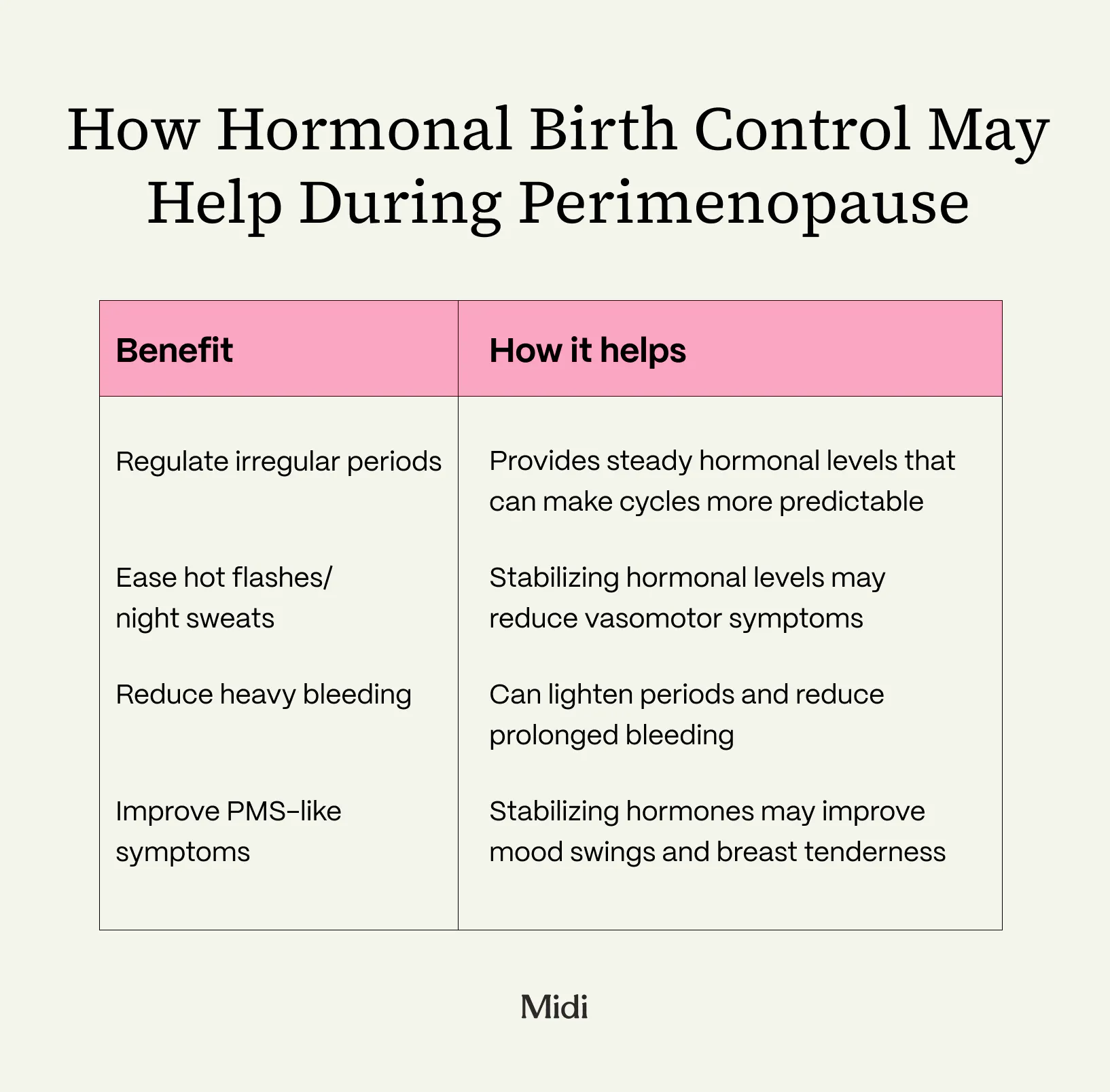
Hormonal contraceptives can be particularly helpful in perimenopause: They can help regulate menstrual cycles and reduce symptoms such as hot flashes and headaches.
“The reason why patients have so many issues in perimenopause is not because they have low estrogen—it’s actually because estrogen fluctuates between very high and very low, and they're cycling all the time,” says Dr. Agrawala. Influxes of estrogen might sound good, but they’re not always helpful. “The brain loves standard, predictable hormones,” she says.
Hormonal birth control can keep things steadier. But it isn’t recommended in some cases, such as if you smoke or if you have a history of high blood pressure or blood clots.
Of course, birth control isn’t 100% effective for preventing pregnancy. However, research shows that birth control failure rates, or the percentage of users who have an unintended pregnancy, decrease with age as fertility decreases and women have more years of experience using birth control.
As you well know by now, there are a range of potential birth control methods. Talk with a clinician if you’re not sure which method is right for you at this stage of your life. If you’re monogamous, discuss contraceptive options with your partner, too.
“This isn’t just a female issue,” says Dr. Agrawala. Vasectomies are very easy to get, she points out—and unlike having your tubes tied, they’re not major abdominal surgery and don’t usually require anesthesia.
Dr. Agrawala adds, “If you know that absolutely under no condition do you want to be pregnant, then really, we need to be having these discussions about surgical sterilization for you or your partner.”
When sterilization isn’t your choice, when can you stop contraception altogether? The answer is when you’re in menopause. That means some women need to consider contraception well into their 50s.
There’s no single test to detect menopause. A year of missed periods is a clue, but it might not be all the evidence you need, especially if your birth control method stops or reduces periods. A trained menopause specialist (like those at Midi Health) can help you understand your symptoms and cycles.

Perimenopause and Pregnancy: Planning and Getting Help
If you’re trying to conceive, consider reaching out to a healthcare professional for help. Your odds of pregnancy in any given cycle decline with age, and irregular cycles during menopause can make ovulation tricky to predict.
Referral to a fertility specialist is often recommended if you’re having trouble conceiving:
- within 3 to 6 months if you’re over age 35
- within 3 months if you’re over age 40
The specialist can check your hormone levels and use ultrasound imaging to pinpoint when you’re ovulating.
“Short of ultrasound and blood draws, we don’t have a good way to make sure that you are ovulating or detect ovulation,” says Dr. Agrawala.
It’s normal to feel overwhelmed about what to do next while you feel like time is running out, but your clinician is there to provide reassurance and comfort and take away the guessing, says Dr. Agrawala.
Is It Dangerous to Get Pregnant During Perimenopause? Risks and Realities
Pregnancy during perimenopause comes with higher risks, including:
- miscarriage
- gestational diabetes
- preeclampsia
- difficult or obstructed labor
That’s why early and thorough prenatal care is especially critical in pregnant people ages 35 and older, so that your clinician can monitor you more closely for these risks. They’ll also likely offer prenatal genetic screening and follow-up testing to detect chromosomal abnormalities in your growing baby.
With the right monitoring and support, many women have healthy pregnancies at “older” ages. Discuss your health history and risk factors with your clinician. Together, you can develop a plan to stay healthy and catch any signs of trouble early.
Diagnosis and Testing: What Clinicians May Check if It’s Possible You’re Pregnant
If an at-home pregnancy test is positive, your clinician will confirm your results with another test and an ultrasound. They’ll also:
- Review your current medications and supplements.
- Recommend routine prenatal tests, such as a complete blood count and glucose screening for gestational diabetes.
- Start you on folic acid supplements, if you’re not taking them already.
- Offer prenatal genetic screening, such as cell-free DNA testing. This blood test assesses the risk of certain conditions caused by chromosomal abnormalities.
- Recommend a standard detailed ultrasound around 20 weeks.
If the second test indicates that you’re not actually pregnant, a clinician who specializes in perimenopause care, like one at Midi, can help you understand irregular periods and find the cause of symptoms such as fatigue, mood shifts, and breast tenderness.

A perimenopause evaluation and medication review is the first step. If the irregular periods aren’t due to perimenopause, your clinician should check for other causes, such as a hormonal disorder, uterine problems such as polyps or fibroids, or infections. Your clinician might also order blood tests to check your thyroid hormone levels and iron levels (thyroid problems or low iron can worsen perimenopause symptoms).
Working with a Healthcare Provider: The Right Questions to Ask
To get you started when you’re working with a clinician, here are some questions about fertility issues during perimenopause that you can ask, depending on your situation:
- “Am I still ovulating, and what does that mean for contraception?”
- “When is it medically safe for me to stop birth control?”
- “What pregnancy risks apply to my health history?”
- “What symptoms are related to perimenopause versus something else?”
- “If I want to conceive, when should I get fertility help?”
When to Seek Care: Red Flags to Know
The changes that happen to your body during perimenopause are normal and sometimes confounding. But there are some warning signs that indicate you should seek help from your clinician, urgent care, or the emergency room:
- severe lower abdominal pain, especially on one side, pelvic pain, or shoulder pain (this requires urgent evaluation for the possibility of ectopic pregnancy)
- heavy bleeding, dizziness, fainting, or signs of anemia
- positive pregnancy test with significant pain or bleeding
- very high blood pressure symptoms (severe headache, vision changes) during pregnancy
- persistent abnormal bleeding patterns that worsen over time
- severe nausea and vomiting that stops you from drinking for 8 hours or eating for 24 hours
Key Takeaways
- Fertility declines during the perimenopause years, but pregnancy is still possible.
- Ovulation can still occur during perimenopause, but it might be harder to recognize because periods are irregular.
- Some symptoms of perimenopause and pregnancy overlap, so it can be smart to take a pregnancy test when new symptoms emerge.
- If you want to become pregnant during perimenopause, work closely with a provider early on to increase your odds of conception and to help you stay healthy during pregnancy.
- If you don’t want to become pregnant, continue using contraception until you’re certain that you’ve reached menopause.
Frequently Asked Questions (FAQs)
What are the odds of getting pregnant during perimenopause?
It’s estimated that around age 40, about 1 in 10 women will get pregnant per menstrual cycle. A study in the American Journal of Obstetrics & Gynecology found that 55.5% of women ages 40 to 45 who wanted to get pregnant conceived within 12 cycles.
How do I know what stage of perimenopause I’m in?
Erratic periods are often the first sign of perimenopause; the length of your cycle may start to change, or the amount of flow becomes heavier or lighter than usual. Your cycle may even disappear for a month or more, then come back. Symptoms like hot flashes, brain fog, and vaginal dryness pop up.
What are the symptoms of a pregnancy in/during perimenopause?
Common pregnancy symptoms such as nausea, fatigue, missed periods, and breast tenderness can strike whether you’re in perimenopause or not. What makes it confusing during this life stage is that symptoms of perimenopause and pregnancy can overlap, making it easier to overlook the possibility of pregnancy.
Do you still ovulate if you're in perimenopause?
Yes. Ovulation becomes less predictable during perimenopause, but it doesn’t end until you’re in full menopause.
Can perimenopause give you a positive pregnancy test?
Rarely, yes. Research suggests that up to 11% of perimenopausal or postmenopausal women who are not pregnant can have elevated levels of hCG. A clinician might recommend follow-up pregnancy tests and check your follicle-stimulating hormone (FSH) levels to help distinguish what’s going on.
If you’re in perimenopause or menopause and want guidance from clinicians who specialize in women’s midlife health, book a virtual visit with Midi today.
Hormonal change is at the root of dozens of symptoms women experience in the years before and after their period stops.
Our trained menopause specialists can help you connect the dots to guide you towards safe, effective solutions.
Whether you need personalized guidance or a prescription routine to tackle symptoms—including brain fog, hot flashes, sleep trouble, mood swings, and weight gain—we’ve got you covered. Learn more here.
Midi’s mission is to revolutionize healthcare for women at midlife, wherever they live and whatever their health story. We believe that starts with education, to help all of us understand our always-changing bodies and health needs. Our core values guide everything we do, including standards that ensure the quality and trustworthiness of our content and editorial processes. We’re committed to providing information that is up-to-date, accurate, and relies on evidence-based research and peer-reviewed journals. For more details on our editorial process, see here.